

Free walking tour
Free Tour of Benalmadena
9.2 Exceptional · 237 reviews (as of Nov 2026) Free cancellation
Choose your date
Civitatis displays availability and confirms bookings on its own site.
A bronze girl offering water in a shell has become so woven into civic identity here that her name is also used for the municipality’s highest honorary distinction. That detail says a lot about Benalmádena Pueblo: public squares, symbols and local memory still carry real weight. Many visitors know the coast first, but the old hilltop settlement keeps older stories in plain sight, from the 17th-century church to the high ground where the town first took shape.
This free walk focuses on the pueblo beyond the usual whitewashed image. You will see Plaza de las Tres Culturas, Plaza de Andalucía, the little girl statue known as La Niña de Benalmádena, the church of Santo Domingo de Guzmán and the Jardines del Muro viewpoint. Together, these highlights connect public art, civic space, religious history and the elevated setting that explains why Benalmádena began here.
The tour lasts 1 hour and is led in English by an English speaking guide. It starts at Plaza de las Tres Culturas and finishes at Jardines del Muro. The English speaking guide is included. Tipping the guide at the end is up to you. Free cancellation is available, and if you cannot attend, cancel your booking.
What You’ll See on the Free Tour of Benalmadena
Plaza de las Tres Culturas
You begin in a square that widens the story of Benalmádena beyond the standard old-town image. Plaza de las Tres Culturas is home to the Museo de Arte Precolombino Felipe Orlando, which holds one of Spain’s most important pre-Columbian art collections. That is an unusual cultural marker in a small Andalusian pueblo, and it gives the route a broader frame from the very start. The square is also used for events built around cultural mixture, including the Catrinas and Calaveras parade celebrated here since 2017.
Plaza de Andalucía
This central square was inaugurated in 1960, after preparatory works carried out in 1959 with funds from the Décima del Paro Obrero, a municipal surcharge created to finance works and employment relief. Before 1960 it was called Plaza Queipo de Llano, so the space also reflects changes in civic identity and public naming. It stands at one end of Calle Real, and municipal records describe its Canary Island date palms as having been there for more than 50 years. It is still used for civic gatherings and community events, including Andalusia Day celebrations.
La Niña de Benalmádena
The best-known figure in the old town is the bronze statue in Plaza de España, standing there since 1967. Made by the Málaga sculptor Jaime Pimentel, it shows a girl with her hair tied back, offering water in a shell. That small gesture is the detail to look for in the square. The model was María Cruz Ruiz, who later said she had not known until much later how important the statue had become to the town. Few public sculptures turn into civic shorthand as completely as this one.
Church of Santo Domingo de Guzmán
This is the oldest church in Benalmádena and dates from the 17th century. More importantly for understanding the town, it occupies the enclosure where Benalmádena historically began, so it marks the original nucleus of the pueblo rather than simply adding a religious monument to the route. The church still anchors the annual calendar, serving as a religious centre for Semana Santa processions and as the starting point for Corpus Christi in the old town.
Jardines del Muro Viewpoint
The walk finishes at Jardines del Muro, where the elevated position of the pueblo becomes easy to read. This is the place to connect the old town’s layout with its history as a defended settlement on high ground. From here, the wider municipality also makes more sense: Benalmádena is lived through Benalmádena Pueblo, Arroyo de la Miel and Benalmádena Costa, each with a different role. The viewpoint gives the route a clear geographical ending.
History and Curiosities of Benalmadena
Phoenicians, Al-Andalus and the First Settlement
Benalmádena’s history starts long before modern tourism. Around 800 BC, Phoenicians arrived on this coast, attracted by trade opportunities and local resources. By the 11th century, under al-Andalus, Benalmádena had developed around a fortress and a walled settlement on the site of today’s pueblo. In the 13th century, the surrounding agrarian landscape was already organised, with sugar cane, figs, mulberry and grapes among the main crops. The hilltop setting you see today follows that older logic of defence, settlement and productive land.
The Medieval Wall and the Origin of the Pueblo
Remains of the Benalmádena castle wall survive as a protected site identified as an Islamic-period walled alcázar. That matters because the pueblo is not just an attractive old quarter created for visitors. It occupies the same strategic site as the medieval settlement. The church of Santo Domingo de Guzmán later rose within the enclosure where the town historically began, linking different phases of local history in one compact area. On a short walk, this continuity is one of the most important things to grasp.
How Tourism Changed Benalmádena
Benalmádena changed rapidly in the late 1950s and early 1960s, when hotels such as the Riviera, Siroco, Tritón and Alay helped place the municipality on national and international tourist circuits. In the early 1970s it was declared a Town of Tourist Interest. That coastal transformation often dominates the outside image of Benalmádena, yet the pueblo remained the historical counterweight to the beach economy. This is why the municipality feels divided into three distinct urban centres rather than one continuous resort.
The Girl, the Shell and the Shipwreck Statues
La Niña de Benalmádena is not the town’s only curious sculpture story. In 1961 a white marble Dionysus statue was found on Torrequebrada beach, and later finds showed that the sculptures were not ancient remains at all but cargo from the 1855 wreck of the English brig-barque Isabella, sailing from Genoa to Calcutta. Set against that episode, the little girl in the square seems more straightforward, yet even she has an unusual civic afterlife: her name was adopted for the municipality’s highest honorary distinction. Public art in Benalmádena has a habit of moving into local legend.
Local Life, Traditions and Food in Benalmadena
Three Centres, One Municipality
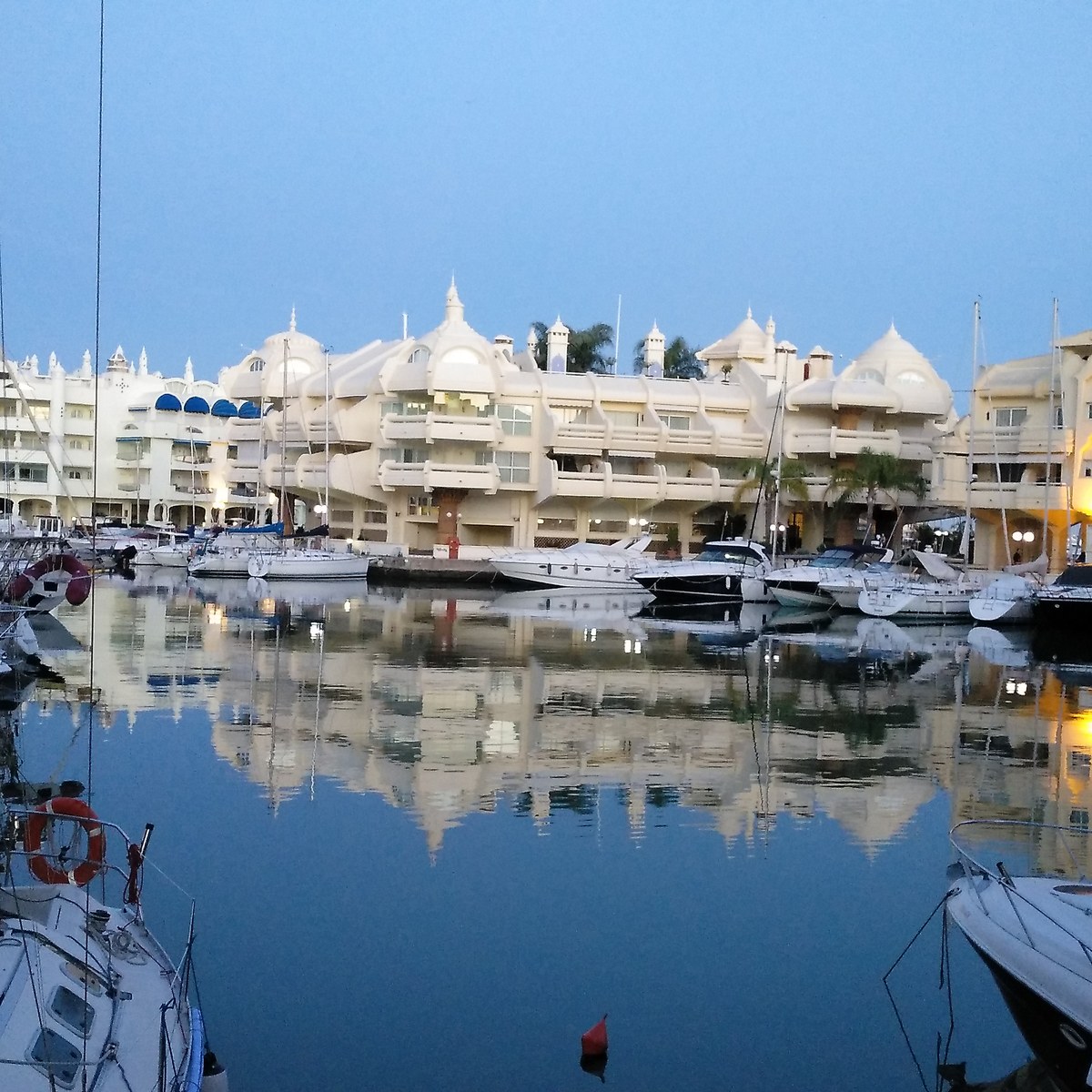
Benalmádena is known for combining three main urban centres in one municipality: Benalmádena Pueblo, Arroyo de la Miel and Benalmádena Costa. Choose the pueblo for historic walking, viewpoints and traditional urban form. Choose the coast for beaches, marina life and seaside leisure. Arroyo de la Miel is where the local tourism picture puts more of the shop and bar life. In the old town, Calle Real remains a meeting point for residents and visitors, with small shops and everyday street life along a historic axis described as having more than five centuries of history.
Religious Festivals and the Town Calendar
The church of Santo Domingo de Guzmán is part of the annual rhythm of Benalmádena Pueblo, not only a stop on a route. Semana Santa processions use it as a religious centre through the old town, and Corpus Christi begins there before continuing in procession. Cruz de Mayo also belongs to this cycle, with the municipal cross blessed by the parish priest. In summer, the Feria y Romería de la Virgen de la Cruz honours the town’s patron and links August festivities with pilgrimage custom as well as fair celebration.
What to Eat After the Walk
If you continue your day towards the coast, the food becomes very recognisably Málaga. Espeto is the classic local speciality, with fish or seafood skewered on long thin canes and grilled over wood on the beach, most often sardines. Pescaíto frito is another standard dish of the coast, served as small fried fish. For tapas, look for boquerones en vinagre and gambas al ajillo. If you want something older in style and cooler in temperature, ajoblanco is made with almonds, garlic, bread, oil and vinegar. Málaga sweet wines are the recognised provincial drink tradition.
Tips for the Free Walking Tour of Benalmadena
- Wear comfortable shoes with some grip. Benalmádena Pueblo sits on a hill, and even a short route is easier when you are prepared for slopes and paving changes.
- If you can choose your timing, morning or late afternoon is often more comfortable in warmer months. The climate is mild year round, with more than 300 days of sunshine and relatively little rain, mostly in November and February.
- Bring water, especially in hotter weather, and leave a little extra time after the tour if you want to stay at the viewpoint or continue along Calle Real.
- Booking conditions are straightforward: the tour does not admit groups of more than 6 people, even if they book separately; you can book up to 12 hours in advance if there are seats left; pets are not allowed; the tour is wheelchair accessible, but an accompanying person is required and this must be indicated in the reservation; free cancellation is available, and if you cannot attend, cancel your booking.
- The route starts in the pueblo, not on the coast, so allow extra travel time if you are coming from Benalmádena Costa, Arroyo de la Miel or nearby resorts.
- If you want to turn the walk into a longer cultural visit, keep going through the old town afterwards. The pueblo works well as a day trip, but the wider municipality also suits a longer stay if you want both the historic hilltop area and the coast.
Frequently Asked Questions
Where does the free tour of Benalmadena start?
The usual meeting point is Plaza de las Tres Culturas. Check your booking confirmation for the exact meeting details, as the point can occasionally change because of seasonal arrangements, demonstrations, concerts or works.
What does the free tour of Benalmadena cover?
The route covers Plaza de las Tres Culturas, Plaza de Andalucía, the little girl statue, the church of Santo Domingo de Guzmán and the Jardines del Muro viewpoint.
How much time should I set aside for the free tour of Benalmadena?
Set aside 1 hour for the tour.
What language is the free tour of Benalmadena in?
The tour is in English and is led by an English speaking guide.
What do I get on the free tour of Benalmadena?
You get the services of an English speaking guide. Tipping the guide at the end is up to you.
What is Benalmádena known for?
It is known for combining three distinct areas in one municipality: Benalmádena Pueblo, Arroyo de la Miel and Benalmádena Costa.
Is Benalmádena worth visiting if I am more interested in history than beaches?
Yes. The old town preserves the original hilltop settlement, the oldest church, traces of the medieval wall, historic streets and a pre-Columbian art museum on the route.
How do you get to Benalmádena from Málaga Airport?
The most convenient public option is the Renfe Cercanías C1 train to Benalmádena-Arroyo de la Miel or Torremuelle.
Popular Activities Near Benalmadena

Free Tour of Malaga
Free Tour of Torremolinos

Free Tour of Marbella
