Salvador de la Bahía

Rio de Janeiro

Sao Paulo

Manaus

Fortaleza
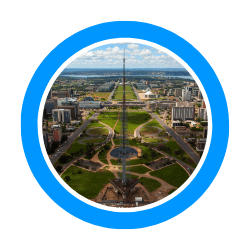
Brasilia

Free tours in Brazil are organized city by city, and each route reveals a different part of the country’s history. In Rio de Janeiro, walks often focus on the imperial center, colonial churches and the transformation of the old port. In Salvador, the story is shaped by Afro-Brazilian religion, slavery, music, and the streets of Pelourinho, while São Paulo explains coffee wealth, migration, and industrial growth.
That variety matters because Brazil cannot be understood through a single national lens. Its cities developed around different economies, populations, and political roles. Gold reshaped the interior, sugar and slavery marked the Northeast, coffee transformed the Southeast, rubber enriched Amazonian cities, and the construction of Brasília moved the national capital far from the coast.
Use this hub to compare the best excursions and free tours available across Brazil and choose the city that best matches your trip.
Why Choose a Free Tour in Brazil?
Brazil changes completely from one city to another, which is why choosing the right free tour depends on the history you most want to understand. Rio de Janeiro is strongest for imperial power and urban transformation, Salvador for Afro-Brazilian culture and colonial memory, and São Paulo for migration, industry and modern city growth.
Free Tour in Rio de Janeiro
Choose a free tour in Rio de Janeiro to understand the city beyond its beaches and viewpoints. Routes through the historic center connect Praça XV, the Paço Imperial, colonial churches, Cinelândia and the old port to the period when Rio developed from a Portuguese trading settlement into the capital of the Brazilian Empire.
A guide can also explain how avenue building, port reform, demolition and redevelopment repeatedly reshaped the city. Some tours continue toward Lapa or areas linked to samba and Afro-Brazilian history, making Rio the best option for travelers interested in political power, imperial memory and the tension between monumental architecture and older popular neighborhoods.
Free Tour in Salvador
Choose a free tour in Salvador to understand Afro-Brazilian history as one of the foundations of Brazil, not as a secondary cultural theme. Most routes concentrate on Pelourinho and the historic center, where baroque churches, steep streets, public squares and colonial façades reveal both the wealth generated by Atlantic trade and the violence of slavery.
The strongest tours connect that history to living traditions, including Candomblé, Bahian music, festivals, food and religious processions. Salvador is the clearest choice for travelers who want to see how African, Indigenous and Portuguese influences became inseparable in the city’s architecture, language, ritual and everyday life.
Free Tour in São Paulo
Choose a free tour in São Paulo to understand how a small Jesuit settlement became one of the largest and most economically powerful cities in the Americas. Routes through the old downtown usually connect Sé Cathedral, Pátio do Colégio, the Municipal Theatre, Viaduto do Chá and the former financial district.
These walks are especially useful because São Paulo’s history is difficult to read without context. Coffee wealth, international immigration, industrialization, modernist architecture and rapid vertical growth all overlap within a compact area. São Paulo is the best option for travelers interested in migration, labor, commerce and the forces that turned the city into Brazil’s main financial and cultural center.
What You Can Learn on Free Tours in Brazil
Colonial Power and Atlantic Trade
Many Brazilian cities grew around ports, forts, customs houses and religious institutions. Guided walks help explain how sugar, gold, coffee, cacao and enslaved labor shaped the built environment.
In places such as Salvador and Rio de Janeiro, the most important monuments cannot be separated from the Atlantic slave trade. A good guide should address that history directly rather than presenting colonial architecture only as decorative heritage.
Migration and Urban Growth
Brazilian cities were also transformed by internal and international migration. São Paulo grew through arrivals from Italy, Japan, Portugal, the Middle East and other regions of Brazil, while Amazonian and northeastern cities developed through different patterns of labor and movement.
Free tours can make those demographic shifts visible in neighborhoods, food traditions, religious buildings and commercial streets.
Afro-Brazilian and Indigenous Influence
African and Indigenous histories are central to Brazil, but their presence changes by region. In Salvador, Afro-Brazilian religion and music are especially visible. In Amazonian cities, Indigenous food, river knowledge and local languages remain essential.
A city-level tour is useful because it shows how those influences appear in daily life instead of reducing them to a general national description.
Architecture and Political Identity
Brazilian architecture ranges from baroque churches and Portuguese townhouses to modernist capitals and high-rise financial districts.
Brasília represents one of the clearest examples of architecture used to express a national political project, while Rio’s civic center and São Paulo’s downtown reveal very different ambitions tied to empire, republicanism, industry and finance.
Tips for Free Tours in Brazil
Confirm the Exact Meeting Point
Meeting points are usually in central squares, outside churches, beside metro exits or near major monuments. Check the booking confirmation carefully because large plazas can have several entrances and similarly named landmarks.
Arrive 10 to 15 minutes early, especially in Rio de Janeiro and São Paulo, where metro exits and traffic can make the final part of the journey less predictable.
Carry Brazilian Reais for the Tip
Free tours are free to reserve, but guides normally depend on voluntary tips. Small notes in Brazilian reais make payment easier at the end of the walk.
The amount is your decision and should reflect the length of the tour, the quality of the guide and your budget.
Prepare for Heat, Humidity and Rain
Light clothing, water, sunscreen and a hat are useful in most Brazilian destinations. In Salvador, Rio de Janeiro, Brasília and Manaus, midday heat can make a 2-hour walk feel much longer.
Tropical rain can also arrive quickly, so a compact umbrella or light rain jacket is worth carrying.
Wear Shoes With Good Grip
Historic centers often include slopes, polished stone, broken sidewalks and cobblestones. Pelourinho in Salvador and older areas of Rio can be uncomfortable in sandals with little support.
Comfortable walking shoes are more important than formal clothing, even when the route includes churches or civic buildings.
Keep Valuables Close
Carry only what you need and keep your phone, wallet and camera secure in busy areas. A closed crossbody bag is usually more practical than an open backpack.
The guide may also give route-specific advice at the beginning, so listen to local recommendations rather than assuming every district presents the same conditions.
Ask About Food Near the End of the Route
Free-tour guides often know which nearby places still serve regional food without relying entirely on tourist traffic.
That may mean acarajé in Salvador, market snacks in São Paulo, seafood in Rio, Amazonian fish in Manaus or cafés near the Monumental Axis in Brasília. Ask for a specific dish and neighborhood rather than simply requesting “a good restaurant.”
How Free Tours Work in Brazil
Most free walking tours in Brazil are free to reserve and do not have a fixed ticket price. At the end, visitors leave the guide a voluntary tip based on the experience and their budget.
Booking is still important because group sizes may be limited. A reservation also gives the operator a way to confirm the meeting point, language, schedule and any changes caused by weather or local events.
Not every tour runs daily, and English or Spanish departures may be less frequent than Portuguese-language routes. Always check the selected date before building the rest of your itinerary around the tour.
Popular Activities in Brazil
Frequently Asked Questions
Is There One Free Tour of Brazil?
No. Free tours operate within individual cities, so there is no single walking route covering Brazil as a whole. This page helps you compare destinations such as Rio de Janeiro, Salvador, and São Paulo.
How Long Do Free Tours in Brazil Last?
Most tours last between 2 and 3 hours. Historic-center routes may be relatively compact, while walks that include viewpoints, hills or several neighborhoods can take longer.
Do I Need to Tip the Guide?
Yes, tipping is customary because the tours normally use a voluntary-payment model. There is no mandatory amount, so you decide what the experience was worth.
What Languages Are Available?
Portuguese is the most common language, while English and Spanish tours depend on the city and schedule. Check the individual activity page before booking.
Are Free Tours in Brazil Accessible?
Accessibility varies significantly. Modern and flatter areas may be easier, while colonial neighborhoods can include steep streets, stairs and uneven pavement. Review the accessibility details for the exact tour rather than relying on general information about the city.
What Happens if It Rains?
Many tours continue in light rain. During storms or extreme weather, the operator may delay, change or cancel the route. Keep your contact details current so you receive any message sent before departure.
Where Do the Free Tours Typically End?
Most routes finish in a central area near public transport, markets, restaurants or major attractions. The final point is not always the same as the meeting point. The guide normally explains how to continue exploring or return to your accommodation.
Explore Brazil City by City
Brazil makes more sense through its cities than through one simplified national story. Compare the free tours in Rio de Janeiro, São Paulo, and Salvador to see how port history, migration, religion, architecture and regional identity change across the country.
Free Tours in South America

Chile

Uruguay

Argentina