

This Hagia Sophia tour begins at At Meydanı Cd, 10/1, near the Hippodrome, with a one-hour guided introduction in English outside the monument, followed by admission for an independent interior visit.
Hagia Sophia makes Istanbul’s religious and political shifts visible within a single building. Its sixth-century Byzantine structure was adapted for Islamic worship after the Ottoman conquest in 1453, and its surviving Christian mosaics and later calligraphic decoration belong to different chapters of that history. The interest lies in understanding how those layers accumulated, rather than treating everything inside as part of one original design.
The guide provides that context before you enter, explaining the building’s architecture and changing role in the city. You then continue through the visitor area at your own pace. This format suits travellers who want historical orientation followed by time to observe independently; the guide does not accompany you throughout the interior.
Admission lets you bypass the ticket-office queue, but security screening still applies. Leave additional time beyond the guided hour for entering and looking around. The sightseeing route uses the upper gallery, while the lower prayer area is separate. Restoration work can affect views, so individual mosaics and architectural details should not be treated as guaranteed sights.
Wear clothing suitable for an active mosque and bring a headscarf if required. Afterward, the surrounding Sultanahmet district offers several ways to continue the day. A free tour of Istanbul can help connect the monument with the Hippodrome and the wider historic centre, provided you leave enough time between reservations.
How the Hagia Sophia Visit Works
The experience has two distinct parts. First, you meet the guide for an introduction that prepares you to understand the monument. Then you enter independently, using that explanation to interpret the spaces and details available along the visitor route.
Use the guided portion to ask which features deserve your attention and how to recognise them. Questions about the dome, the building’s changing religious use and the relationship between mosaics and calligraphy will be easier to discuss before you are walking through the gallery on your own.
Inside, you can decide where to pause without keeping pace with a guide’s commentary. That freedom works best if you already have a few points to look for. A short note on your phone can help you remember the features that interested you during the introduction.
Plan the visit as part of a flexible morning or afternoon. The advertised guided duration is not a reliable measure of the entire outing, because entry procedures and your own viewing time come afterward. Avoid placing another timed admission immediately after the guided portion ends.
Architecture and History to Look For
The Exterior and Imperial Setting
Hagia Sophia stands beside the former ceremonial heart of Byzantine Constantinople. Its proximity to the Hippodrome helps explain why this was a setting for imperial authority as well as religious life. The surrounding district later became central to the Ottoman capital too.
From outside, the dome, supporting structures and minarets show a building that changed repeatedly. Looking at their relationship is more revealing than assuming the silhouette was conceived all at once. The exterior provides a useful starting point for separating the Byzantine structure from later additions.
The Great Dome
The present Hagia Sophia was commissioned under Justinian I after the destruction of the earlier church during the Nika revolt. Its dome became a defining feature of the building, spanning the central space and shaping the way light enters the interior.
The monument also has a long history of repairs and structural reinforcement. Its survival should not be confused with an entirely untouched sixth-century building. When views permit, look at how the dome relates to the arches and supporting masses beneath it, rather than concentrating only on its height.
Byzantine Mosaics
Hagia Sophia’s mosaics belong to different periods of its history as a church. They include religious figures and imperial imagery, making them important evidence of the relationship between worship, patronage and political authority.
Where mosaics are visible, notice the placement of figures, the background and the surviving surface. Missing sections and restored areas are also part of their history. Avoid expecting every image reproduced in books or older photographs to be visible from the current visitor route.
Islamic Calligraphy and Ottoman Adaptations
The large circular calligraphic panels are among the interior’s most recognisable later features. Together with elements associated with Islamic worship, they show how the building acquired new functions and meanings after its conversion into a mosque.
Understanding these additions requires more than a simple account of one religion replacing another. The structure was adapted, maintained and redecorated over centuries. Some features can be appreciated from a distance, while areas used for prayer are not part of the sightseeing route.
Marble and Decorative Surfaces
The coloured marble adds another way to read the interior. In some wall panels, matching veins create symmetrical patterns, turning the natural markings of stone into deliberate decoration. These details reward slower observation after taking in the larger space.
Compare materials as well as images: stone, mosaic and calligraphy each affect how the interior looks. You do not need to identify every panel to appreciate the contrast between a broad architectural view and the smaller decisions visible in individual surfaces.
Preparing for Your Visit
Go to the meeting address first. The guide meets the group near the Hippodrome. Save the reservation map and locate the address before joining any entrance queue at Hagia Sophia.
Use Sultanahmet as your transport reference. The T1 tram serves the district from places including Eminönü, Karaköy and Kabataş. Allow walking time from the stop to the meeting point, especially if this is your first visit to the square.
Dress appropriately before arriving. Cover shoulders and knees; women should bring a headscarf. Having suitable clothing with you avoids needing to find additional coverings shortly before the visit.
Prepare for the outdoor introduction. Bring weather-appropriate clothing for time spent outside, not just for the interior. A compact rain layer or sun protection can be useful depending on the forecast.
Confirm mobility needs in advance. The visit involves an upper-level route in a historic building. Describe any need for step-free access, assistance or rest breaks before paying; do not assume the prayer floor provides an alternative sightseeing route.
Be considerate with your camera. Follow the instructions in each area, keep circulation routes clear and avoid photographing people at prayer. Frame architectural views without turning worshippers into the subject of your pictures.
What to See Nearby
The Blue Mosque offers a natural architectural comparison across Sultanahmet Square. Its Ottoman design helps put the adaptations at Hagia Sophia into perspective. Arrange that visit separately and follow its own visitor-access and worship arrangements.
The Basilica Cistern adds a different side of Byzantine Constantinople: the water infrastructure supporting the imperial city. Its underground setting contrasts with the height and light of Hagia Sophia, making the two visits complementary without repeating the same experience.
Topkapi Palace extends the historical theme into the Ottoman court, but deserves its own time. If your schedule is already full, a walk through the former Hippodrome or a meal around Divan Yolu may be a more comfortable continuation than another major ticketed attraction.
Frequently Asked Questions
Does the Guide Accompany Me Inside?
No. The guided explanation takes place outside; you visit the interior independently afterward.
How Much Time Should I Allow?
Allow one hour for the guided portion, plus security and your interior visit.
Is Admission Included?
Yes. You bypass the ticket-office queue, but still pass through security.
Can I Visit the Ground-Floor Prayer Area?
Not as part of this sightseeing route, which uses the upper visitor level.
What Should I Wear?
Wear modest clothing covering shoulders and knees. Women should also cover their hair.
Where Can I Check the Price?
The booking calendar shows the current price and available departures. Enter all participants before confirming.
Is There a Minimum Group Size?
Yes, three participants. If the minimum is not reached, you will be contacted with alternatives.
Can I Cancel for Free?
Yes, until 24 hours before the activity. Later cancellations and no-shows are non-refundable.
Popular Activities in Istanbul
More Tours in Istanbul
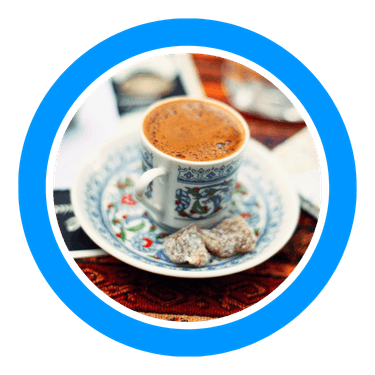
Coffee Workshop

Historic Istanbul
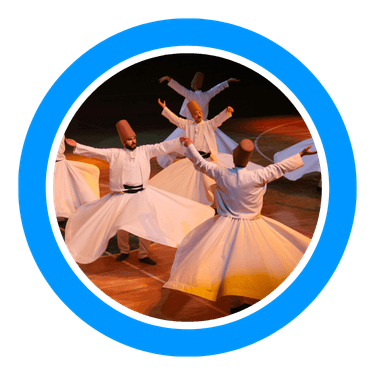
Whirling Dervish Show
