

This 45-minute wagashi-making and tea ceremony experience takes place at MOMOZEN in Kyoto’s Higashiyama district, about 500 metres from Kiyomizu-dera Temple. In a small group of no more than 10 participants, you will make traditional Japanese sweets by hand, learn about matcha and grind tea, discover basic tea-room etiquette, and watch a matcha preparation demonstration before enjoying your handmade wagashi with tea.
The class is designed as a practical introduction rather than a long formal study of tea. You begin by shaping the wagashi yourself, then move from sweets into matcha and finally into the tea-room setting. That sequence helps explain why wagashi and tea are traditionally paired rather than presenting them as two unrelated Japanese foods.
Instruction is available in English, Japanese and Chinese, and no previous experience with wagashi or tea ceremony is required. The host explains the process step by step, including the etiquette surrounding the tea room and the way matcha is prepared and served.
The venue is wheelchair accessible, and children aged 3 and older can participate. The location also makes the activity easy to combine with Kiyomizu-dera and the historic streets of eastern Kyoto without committing half a day to a cooking workshop or extended ceremony.
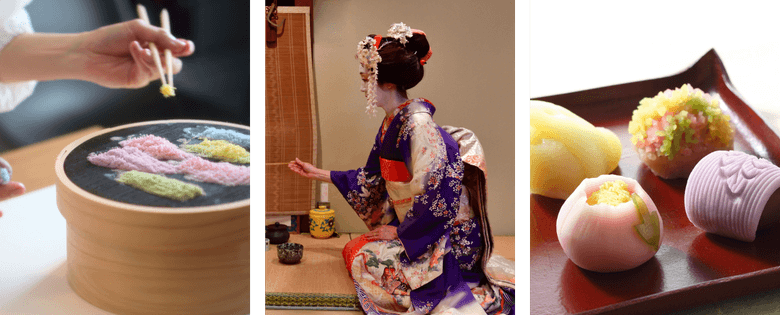
How the Kyoto Wagashi and Tea Ceremony Experience Works
The complete experience lasts 45 minutes and follows a clear sequence. You first learn how to make wagashi, then move into an introduction to matcha before learning the basic process and etiquette of Japanese tea ceremony.
The wagashi section is hands-on. Rather than simply watching finished sweets being decorated, you work with the confection yourself and shape your own piece under the instructor’s guidance.
Next comes the matcha introduction. The activity includes learning about the tea and grinding tea leaves yourself, giving you a better sense of the ingredient before it appears in the ceremonial portion of the session.
The host then explains how a tea ceremony is structured and introduces the basic etiquette expected in the Japanese tea room. This provides context for actions that might otherwise appear purely decorative or formal to a first-time visitor.
Staff demonstrate the preparation of matcha, and the experience concludes by pairing the tea with the wagashi you have made yourself.
Making Traditional Japanese Wagashi
Wagashi is a broad category of traditional Japanese confectionery that includes many different styles, ingredients and preparation techniques. These sweets are closely connected with tea culture because their sweetness provides a deliberate contrast with the stronger vegetal and slightly bitter character of matcha.
Appearance also matters. Traditional wagashi often use color, shape and small decorative details to suggest flowers, plants, weather or other elements associated with a particular time of year.
During this class, the emphasis is not on memorizing the complete history of Japanese confectionery but on working with the sweet directly. The instructor demonstrates the process and guides you as you form your own wagashi.
Why Wagashi Is Served with Matcha
In tea practice, wagashi is normally eaten before drinking the matcha. The sequence is intentional: sweetness remains on the palate and changes how the stronger flavor of the tea is perceived immediately afterwards.
This class lets you experience that relationship directly because the confection you make becomes part of the tea portion later in the session rather than simply being packed away as a souvenir.
A Hands-On Introduction
No confectionery experience is required. The activity is structured for beginners, and the small-group format allows the instructor to demonstrate the shaping process clearly before participants work on their own sweets.
The finished result does not need to look identical to the instructor’s. Part of the appeal is seeing how small changes in pressure, shape and placement alter the final appearance of an object that is meant to be eaten only a short time later.
Matcha Grinding and Tea Ceremony Etiquette
Learning About Matcha
After making the wagashi, the focus shifts to matcha. The experience includes an introduction to the tea and an opportunity to grind tea leaves as part of understanding how the ingredient is prepared before serving.
This makes the tea portion more concrete than simply receiving a finished bowl. You encounter the ingredient before watching the preparation process and tasting it alongside the sweet you made earlier.
Tea-Room Etiquette
The host then explains the basic process and etiquette used during a Japanese tea ceremony. The lesson is introductory, so first-time visitors are not expected to arrive knowing how to sit, handle a bowl or follow a sequence of formal gestures.
The purpose is to show that tea ceremony is structured around more than whisking matcha. The way the host and guest interact, the order in which things happen and the deliberate handling of utensils all contribute to the experience.
Matcha Preparation Demonstration
Staff demonstrate how matcha is prepared and served. A bamboo whisk is used to combine the powdered tea and hot water, creating the texture associated with traditionally prepared matcha.
The activity teaches participants about preparing and serving matcha, but it is best understood as an introductory cultural workshop rather than an advanced tea-school lesson. The entire wagashi and tea experience fits within 45 minutes.
Enjoying Your Wagashi with Matcha
The final part of the experience brings the two halves of the class together. You eat the wagashi you made and enjoy it with matcha in the tea-room setting.
The order matters. Eating the sweet first prepares the palate for the tea and lets you notice more clearly how the flavors contrast. That relationship between confectionery and matcha is one of the reasons wagashi developed such a close association with tea culture.
The activity is therefore more useful than a simple tasting if you want to understand the sequence behind the pairing. You have already handled and shaped the sweet, learned about the tea and watched how the matcha is prepared before finally consuming the two together.
By the end, the aim is not to make you an expert in formal tea practice. Instead, you leave with a basic understanding of how wagashi and matcha are prepared, served and experienced together.
Location, Accessibility and Practical Information
The experience takes place at MOMOZEN Tea Ceremony in Château Kiyomizu, 4-190-1 Kiyomizu, Higashiyama Ward, Kyoto. The venue is approximately 500 metres from Kiyomizu-dera Temple.
Look for the MOMOZEN signboard when you arrive. Because the surrounding Higashiyama streets can become crowded, especially around Kiyomizu-dera, leave enough time to locate the entrance before your scheduled starting time.
The class is limited to a maximum of 10 participants and instruction is available in English, Japanese and Chinese.
The activity is wheelchair accessible. Children aged 3 and older may participate, while children under 3 are not admitted under the current booking conditions.
Free cancellation is currently available until 24 hours before the activity for a full refund. A reserve-now, pay-later option is also available under the current booking conditions.
No specific photography policy is published for the experience. If you want to photograph the tea ceremony or the instructor’s demonstration, ask before the session begins so you do not interrupt the sequence.
Frequently Asked Questions
How Long Does the Wagashi-Making and Tea Ceremony Last?
The activity lasts 45 minutes.
Where Does the Experience Take Place?
It takes place at MOMOZEN Tea Ceremony in Château Kiyomizu, 4-190-1 Kiyomizu in Kyoto’s Higashiyama Ward, approximately 500 metres from Kiyomizu-dera Temple.
Do I Make the Wagashi Myself?
Yes. This is a hands-on class, and participants shape their own traditional Japanese sweet under the instructor’s guidance.
Do I Grind Matcha During the Class?
The activity includes learning about matcha and grinding tea leaves before the tea-ceremony section.
Is a Tea Ceremony Included?
Yes. The experience includes an introduction to tea-ceremony etiquette and process, followed by a matcha preparation demonstration and the chance to enjoy your wagashi with tea.
What Languages Are Available?
Instruction is available in English, Japanese and Chinese.
How Large Is the Group?
The class is limited to a maximum of 10 participants.
Can Children Participate?
Yes, from age 3. Children under 3 are not permitted to participate under the current booking conditions.
Is the Venue Wheelchair Accessible?
Yes. The activity is currently listed as wheelchair accessible.
Popular Activities in Kyoto

Chopstick Making Workshop in Kyoto
Free Tour of Kyoto’s Historical Center
Fushimi Inari in Kyoto
