

This 2-hour free tour of Lima begins at Gran Hotel Bolívar beside Plaza San Martín and ends at San Francisco Church. With an English-speaking guide, you will walk along Jirón de la Unión, explore Plaza Mayor and see landmarks such as the Government Palace and Lima Cathedral from the outside. The guide also introduces Peruvian cuisine, explains the history of San Francisco and its catacombs, and may offer a pisco tasting when available.
The route concentrates on Lima’s historic centre, an area where the city’s colonial and republican history remains particularly visible. Spanish Lima was founded by Francisco Pizarro in January 1535 and became the political, administrative, religious and economic centre of the Viceroyalty of Peru. Its importance extended far beyond the modern borders of Peru, making it one of the principal cities of Spanish South America for centuries.
The historic centre is now recognized by UNESCO as a World Heritage Site. The Convent of San Francisco was first inscribed in 1988, and the protected area was expanded in 1991 to encompass a much larger section of central Lima. The route connects several of the public spaces and monuments that help explain that evolution, from the colonial Plaza Mayor to the republican Plaza San Martín.
This is primarily an outdoor walking tour, so entry to Lima Cathedral, the Government Palace, San Francisco Church and the catacombs is not included. Like other free tours, there is no fixed participation fee. At the end of the walk, each traveler decides what voluntary contribution to give the guide according to their experience.
How the Lima Free Tour Works
The meeting point is Gran Hotel Bolívar, one of the landmark buildings facing Plaza San Martín. The hotel opened in 1924 as part of the transformation of central Lima during the centennial era and still occupies a prominent position at the beginning of Jirón de la Unión.
From here, the group explores Plaza San Martín before continuing along Jirón de la Unión toward Plaza Mayor. This pedestrian axis connects two of the historic centre’s most important public spaces and provides a useful visual transition between Lima’s republican and colonial architecture.
At Plaza Mayor, the guide introduces the Government Palace, Lima Cathedral and the origins of the Spanish colonial city. The route then continues toward San Francisco, where you will hear about the church, convent and famous underground catacombs before the tour finishes outside San Francisco Church.
Civitatis publishes a contractual duration of 2 hours, although the walking itinerary can occasionally extend toward 2 hours 30 minutes depending on the pace of the group and conditions in the historic centre.
The tour includes an English-speaking guide. The guide also speaks Spanish, although this product is specifically marketed to English-speaking travelers.
Plaza San Martín and Jirón de la Unión
Plaza San Martín
Plaza San Martín provides the republican starting point for the tour. It was inaugurated on July 27, 1921 as part of the celebrations marking the centennial of Peruvian independence.
The square was designed as a monumental civic space dedicated to General José de San Martín, whose equestrian statue dominates its centre. San Martín had proclaimed Peru’s independence in Lima in July 1821, making the new plaza an important part of the national commemorative landscape created a century later.
The surrounding architecture developed during Lima’s early 20th-century modernization. Gran Hotel Bolívar, where the free tour begins, opened in 1924 and became one of the major buildings framing the square.
Jirón de la Unión
From Plaza San Martín, the route follows Jirón de la Unión toward the colonial heart of Lima. The street has long functioned as one of the principal axes through the historic centre, connecting civic, commercial and religious spaces.
Its façades also reveal the constant rebuilding of Lima. Earthquakes, political changes and changing architectural tastes repeatedly transformed the city, leaving colonial churches alongside republican and early modern commercial buildings.
Today, Jirón de la Unión remains a busy pedestrian and commercial street. Walking it with a guide makes it easier to understand how an apparently modern shopping corridor follows one of the fundamental routes through historic Lima.
Plaza Mayor, Government Palace and Lima Cathedral
Plaza Mayor
Plaza Mayor, also widely known as Plaza de Armas, forms the monumental centre of historic Lima. Francisco Pizarro established the Spanish city here in January 1535, on a landscape that was already inhabited and politically organized before the conquest.
The square subsequently became the focus of political, religious and administrative power in the capital of the Viceroyalty of Peru. Its importance survives in the concentration of major institutions around it, including the Government Palace, Cathedral and Archbishop’s Palace.
The fountain, gardens and surrounding façades make Plaza Mayor one of the clearest places to read Lima’s development as the centre of Spanish government in South America and later as the capital of the independent Peruvian republic.
Government Palace
The Government Palace occupies the northern side of Plaza Mayor and stands on a site associated with political authority since the foundation of Spanish Lima. It remains the seat of Peru’s executive government.
The building visible today is the result of numerous reconstructions rather than a surviving 16th-century palace. Fires, earthquakes and successive architectural projects transformed the complex over several centuries.
The free tour observes the palace from the square. It does not include an interior visit or guarantee access to ceremonies such as the changing of the guard.
Lima Cathedral
Lima Cathedral stands on the eastern side of Plaza Mayor and traces its origins to the earliest decades of the Spanish city. Like many major buildings in Lima, it has been reconstructed and altered repeatedly following earthquakes and changes in architectural taste.
The cathedral is closely linked with the religious and political history of colonial Lima, and it also contains the tomb associated with Francisco Pizarro. During this free tour, however, the monument is explained from the outside rather than visited as an included interior attraction.
San Francisco, the Catacombs and Peruvian Cuisine
San Francisco Church and Convent
The final part of the walk reaches the monumental complex of San Francisco. Its church and convent form one of the most important surviving ensembles from colonial Lima and played a central role in the original UNESCO recognition of the historic centre.
UNESCO highlights San Francisco as one of the most complete colonial convent complexes in Latin America. Its architecture also reflects the broader history of Lima, where European building traditions were adapted by local craftspeople to materials, earthquakes and regional construction techniques.
The free tour ends at San Francisco Church, but admission to the church, convent and underground catacombs is not included. The guide instead explains the history of the complex and the burial spaces beneath it, allowing you to decide whether you want to return for a separate interior visit.
The Walls of Lima
The history of the city’s defensive walls may also appear during the explanation near San Francisco. Lima was surrounded by a fortified wall during the late 17th century, but it is more accurate to describe the city as walled for less than two centuries rather than for approximately 300 years.
Construction took place mainly between 1684 and 1687. By the 19th century, the fortifications had become an obstacle to urban expansion and were progressively demolished during the 1870s as Lima began extending beyond its colonial limits.
Pisco and Lima’s Food Culture
The guide also introduces the importance of Peruvian cuisine and provides recommendations for dishes and places to try after the walk. Lima has become internationally associated with dishes such as ceviche, anticuchos and lomo saltado, but the tour itself is not a food tour and meals are not included.
A small pisco tasting is included subject to availability. Because this depends on the conditions of the individual departure, it should be treated as a possible extra rather than the central reason for booking the tour.
Practical Information and Frequently Asked Questions
The activity takes place entirely on foot through central Lima. The current Civitatis listing classifies it as not wheelchair accessible and not suitable for people with reduced mobility.
Pets are permitted. Reservations can currently be made up to 2 hours before departure while places remain, and the electronic voucher can be shown directly on your phone.
Groups traveling together cannot exceed 6 people, even if they try to divide themselves between several separate reservations. This restriction applies to the travel party rather than the total number of participants on the free tour.
Where Does the Free Tour of Lima in English Start?
The meeting point is Gran Hotel Bolívar beside Plaza San Martín. Check the meeting point on your voucher before departure because operational details can occasionally change.
How Long Does the Lima Free Tour Last?
The contractual duration is 2 hours. Civitatis notes that the actual walk through the historic centre can sometimes last between approximately 2 and 2.5 hours.
Where Does the Tour Finish?
The activity ends at San Francisco Church in Lima’s historic centre. It does not return to Gran Hotel Bolívar.
Does the Tour Enter Lima Cathedral or San Francisco?
No monument admission is published as part of the free tour. The main landmarks are explained from the outside, and a visit to the San Francisco catacombs must be arranged separately.
Is a Pisco Tasting Included?
Yes, a pisco tasting is listed as an inclusion, but it is subject to availability and therefore is not guaranteed on every departure.
Is the Free Tour Entirely in English?
The English product includes an English-speaking guide. Civitatis also states that the guide speaks Spanish, so the guide is bilingual even though this departure is marketed in English.
Is the Tour Wheelchair Accessible?
No. The current product is classified as not wheelchair accessible and not suitable for people with reduced mobility.
Are Pets Allowed?
Yes. Pets are currently permitted during the free walking tour.
Can Groups of More Than 6 People Join?
No. Civitatis does not accept groups of more than 6 people traveling together, even if they make several separate reservations.
Popular Activities in Lima
Free Tours in Peru

Cusco
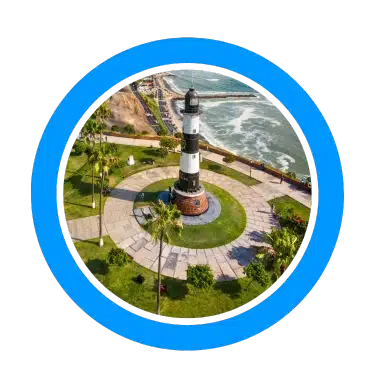
Barranco in Lima

Lima Free Food Tour
