

Guided tour
Tour of Macarena + Palacio de las Dueñas
9.3 Exceptional · 104 reviews (as of Nov 2026) Free cancellation
Choose your date
Civitatis displays availability and confirms bookings on its own site.
Seville’s Macarena district still follows lines laid down long before the city became a Baroque capital. One of the clearest examples is the old Cardo Maximus, the north-south axis of Roman Hispalis, which survives in the street pattern around this part of the city. The area also preserves stretches of medieval wall and one of Seville’s historic gates, so the walk moves through several layers of the city without leaving the same neighbourhood.
You start at Setas de Sevilla and continue through Feria Street, San Juan de la Palma, Omnium Sanctorum, the Macarena neighbourhood and the area around the Basilica of La Macarena, finishing at the Palacio de las Dueñas. The activity lasts 3 hours 30 minutes. An English-speaking guide is included, along with admission to the Palacio de las Dueñas. Admission to the Church of San Luis de los Franceses is not included.
The route is conducted in English with an English-speaking guide. If you want a wider introduction to the historic centre before or after this walk, Seville also has free city tours in English that cover the main central districts on foot.
What You Will See on the Tour of Macarena + Palacio de las Dueñas
Feria Street
Feria Street is one of Seville’s oldest market streets and has long linked the northern entrance of the city with its commercial centre. Its route helps explain why this area developed as a working neighbourhood around the old walls, with churches, markets and housing packed closely together.
Parish of Omnium Sanctorum
Omnium Sanctorum is one of the oldest parish churches in Seville, with origins in the 13th century after the Christian conquest of the city. Its façade preserves strong Gothic-Mudéjar features, a style that combines Christian building forms with Islamic decorative traditions still common in medieval Seville.
Basilica of La Macarena
The Basilica of La Macarena is closely tied to one of Seville’s best-known devotional images, the Virgin of Hope of Macarena, central to Holy Week in the city. The church stands beside the old walls, which makes this stop especially useful for seeing how religion, neighbourhood identity and the historic urban edge of Seville meet in one place.
Church of San Luis de los Franceses
You see San Luis de los Franceses from the outside, one of the most important Baroque churches in Seville. Built in the 18th century and associated with the Jesuits, it is recognised for its richly decorated design and its prominent dome, a clear contrast with the more severe medieval buildings nearby.
Palacio de las Dueñas
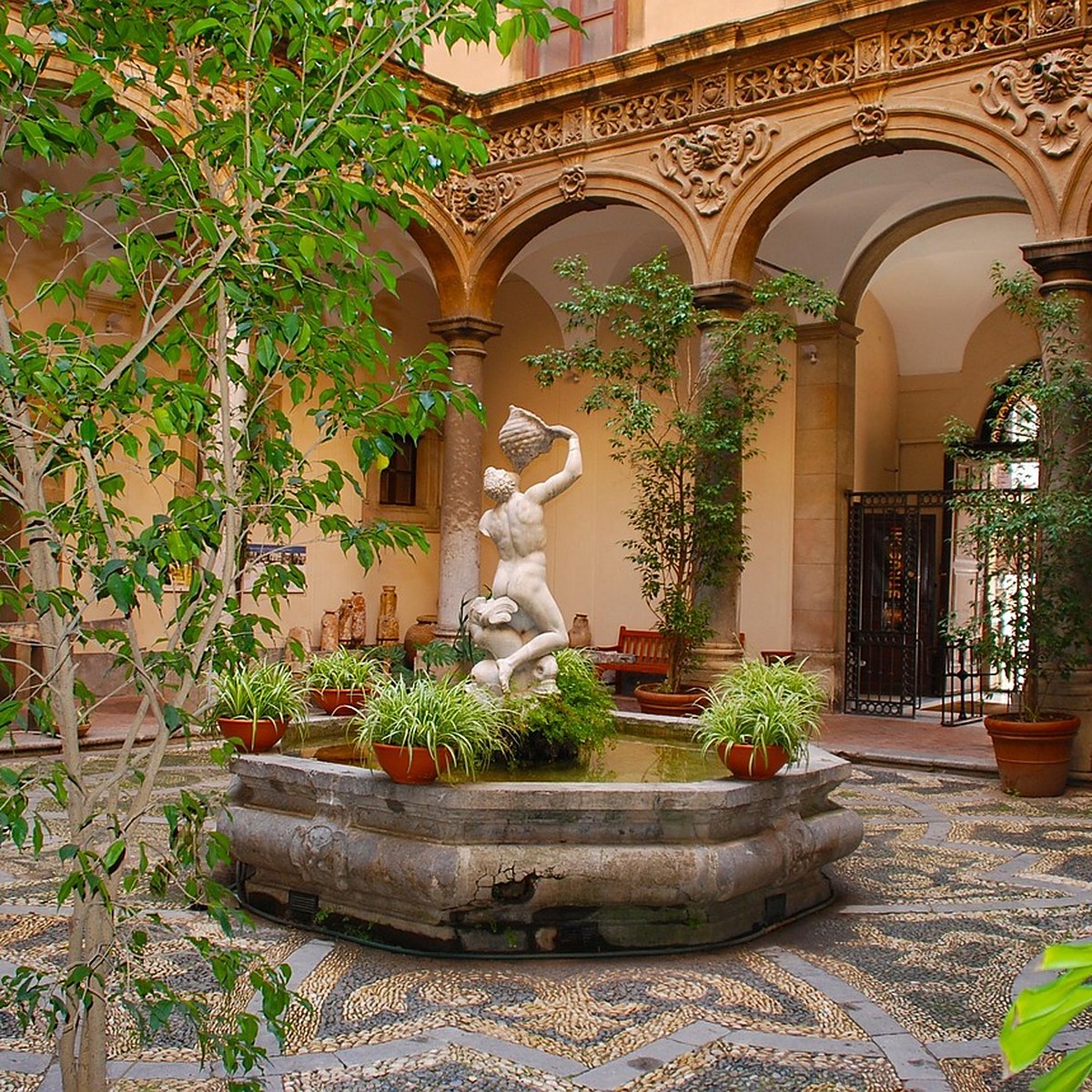
Palacio de las Dueñas is a noble residence with roots in the late 15th century and a strong mix of Gothic-Mudéjar and Renaissance elements. It is especially associated with the House of Alba and with the poet Antonio Machado, who was born here in 1875 when part of the palace was used as rented housing.
Tips to Enjoy the Tour of Macarena + Palacio de las Dueñas
✔️ The meeting point is Setas de Sevilla at Plaza de la Encarnación, so go to the ground level meeting area rather than the elevated walkway or viewpoint entrance. That square is large and busy, especially late morning and early evening.
✔️ The route lasts 3 hours 30 minutes and finishes at Palacio de las Dueñas, not back at Setas. Dueñas is on Calle Dueñas, so if you parked or planned a taxi to Plaza de la Encarnación, factor in the separate end point before you start.
✔️ San Luis de los Franceses is only seen from the outside and its ticket is not included. If you want to go inside the same day, check the official site of the Diputación de Sevilla before travelling, since opening days and entry conditions can change.
✔️ The walk passes older sections near the Macarena walls and streets around Feria where paving can be uneven. The activity is not wheelchair accessible, so this matters if you use mobility aids or need step-free planning.
✔️ If you want to continue the theme after the tour, Casa de Pilatos is about a 10 to 15 minute walk from Palacio de las Dueñas and gives you another major Sevillian palace to compare with Dueñas on the same day.
✔️ Feria Street is one of the best areas to stay after the tour if you want lunch in the same part of the city. Mercado de Feria and the surrounding streets make a practical continuation because you are already nearby and do not need to cross back into the cathedral zone.
What Else to See in Seville
Hospital de los Venerables
In the Santa Cruz quarter, this 17th-century Baroque building was founded as a residence for elderly priests. Today it is a cultural site, and it works well after Dueñas if you want to compare aristocratic and religious architecture from early modern Seville in two different neighbourhood settings.
Casa de Pilatos
Casa de Pilatos, between the historic centre and the old Jewish quarter, is one of Seville’s best-preserved aristocratic houses. Its patios, tilework and Renaissance additions make it a strong companion visit to Palacio de las Dueñas, especially for anyone interested in how noble families shaped the city’s domestic architecture.
Seville City Walls and the Macarena Gate
The surviving wall section beside the Basilica de la Macarena and the Puerta de la Macarena are among the clearest remains of Seville’s medieval defences. If you return after the tour or spend more time in the area, they help place the whole route in the geography of the former northern edge of the city.
The Best of Seville
Seville is easiest to understand when Roman street planning, medieval walls, parish churches and noble houses are seen as part of the same urban story. The route from the Macarena area to Palacio de las Dueñas shows that continuity clearly, because it links an old entrance zone of the city with one of its long-inhabited aristocratic residences.
Food in this part of Seville also fits the character of the walk. Around Feria Street and nearby bars, espinacas con garbanzos remains one of the city’s most recognisable traditional dishes, and bacalao con tomate is another common classic on older-style menus in the north of the historic centre.
If you want to connect this northern route with Seville’s monumental core, continue later with the cathedral area, Santa Cruz and the Alcázar zone. Seeing both sides of the city helps explain how neighbourhood life and grand ceremonial spaces developed side by side.
Frequently Asked Questions
How long does the Tour of Macarena + Palacio de las Dueñas last?
The activity lasts 3 hours 30 minutes. That time covers the walking route through the Macarena area and the visit ending at the Palacio de las Dueñas.
Where does the Tour of Macarena + Palacio de las Dueñas start?
The meeting point is Setas de Sevilla, in Plaza de la Encarnación. The activity finishes at Palacio de las Dueñas, so it does not return to the starting point.
What language is the Tour of Macarena + Palacio de las Dueñas conducted in?
The tour is conducted in English. An English-speaking guide accompanies you throughout the route.
Is admission included in the Tour of Macarena + Palacio de las Dueñas?
Yes, admission to the Palacio de las Dueñas is included. Admission to San Luis de los Franceses is not included, and that stop is visited from the outside.
Do I need to book in advance?
Booking in advance is recommended, especially if you want a specific date in a busy period such as spring or around Holy Week in Seville. Once booked, you can cancel free of charge up to 48 hours before the activity starts.
Is the Tour of Macarena + Palacio de las Dueñas accessible for people with reduced mobility?
No, this activity is not wheelchair accessible. The route moves through historic streets in the Macarena area, including uneven paving in older sections, so travellers with reduced mobility should take this into account before booking.
Is photography allowed during the Tour of Macarena + Palacio de las Dueñas?
Photography is usually possible in outdoor parts of the route such as Feria Street, the Macarena walls and the exterior of San Luis de los Franceses. Inside Palacio de las Dueñas, follow any photography rules in force on the day of your visit.
What is the best time of year to visit Seville?
Spring and autumn are generally the most comfortable seasons for walking in Seville, with milder temperatures than the height of summer. If you visit between late May and September, earlier hours are usually easier for a 3 hour 30 minute route through exposed streets and squares.
Popular Activities in Spain

Free Tour of Seville
Alcazar of Seville Tour

Seville Cathedral and Giralda Guided Tour

Secrets of Seville Evening Tour
