

Free walking tour
Free Tour of Sibiu
8.9 Fabulous · 20 reviews (as of Nov 2026) Free cancellation
Choose your date
Civitatis displays availability and confirms bookings on its own site.
By the late Middle Ages, this was more than a handsome Transylvanian town. Sibiu had become the administrative centre of the Saxon settlements in Transylvania, and its urban form still makes that history unusually easy to read. UNESCO highlights the way three upper-town squares connect to lower-town streets, stairs and covered passages, which is one reason the old centre feels so legible when you explore it on foot.
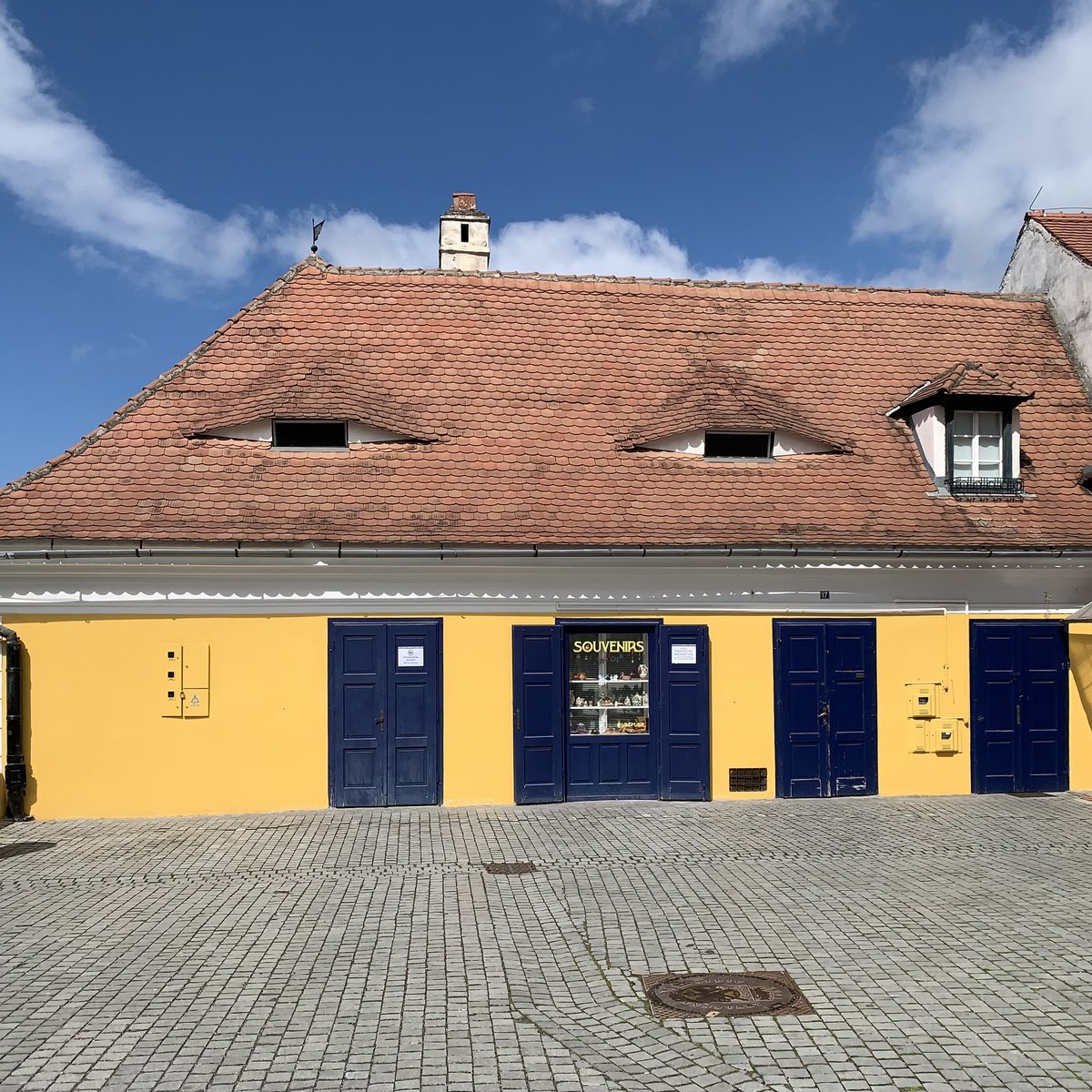
This free walking tour takes in the places that define Sibiu at a glance: the Grand Square, the Lutheran Cathedral, the Bridge of Lies, the roof windows that earned the city its nickname, and Citadel Street. You will see civic space that once hosted markets and punishments, a major church tied to the Reformation, an iron bridge wrapped in local legend, and the attic windows that seem to watch the street below. Together, these highlights explain why Sibiu feels both compact and layered.
You should set aside 2 hours for the walk. It is led in English by an English-speaking guide, and the meeting point is the Statue of Samuel von Brukenthal, in Sibiu’s Grand Square. The tour ends on Citadel Street. Tips are not included, so you can decide at the end what to give the guide.
What You’ll See on the Free Tour of Sibiu
Grand Square
You start in the city’s main civic space, a square that existed by 1366, when Sibiu’s third fortification belt was completed, and that was first documented in 1411 as a cereal market. In the Middle Ages it was used not just for trade, but also for public gatherings, trials and executions, which gives the space a harder historical edge than its elegant facades suggest. A fountain is recorded here in 1538, a pillory in 1550, and the scaffold was removed in 1783. It is also one of the best places to look up and spot Sibiu’s famous roof windows.
Lutheran Cathedral
You will see one of the key buildings of Sibiu’s religious history, standing on the site of an earlier Romanesque basilica. Construction of the present church began in 1320, and the building was developed and altered between the 14th and 16th centuries. The tower is easy to recognise because of its four small corner turrets, a detail with legal meaning in medieval Transylvania. Those turrets signalled the city’s right of high justice, including capital punishment.
Bridge of Lies
You will cross or view the bridge most closely tied to Sibiu’s popular imagination. The current structure was rebuilt in 1859 by Friedrich Hütte on the site of an earlier wooden bridge, and it is described as the first forged iron bridge in Romania. If you look carefully, you can still pick out the coat of arms of Sibiu on the south side, while the north side bears the inscriptions “1859” and “Friedrich Hütte”. Its fame today comes from both engineering history and the story attached to its name.
The Roofs Known as the City With Eyes
You will notice that many houses in the old centre seem to stare back. These lens-shaped openings are not a modern branding trick but functional skylights and vents built into historic houses, especially visible around the squares and in the Small Square. They help explain why Sibiu is often called the “City With Eyes”. Once you know what to look for, the roofline changes from decorative backdrop into one of the city’s most distinctive practical features.
Citadel Street
You will finish on Citadel Street, where Sibiu’s fortified character is still easy to grasp. This part of the old town belongs to the defensive landscape that developed after the Tatar invasion of 1241, when Sibiu’s fortifications and urban layout were further shaped into the walled upper town and connected lower quarters seen today. It is a useful final point because it ties architecture, military history and urban planning into one view.
History and Curiosities of Sibiu
Saxon Settlement and a Frontier City
Sibiu was colonised by Saxon settlers in the mid-12th century after they were invited by the Hungarian king Géza II to defend and administer this frontier zone. The earliest written record of the city dates from 1191, and from 1366 onward the Saxon community referred to it as Hermannstadt. That background matters because the old town’s organisation was never accidental: it was built by a community with legal privileges, defensive duties and strong commercial interests. You can still see the result in the coherent street network and the relationship between the upper and lower town.
The Saxon University and Administrative Power
By the end of the 15th century, Sibiu was the seat of the Saxon University, the institution that made it the administrative centre of the Saxon settlements in Transylvania. Despite its name, this was not a modern university but the political body representing the Saxon community. Its presence explains why Sibiu often feels more formally planned and civically ambitious than towns of similar size. The concentration of important public buildings in the historic centre reflects that role.
The Reformation Changed the City
From 1543, Sibiu became the focus for the Lutheran Reformation in Transylvania, marking a shift away from Catholicism. That confessional change still shapes the city’s identity, but not in a simple one-faith way. Sibiu remained and remains a multi-confessional place, with Orthodox, Evangelical, Roman Catholic, Greek Catholic, Reformed and Jewish places of worship in the historic centre. This mixture helps explain why the old town is marked by Gothic, Renaissance and Baroque architecture rather than a single style.
A Cage for Night Disturbers
One of the stranger details from Sibiu’s past is the “lunatic cage” once kept in the Grand Square. Between 1724 and 1757 it was used to expose people who disturbed the night peace, which says a lot about how public order was enforced in an early modern city. It is the kind of fact that cuts through romantic ideas about old town life. Sibiu’s central spaces were beautiful, but they were also tightly controlled.
The Bridge of Lies and Other Local Stories
The Bridge of Lies comes with a local legend that it collapses if someone sits on it and tells a lie. That story belongs to folklore rather than documented history, but it has helped fix the bridge in the city’s public imagination. Another old explanation for its nickname is more practical: it was remembered as the first bridge in Sibiu built without supporting pillars underneath. Sibiu also likes to present itself as a city of firsts, with claims that include Romania’s first museum, first archives, first folkloric ensemble, and the first attested printing press in Transylvania.
Local Life, Traditions and Food in Sibiu
Squares, Passages and Everyday City Life
The old centre still works as more than a historical set piece. Grand Square remains the city’s main public stage, while the Small Square historically functioned as a working square where arcaded ground floors housed craftsmen’s workshops and spaces for displaying goods. If you want one of the better free things to do in Sibiu after the tour, continue on foot beyond the headline landmarks and pay attention to the passages, stairways and the shift from ceremonial space to daily routine. The city makes most sense when you read its streets as places of work, trade and movement as much as monuments.
Traditions and Cultural Life
Sibiu’s cultural identity is broader than its Saxon past alone. It remains a multi-confessional city, and that mix of communities is one reason the historic centre contains such a varied religious landscape. In more recent decades, the Sibiu International Theatre Festival, founded in 1997, has become Romania’s biggest performing-arts festival. Each June it spreads across theatres, churches, city squares and other urban spaces, showing how the old centre still functions as a lived public setting rather than a preserved backdrop.
Markets and the Link to the Villages
For a clearer sense of present-day local life, head towards Cibin Market after the walk. It is the main produce market associated with Sibiu and reflects the city’s links to the surrounding farming villages. Markets and fairs here are still places where residents and nearby producers meet, especially for produce, cheeses and meat products. This matters because Sibiu is not just an old Saxon centre preserved behind facades, but also a regional town with living ties to the countryside.
Traditional Food of Sibiu
The traditional food of Sibiu reflects the city’s mixed Saxon, Romanian and Hungarian heritage. Local specialities include Mărginime telemea, a regional cheese, and hencles, a Saxon specialty associated with the area’s cultural blend. Hungarian poppy seed sponge cake also appears in the local food picture. More broadly, dishes around Sibiu are often built on cheese, pork, lamb and grains, and boiled papanași are noted here as a local version worth seeking out. None of that is part of the tour, but it is a sensible way to continue the day once the walking is done.
Tips for the Free Walking Tour of Sibiu
- Wear shoes with good grip and reasonable support, because the old centre is best explored on foot and historic paving can be uneven in places.
- Look up as much as you look ahead. Sibiu’s roof windows are easiest to appreciate from the main squares, and once you spot them, the whole skyline reads differently.
- June is especially lively because of the Sibiu International Theatre Festival, so book ahead if you are visiting then and expect busier squares and streets.
- Tipping the guide at the end is up to you. If you thought the guide was knowledgeable and the walk was worth your time, it is normal to leave something at the end.
- This tour lasts 2 hours, is in English, starts at the Statue of Samuel von Brukenthal in Sibiu’s Grand Square and ends on Citadel Street. It is not wheelchair accessible, pets are permitted, bookings can be made up to 6 hours before the activity as long as places remain, and groups of more than 6 people are not allowed even with separate bookings. If you cannot attend, cancel the reservation so the guide is not left waiting. For any details not shown here, check your booking confirmation.
- If you have extra time after the tour, continue towards the Small Square and Cibin Market area, where Sibiu’s historic trade routes connect more clearly with ordinary daily life.
Frequently Asked Questions
What Is the Meeting Point for the Free Tour of Sibiu?
The usual meeting point is the Statue of Samuel von Brukenthal, in Sibiu’s Grand Square. Check your booking confirmation too, as the exact meeting arrangements can occasionally change for practical reasons.
What Route Does the Free Tour of Sibiu Follow?
The route includes the Grand Square, the Lutheran Cathedral, the Bridge of Lies, the famous roof windows known as the “City With Eyes”, and Citadel Street.
How Much Time Should I Set Aside for the Free Tour of Sibiu?
You should allow 2 hours for the tour itself. If you want time for photos or a drink afterwards, leave a little extra room in your day.
What Language Is the Free Tour of Sibiu in?
The tour is in English. It is led by an English-speaking guide.
What Is Not Included in the Free Tour of Sibiu?
Tipping the guide at the end is up to you.
What Is Sibiu Known For?
Sibiu is known for its medieval historic centre, surviving fortifications, and the three connected upper-town squares linked to lower-town streets and passages. It is also known for its Lutheran and wider multi-confessional heritage, and for the roof windows called the “eyes of Sibiu”.
Is Sibiu Worth Visiting?
Yes, especially if you want a compact historic city where the main sights are concentrated within an easy walking area. Sibiu suits travellers interested in urban history, fortifications, churches, markets and a city plan that is still unusually readable centuries later.
How Long Should You Stay in Sibiu?
At least one full day is enough to cover the core historic centre around the squares, bridge and fortifications. An overnight stay makes more sense if you also want museums, market time or festival events.
Popular Activities in Romania

Free Tour of Bucharest
Free Tour of Brasov
