

Guided tour
Onigiri and Musubi Class with a Tokyo Grandma
Choose your date
GetYourGuide displays availability and confirms bookings on its own site.
Onigiri and Musubi Class with a Tokyo Grandma
This small-group cooking class focuses on one of Japan’s most familiar everyday foods, but with a detail many visitors never hear explained properly: musubi and onigiri are often treated as the same thing, yet the class begins with a short introduction to how the terms differ in usage and nuance. In about 1.5 hours in the Ginza area, you learn by doing rather than just watching.
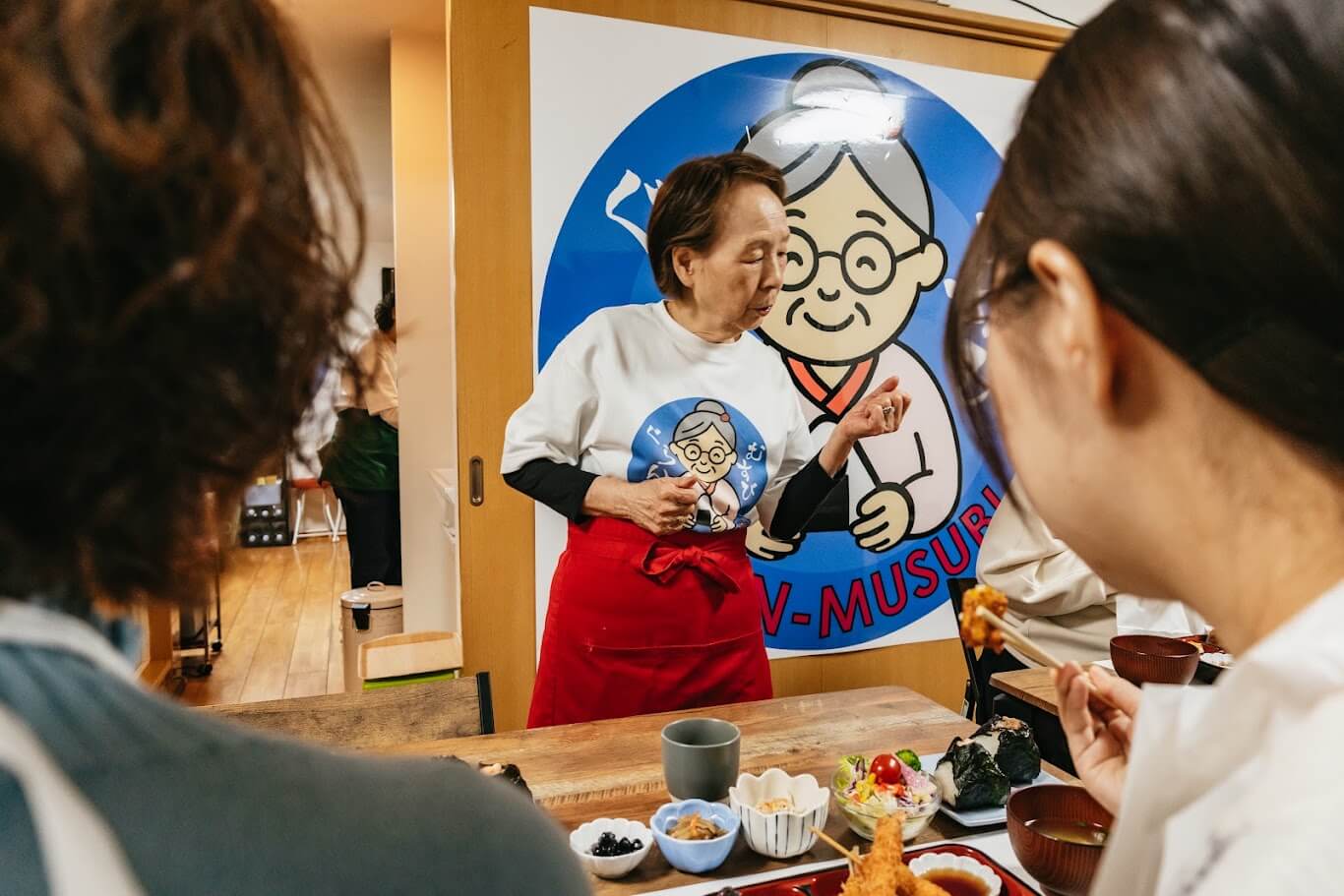
The session is led by an 80-year-old Japanese grandmother in a group of no more than 6 guests, which keeps the lesson personal and easy to follow. After washing your hands, you choose 1 filling from 6 options, watch her make 1 musubi as a demonstration, and then make 3 musubi of your own. An assistant translates everything into English, so the class works well for international visitors while keeping the teaching style rooted in Japanese home cooking.
Once your musubi are ready, you eat them while a homemade teishoku meal is prepared for you. This includes miso soup, salad, dessert, and a drink. The experience is not a restaurant tasting or a city tour. It is a practical introduction to a daily Japanese food tradition, taught in a small setting in Ginza.
What You Will See on the Onigiri and Musubi Class with a Tokyo Grandma
Ginza
Ginza is one of Tokyo’s best-known central districts and was rebuilt as a modern commercial area after a major fire in 1872. Its broad streets and long history of department stores, specialty shops, and food businesses made it one of the city’s early symbols of modernization in the Meiji period.
Holding a home-style rice-ball class in this part of Tokyo creates an interesting contrast. Ginza is often associated with polished retail and formal dining, while this activity introduces a simple domestic food that belongs to school lunches, convenience stores, family kitchens, and everyday meals across Japan.
The Class Format
The experience lasts about 1.5 hours and is limited to 6 guests. That small size matters because shaping musubi depends on hand pressure, rice texture, and careful handling. You are close enough to follow the demonstration clearly and then try the same technique yourself.
The class follows a clear sequence: wash your hands, hear a short explanation about musubi and onigiri, choose 1 filling from 6 options, watch the grandmother make 1 musubi, and make 3 of your own. The lesson is conducted in Japanese and fully translated into English by an assistant.
Your Musubi and Teishoku Meal
You make 3 musubi during the class, all with the filling you select from the available 6 options. Afterward, you eat your musubi as part of an included homemade teishoku meal.
Teishoku is a Japanese set meal built around multiple components rather than a single dish. Here it includes miso soup, salad, dessert, and a drink. That gives the class more context than a simple snack lesson, showing how rice-based foods fit into a broader home-style meal.
What Is Included
Your booking includes the cooking class, 3 musubi with your chosen filling, and the teishoku meal with miso soup, salad, dessert, and a drink. The guide languages are Japanese and English through the assistant’s translation. Free cancellation is available up to 24 hours before the start, and you can reserve now and pay later.
Tips to Enjoy the Onigiri and Musubi Class with a Tokyo Grandma
✔️ Arrive a little early in the Ginza area, as the exact venue details are provided with your booking rather than described as a sightseeing stop.
✔️ Eat lightly before the class. You will have 3 musubi plus miso soup, salad, dessert, and a drink.
✔️ If you are traveling with dietary restrictions, check carefully before booking. This activity is not suitable for vegans or vegetarians.
✔️ Children under 6 cannot join, so confirm ages before reserving if you are booking as a family.
✔️ Ask questions during the translated explanation if you are curious about the difference between musubi and onigiri. That cultural context is one of the most useful parts of the session.
✔️ Keep your phone or camera ready for the shaping process and finished meal, but be mindful that the setting is small and shared with up to 5 other guests.
The Best of Tokyo
Tokyo is especially rewarding for travelers interested in food because everyday dishes and formal cuisine sit side by side across the city. In the same trip, you might eat sushi, ramen, tempura, or monjayaki, then join a class like this one to understand how simple rice dishes such as musubi fit into daily life. Ginza also works well as a base for combining food stops with shopping and walks through central Tokyo.
To go deeper into the food behind the class, read our guide to traditional food in Tokyo, or see why grandmothers keep food traditions alive.
Frequently Asked Questions
How long does the Onigiri and Musubi Class with a Tokyo Grandma last?
The class lasts about 1.5 hours.
Where does the Onigiri and Musubi Class with a Tokyo Grandma take place?
It takes place in the Ginza area of Tokyo. The exact meeting location is provided after booking.
How many people are in the class?
The class is limited to a maximum of 6 guests.
What happens during the class?
You wash your hands, hear a short explanation about musubi and the difference between musubi and onigiri, choose 1 filling from 6 options, watch 1 demonstration musubi being made, then make 3 musubi yourself. After that, you eat while the included teishoku meal is prepared.
What food is included?
The booking includes 3 musubi that you make yourself, plus a homemade teishoku meal with miso soup, salad, dessert, and a drink.
What language is the class conducted in?
The class is taught in Japanese, with an assistant translating everything into English. English and Japanese are the working languages.
Is this a sightseeing tour?
No. This is a cooking class in the Ginza area rather than a guided sightseeing tour.
Is the activity suitable for vegetarians or vegans?
No. The class is not suitable for vegans or vegetarians.
Popular Activities in Japan

Free Tour of Asakuza

Nikko

Mount Fuji
