

The Murano and Burano Excursion explains a side of Venice that is easy to miss if you stay only around Saint Mark’s Square and the Grand Canal. Murano became the center of Venetian glassmaking in 1291, when many furnaces were moved there for safety reasons, and Burano developed a reputation for lace and fishing. Visiting both islands on the same trip shows how specialized trades were spread across the lagoon and how Venice functioned as a system of connected communities rather than a single monumental center.
This excursion usually includes boat transfers across the lagoon, time in Murano to understand glass production, and a stop in Burano to walk along canals lined with painted houses. You see working areas tied to old crafts, island streets shaped by daily life on the water, and landscapes that feel very different from central Venice. It is a practical route for travelers who want historical context as well as time to look around on their own.
It is also a useful introduction to the geography of Venice, where movement by boat has always mattered as much as movement on foot. With a guide in English, the visit is easier to follow and the stops make more sense in their historical setting. If you want to add the main city sights to your day, a free tour in English in Venice pairs well with this island excursion.
What You Will See on Murano and Burano Excursion
Boat Ride Across the Venetian Lagoon
The crossing is part of the experience, not just transport between stops. From the water, you can better understand why Venice depended on lagoon routes for commerce, defense, and communication, and why its islands developed with different economic roles.
Murano Glassmaking Tradition
Murano has been associated with glass for more than seven centuries. The transfer of furnaces in 1291 helped protect Venice from fires, but it also concentrated technical knowledge on the island, where glassmakers refined methods that gave Murano an international reputation.
Glass Demonstration in Murano
Seeing a live demonstration helps explain the speed, control, and heat involved in glassmaking. It also gives you a clearer sense of why handmade Murano pieces differ in finish, detail, and price from factory-made items sold elsewhere.
Burano’s Colorful Houses and Canals
Burano is known for rows of brightly painted houses along narrow canals and small streets. The strong colors are part of the island’s visual identity today, and they are closely tied to Burano’s history as a working fishing community.
Burano Lace Heritage
Burano’s lace tradition became especially important from the 16th century, when Venetian lace was sought after by elite clients across Europe. This part of the excursion adds social history to the visit, since lacework was closely connected to women’s labor and household production on the island.
Free Time to Walk and Take Photos
Most excursions leave some free time on the islands. This is when you can notice smaller details such as workshop windows, boats tied along the canals, laundry lines, corner bridges, and shop displays that are easy to miss while following the group.
Tips to Enjoy Murano and Burano Excursion
✔️ Arrive at the meeting point early, because boats leave on schedule and the departure dock can be confusing if the area is busy.
✔️ Bring sun protection in spring and summer, since the boat ride and many parts of Murano and Burano have little shade.
✔️ Wear comfortable shoes with good grip, especially around docks, bridges, and canal edges where surfaces can be smooth or wet.
✔️ If you plan to buy Murano glass, ask whether the piece is handmade on Murano and check shipping options for fragile items.
✔️ In Burano, use your free time for a short walk away from the main landing area, where the quieter canals are often better for photos.
✔️ Check the weather forecast before departure, because wind and rain are felt more strongly on the boat than in the streets of central Venice.
The Best of Venice
Venice is known for Saint Mark’s Basilica, the Doge’s Palace, the Grand Canal, and a lagoon made up of many islands with distinct identities. Its food is also closely linked to the water and to Venetian bar culture. Typical dishes include sarde in saor, sweet and sour sardines with onion, and risotto al nero di seppia, made with cuttlefish ink. For a lighter stop, many visitors try cicchetti in traditional bàcari, often with seafood toppings or salt cod. If you want broader historical context before or after the island trip, a free tour in Venice is a useful complement.
Tours & Activities in Venice
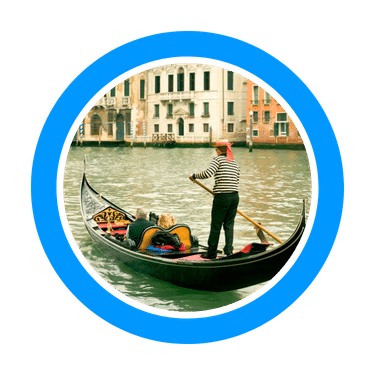
Venice Canals Gondola Ride
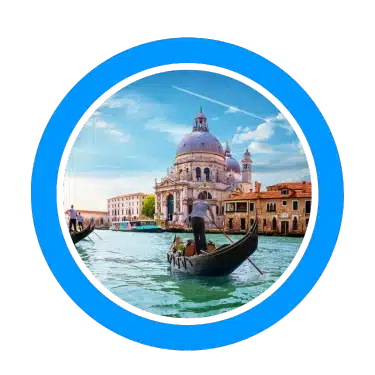
Free Tour of Venice
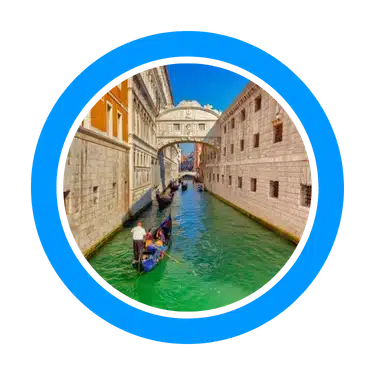
Bridge of Sighs Gondola
Frequently Asked Questions
How long does Murano and Burano Excursion last?
Most excursions take several hours, since the total includes boat travel, the stop in Murano, and free time in Burano. The exact duration depends on the departure you book, so it is worth checking the timetable in advance if you have other plans the same day.
Where does Murano and Burano Excursion start?
The excursion starts from a meeting point in Venice near the departure dock. Your booking confirmation gives the exact place, and it is important to check it carefully because Venice has several boat departure areas.
What language is Murano and Burano Excursion conducted in?
The tour is conducted with a guide in English.
Is admission included in Murano and Burano Excursion?
Boat transport is usually included, and many departures also include a glass demonstration in Murano. Other inclusions can vary, so check the booking details to confirm exactly what is covered.
Do I need to book in advance?
Booking in advance is recommended, especially in high season, on weekends, and during holiday periods when departures can fill up quickly.
Is Murano and Burano Excursion accessible for people with reduced mobility?
Accessibility depends on the boat, the docking conditions, and the walking route on each island. Before booking, check with the provider about boarding assistance, step-free access, and the amount of walking required.
Can children participate in Murano and Burano Excursion?
Yes, this excursion is often suitable for children. The boat ride, the glass demonstration in Murano, and the colorful streets of Burano usually hold their attention better than a standard museum visit.
Is photography allowed during Murano and Burano Excursion?
Photography is generally allowed outdoors and during the boat ride. In Murano workshops, rules can vary during the glass demonstration, so follow the guide’s instructions and any signs on site.
What is the best time of year to visit Venice?
Spring and early autumn are usually the most comfortable periods for this excursion, with milder temperatures and better conditions for walking and boat travel. Summer has longer days but stronger heat and more crowds, while winter is quieter but can bring colder weather, wind, and occasional high water.
