

Guided tour
Private Walking Tour of Zaragoza
9.6 Exceptional · 45 reviews (as of Nov 2026) Free cancellation
Choose your date
Civitatis displays availability and confirms bookings on its own site.
Zaragoza is one of the few Spanish cities where Roman, Islamic, Mudéjar, Renaissance and Baroque layers still sit within the same walkable centre. The route through its old town crosses ground that was once enclosed by the Roman walls of Caesaraugusta, the city founded in the name of Emperor Augustus. In about 2 hours, a private guide introduces traces of the Roman city, the Ebro riverfront, La Seo and the Basilica of Our Lady of the Pillar within the historic centre.
You will explore Zaragoza’s historic centre on a private walking tour reserved only for your group. The route includes the ruins of the ancient walled city, the Ebro River, the archaeological remains of the Roman Theatre, the Cathedral of the Saviour and the Basilica of Our Lady of the Pillar. An English-speaking guide with expert knowledge of Zaragoza’s history is included. Entrance to museums and monuments is not included.
The tour is conducted in English and can finish either at the original meeting point in Plaza de España or at another spot in the city centre. That flexibility is useful if you want to continue on foot afterwards around Plaza del Pilar, the Roman sites or the riverside.
What You Will See on the Private Walking Tour of Zaragoza
Plaza de España and the Historic Centre
The walk starts in Plaza de España, one of the main gateways into Zaragoza’s old town. From here, the route moves into streets where the layout still reflects the long transition from Roman Caesaraugusta to the medieval and early modern city.
Ruins of the Ancient Walled City
Zaragoza was a Roman colony, and the remains of its ancient enclosure are among the clearest signs of that origin. These fragments point back to Caesaraugusta, the only Roman city named after Augustus, and show how the early settlement shaped the later historic core.
The Ebro River
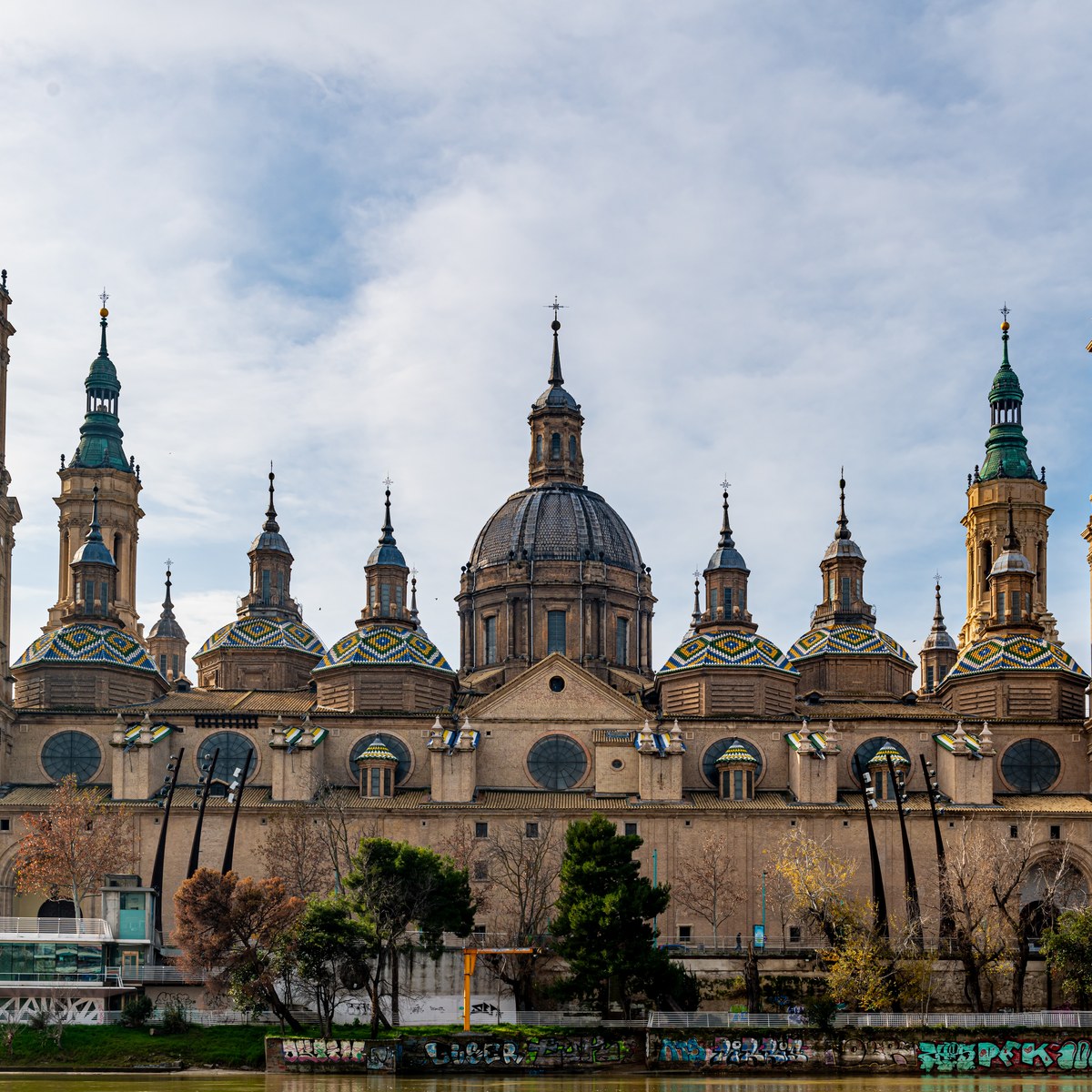
The Ebro is the longest river entirely within Spain and has shaped Zaragoza’s role for centuries as a crossing point between inland regions. From the riverfront, you can see how the city’s major religious buildings were placed close to the water, creating the skyline most associated with Zaragoza.
Archaeological Remains of the Roman Theatre
The Roman Theatre is one of the key archaeological sites in Zaragoza and a direct link to the city’s classical past. Its remains reveal the scale of public life in Caesaraugusta, when theatres served civic display as well as performance.
Cathedral of the Saviour
The Cathedral of the Saviour, commonly known as La Seo, stands on a site that has held religious importance for centuries. It is one of Zaragoza’s most layered monuments, combining Romanesque, Gothic, Mudéjar and Baroque elements in the same building.
Basilica of Our Lady of the Pillar
The Basilica of Our Lady of the Pillar is one of Spain’s best-known pilgrimage churches and the defining monument on Zaragoza’s riverfront. Its large Baroque mass, towers and domes dominate the Ebro side of the old town and connect the city’s identity with a long Marian tradition.
Tips to Enjoy the Private Walking Tour of Zaragoza
✔️ The meeting point is Plaza de España, a large junction with heavy foot traffic and several exits into the old town. It is worth locating the square on a map before the day of the tour and aiming to arrive 10 to 15 minutes early so you are not searching among the tram, bus and shopping flows at the last minute.
✔️ If you want the clearest exterior views of the Basilica del Pilar, plan your photos for the riverfront stretch or continue afterwards to Puente de Piedra. Morning light usually works better on the Ebro side than the harsher midday sun, especially in the open areas near the embankment.
✔️ Entry to monuments is not included, so if you want to go inside La Seo or the Museo del Teatro de Caesaraugusta after the walk, keep extra time free after the 2-hour route. These would be independent follow-up visits rather than part of the guided tour route, so leave at least another hour if you want to add interiors on the same day.
✔️ If reduced mobility is an issue, mention it when booking rather than on arrival. Only some areas are accessible, and accessibility needs must be indicated in the reservation. Accessible toilets are available, and a paid wheelchair loan service exists.
✔️ The tour can finish back at Plaza de España or elsewhere in the centre, so decide before the walk what suits your plans. Ending near Plaza del Pilar is practical if you want to continue to La Seo, the riverfront or lunch in the old town without retracing the route.
✔️ Pets are not allowed on this tour, so arrange accordingly before the day of the visit. That matters in central Zaragoza because the route focuses on busy pedestrian areas around Plaza de España, La Seo and the Basilica, where stopping to sort out pet access can disrupt the walk.
What Else to See in Zaragoza
Aljafería Palace
The Aljafería is Zaragoza’s main Islamic monument, built in the 11th century as a taifa palace. It is the clearest follow-up to a walking tour about the city’s historical layers because it shows the Islamic period that shaped Zaragoza before later Christian and Mudéjar additions.
Puente de Piedra
This historic stone bridge gives one of the clearest views of the Basilica of Our Lady of the Pillar and the Ebro riverfront. It also helps explain why control of river crossings mattered so much to Zaragoza’s trade, defence and urban development.
Museo del Foro de Caesaraugusta
The Forum Museum adds context to the Roman remains seen during the walk by focusing on the civic heart of ancient Caesaraugusta. It is a good next stop if the theatre, walls and Roman street pattern leave you wanting a fuller understanding of the Roman city.
The Best of Zaragoza
The real strength of this walk is how clearly Zaragoza’s story unfolds on foot. The route links Roman Caesaraugusta, the river that shaped the city, La Seo’s layered architecture and the Basilica of the Pillar in one compact section of the old town. Rather than offering a generic overview, it shows how Zaragoza’s major monuments relate to each other within the same historic centre.
That same continuity also carries into the streets around the route. After the walk, the area around Plaza del Pilar and the lanes connecting it with Plaza de España are a practical place to stay for lunch, Roman museums or a second look at the cathedral and basilica exteriors.
If you want to keep exploring on foot afterwards, continuing through the old town works especially well because many of Zaragoza’s key historical sites remain within a short walking distance of where the tour ends.
Frequently Asked Questions
How long does the Private Walking Tour of Zaragoza last?
The tour lasts 2 hours. It is designed as a compact walk through Zaragoza’s historic centre, covering key Roman and religious landmarks without taking up a full half day.
Where does the Private Walking Tour of Zaragoza start?
The tour starts at Plaza de España in Zaragoza. It can end either back at the meeting point or at another place in the city centre, which is useful if you want to continue sightseeing on foot. Check your booking confirmation before you go, as the exact meeting point can change for seasons, events or roadworks.
What language is the Private Walking Tour of Zaragoza conducted in?
The tour is conducted in English. You will be accompanied throughout by an English-speaking guide with specialist knowledge of Zaragoza’s history.
Is admission included in the Private Walking Tour of Zaragoza?
No. The price covers the private guided walk, but entrance to museums and monuments is not included. If you want to visit places such as La Seo or the Roman Theatre site afterwards, plan separate time for those stops.
Do I need to book in advance?
You can book up to 2 days in advance if there are seats left. Free cancellation is available up to 48 hours before the activity starts, while later cancellations and no-shows are not refunded.
Is the Private Walking Tour of Zaragoza accessible for people with reduced mobility?
Only some parts of the route are accessible, and reduced mobility needs should be indicated in the reservation. Accessible toilets are available, and a paid wheelchair loan service exists.
What is the best time of year to visit Zaragoza?
Spring and autumn are usually the most comfortable seasons for a 2-hour city walk, especially in open stretches near the Ebro. In summer, earlier morning or later afternoon is usually more practical than the middle of the day.
Popular Activities in Spain
Free Tour of Madrid
Free Tour of Torremolinos

Free Tour of Marbella
