


Visiting Fushimi Inari at night is one of the most atmospheric experiences in Kyoto. During the day, the shrine is famous for its thousands of red torii gates, busy walking paths, and steady crowds. After dark, the mood changes completely. The crowds thin out, the forest becomes quieter, and the lantern-lit paths feel more mysterious.
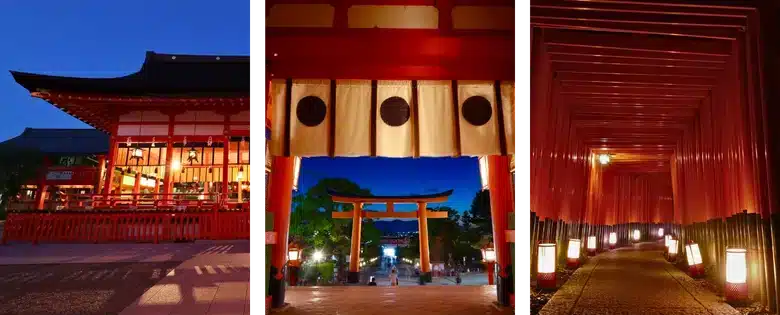
The big question is whether Fushimi Inari is worth visiting at night. For many travelers, the answer is yes, especially if you want fewer crowds, dramatic photos, and a more contemplative walk through one of Kyoto’s most iconic places. However, a night visit is not for everyone. The trail is darker, the atmosphere can feel isolated, and you need to plan your timing, route, and return transport carefully.
This guide explains what to expect when visiting Fushimi Inari after dark, including safety, lighting, how far to walk, the best time to go, and whether a guided night tour is worth it.
Quick Answer
Yes, Fushimi Inari is worth visiting at night if you want a quieter and more atmospheric experience than the daytime visit. The shrine grounds are usually accessible after dark, and the lower sections of the torii gate path can feel especially beautiful when the crowds disappear.
That said, night is not the best time for everyone. If this is your first visit to Kyoto and you want to see the bright red gates clearly, take classic photos, or understand the shrine’s details, daytime may be better. If you want mood, silence, and a different side of Kyoto, night can be unforgettable.
Fushimi Inari at Night: Quick Comparison
| Feature | Night Visit | Day Visit |
|---|---|---|
| Best for | Atmosphere, fewer crowds, moody photos | Classic photos, shrine details, first-time visitors |
| Crowds | Much quieter | Often very busy |
| Visibility | Lower, especially higher on the trail | Clear and easy |
| Atmosphere | Mysterious, calm, slightly eerie | Bright, energetic, iconic |
| Photography | Dramatic but harder | Easier and more colorful |
| Safety | Generally okay with caution | Easier and more comfortable |
| Best route | Lower shrine and partial torii walk | Full hike or extended visit |
| Guide needed | Useful but not required | Less necessary |
Independent Visit vs Guided Night Tour
An independent visit is best if you are comfortable navigating on your own, want flexibility, and only plan to walk the lower sections. It is free, simple, and easy to combine with dinner or other evening plans in Kyoto.
A guided night tour is better if you want storytelling, cultural context, and a more structured experience. It can also be a good option for solo travelers who do not want to walk the shrine paths alone after dark. If you want a guided option, this two-hour Fushimi Inari night walking tour covers the main torii gate sections with an English-speaking local guide and departs from the shrine entrance.
Choose independent if you want freedom. Choose a guide if you want context and comfort.
Is Fushimi Inari Open at Night?
Fushimi Inari is generally accessible at night, unlike many temples and gardens in Kyoto that close in the late afternoon. This is one of the reasons it works so well as an evening or late-night stop.
However, some facilities, shops, food stalls, and shrine services may be closed after regular daytime hours. A night visit is mainly about walking through the shrine grounds and torii gate paths, not about a full daytime visitor experience.
Before going, check your transport options and avoid assuming that everything around the shrine will be open late.
Is Fushimi Inari Safe at Night?
Fushimi Inari is generally considered safe at night, especially in the lower sections near the main shrine and the beginning of the torii gate path. Kyoto is a safe city overall, and many travelers visit the shrine after dark without problems.
Still, the experience can feel isolated as you walk farther uphill. The trail passes through wooded areas, lighting can vary, and there may be long stretches with few people. This is part of the atmosphere, but it also means you should use normal caution.
If you are nervous, visiting with a companion or joining a guided night walk can make the experience more comfortable.
Safety Tips for Visiting Fushimi Inari at Night
A night visit is simple, but it is still a shrine trail on a mountain. Prepare accordingly.
Bring a charged phone, wear comfortable shoes, and avoid carrying too much. A small flashlight or phone light can be useful, especially if you continue beyond the lower gate sections. Stay on the marked paths, avoid side trails, and turn back if the route feels too quiet or uncomfortable.
If you are visiting alone, consider going earlier in the evening rather than late at night. You will still get the night atmosphere, but with a better chance of seeing other visitors around the lower sections.
How Far Should You Walk at Night?
You do not need to hike all the way to the summit to enjoy Fushimi Inari at night. In fact, most visitors will be satisfied with the lower and middle sections of the torii gate route.
The most famous part of the shrine is the dense torii gate corridor near the beginning of the trail. This area gives you the classic Fushimi Inari feeling without requiring a long or dark hike.
If you want a deeper experience, you can continue farther uphill, but keep in mind that the path becomes quieter and more forested. The full hike can take two to three hours round trip depending on pace, stops, and route. At night, most travelers should avoid pushing too far unless they are confident, prepared, and comfortable walking in low light.
Best Time to Visit Fushimi Inari at Night
The best time to visit Fushimi Inari at night is usually early evening, after sunset but before it gets too late. This gives you the night atmosphere while still keeping the visit practical.
Around sunset, you may still encounter some crowds, especially during peak travel seasons. Later in the evening, the shrine becomes quieter, but the trail can also feel more isolated.
A good plan is to arrive shortly before or just after sunset. You can see the transition from daylight to darkness, take photos while there is still some light, and then experience the torii gates after the crowds begin to fade.
Is Fushimi Inari Better at Night or During the Day?
Fushimi Inari is not simply better at night or during the day. It depends on what you want.
Daytime is better if you want bright photos, clear visibility, open shops, more people around, and a complete first-time visit. The red torii gates look more vivid in daylight, and it is easier to appreciate shrine details, fox statues, smaller altars, and the surrounding forest.
Night is better if you want fewer crowds, atmosphere, and a more unusual Kyoto experience. The torii gates feel more mysterious, and the walk becomes quieter and more personal.
If this is your first visit and you have enough time, the ideal option is to visit late afternoon and stay until after dark.
Fushimi Inari at Night for Photography
Fushimi Inari can be beautiful at night, but it is more challenging for photography than daytime. Low light makes handheld shots harder, and the strong contrast between lanterns, shadows, and red gates can be tricky.
Still, night photography here can be very rewarding. The empty torii corridors, soft lighting, and quiet forest atmosphere create images that feel different from the usual crowded daytime shots.
For the best results, arrive around blue hour, just after sunset. This gives you a mix of remaining sky light and shrine illumination. If you come too late, the photos may become much darker and harder to capture without specialized equipment.
Do You Need a Guide for Fushimi Inari at Night?
You do not need a guide to visit Fushimi Inari at night, especially if you plan to stay near the lower shrine and main torii gate paths. The route is relatively easy to follow, and many travelers visit independently.
However, a guide can be useful if you want more context, feel nervous about walking after dark, or want to experience the shrine as part of a broader Kyoto night itinerary. A guided night walk can also help you understand the meaning of the shrine, the fox statues, the torii gates, and the spiritual atmosphere of the mountain.
What to Expect from the Atmosphere
At night, Fushimi Inari feels less like a tourist attraction and more like a sacred mountain path. The bright daytime energy gives way to silence, shadows, and the occasional sound of footsteps. The torii gates feel more enclosed, and the forested sections can feel surprisingly remote despite being close to the city.
Some travelers find this magical. Others may find it slightly eerie. Both reactions are understandable.
If you enjoy quiet places, spiritual atmosphere, and walking through historical sites when the crowds are gone, you will probably love it. If you prefer lively places, easy visibility, and a more social setting, daytime may be better.
How to Get to Fushimi Inari at Night
Fushimi Inari is easy to reach by train. The shrine is close to Inari Station on the JR Nara Line and Fushimi-Inari Station on the Keihan Main Line. From central Kyoto, the trip is usually straightforward.
The key point is your return journey. Before visiting late at night, check the final train times or plan an alternative return by taxi. This is especially important if you continue farther up the mountain and lose track of time.
If you are staying near Kyoto Station, the JR route is usually convenient. If you are staying near Gion, Sanjo, or other areas served by Keihan, the Keihan line may be easier.
What to Bring
You do not need hiking gear for a short night visit, but a few basics make the experience better.
Bring water, comfortable shoes, a charged phone, and a light layer if visiting in cooler months. A small flashlight can help if you go beyond the lower torii gate area. Avoid slippery shoes, especially if it has rained.
If you plan to take photos, bring a camera that handles low light well, or be ready to use night mode on your phone.
Best Route for a Short Night Visit
For a simple night visit, focus on the lower shrine area and the main torii gate paths. This gives you the iconic Fushimi Inari atmosphere without committing to the full mountain hike.
A good short route could look like this:
- Arrive at Inari Station or Fushimi-Inari Station.
- Walk to the main shrine entrance.
- Explore the lower shrine grounds.
- Enter the main torii gate path.
- Walk through the famous dense gate section.
- Continue until the route feels quiet enough for your comfort level.
- Turn back and return to the station.
This route is enough for most travelers who want the night atmosphere and classic torii gate experience.
Can You Hike to the Summit at Night?
You can continue far up the trail at night, but it is not necessary for most visitors. The summit route takes longer, becomes quieter, and may feel much darker in places.
If you are experienced, prepared, and comfortable hiking after dark, it can be done. But casual travelers should not feel pressured to reach the top. The most memorable parts of the shrine for many visitors are closer to the lower and middle sections.
At night, it is better to enjoy the atmosphere safely than to turn the visit into a full summit challenge.
Fushimi Inari at Night by Traveler Type
First-Time Visitors
If Fushimi Inari is one of your top Kyoto priorities, consider visiting during the day or late afternoon first. Night is beautiful, but daytime gives you more detail.
Photographers
Visit around blue hour or early night. You will get atmosphere without losing all natural light.
Solo Travelers
Go earlier in the evening, stay on the main path, and consider a guided night tour if you feel uneasy.
Couples
Fushimi Inari at night can be romantic and memorable, especially if you stay in the lower sections and avoid going too late.
Families
A daytime visit is usually easier with children. If visiting at night, keep the route short and stay near the main shrine and lower gates.
Repeat Visitors
Night is perfect if you have already seen Fushimi Inari during the day and want a different mood.
Practical Tips Before You Go
Fushimi Inari at night is best approached as a quiet walk, not a rushed sightseeing stop. Give yourself enough time to arrive, walk slowly, take photos, and return without worrying about trains.
Check the weather before going. Rain can make the steps slippery, while hot summer nights can still feel humid and tiring. Respect the shrine atmosphere, keep noise low, and avoid blocking paths for long photo sessions.
Most importantly, do not feel obligated to hike farther than you want. The lower torii gate sections are already worth the visit.
Final Verdict: Should You Visit Fushimi Inari at Night?
Yes, Fushimi Inari is worth visiting at night if you want fewer crowds, a quieter atmosphere, and a more mysterious version of one of Kyoto’s most famous places. It is especially rewarding for repeat visitors, photographers, couples, and travelers who enjoy spiritual or atmospheric sites.
For a first-time visitor who wants classic photos and shrine details, daytime or late afternoon may be better. For the best balance, arrive before sunset and stay into the evening.
Fushimi Inari at night is not about checking off every viewpoint. It is about walking through the torii gates when the mountain feels calm, shadowed, and alive in a different way.
FAQ: Fushimi Inari at Night
Is Fushimi Inari open at night?
Yes, the shrine grounds are generally accessible at night, although shops, facilities, and services may be closed after daytime hours.
Is Fushimi Inari safe at night?
Fushimi Inari is generally safe at night, especially in the lower sections, but use normal caution. Stay on the main path, bring a charged phone, and avoid hiking too far alone late at night.
Is Fushimi Inari worth visiting after dark?
Yes, it is worth visiting after dark if you want fewer crowds, a quieter atmosphere, and a more mysterious experience than the daytime visit.
How far should you walk up Fushimi Inari at night?
Most travelers only need to walk through the lower and middle torii gate sections. You do not need to reach the summit to enjoy the night atmosphere.
Do you need a guide for Fushimi Inari at night?
No, a guide is not required. However, a guided night walk can be useful if you want cultural context, safety confidence, or a more structured experience.
Is Fushimi Inari better at night or during the day?
Daytime is better for classic photos and shrine details. Night is better for atmosphere, fewer crowds, and a more unusual experience.
Can you take photos at Fushimi Inari at night?
Yes, but low light makes photography more challenging. Blue hour or early evening is usually better than very late at night.
How do you get to Fushimi Inari at night?
You can reach Fushimi Inari by train using Inari Station on the JR Nara Line or Fushimi-Inari Station on the Keihan Main Line. Check return train times before visiting late.
Is Fushimi Inari crowded at night?
It is usually much quieter at night than during the day, although early evening and peak travel seasons may still bring some visitors.
Can you hike to the summit of Fushimi Inari at night?
It is possible, but most casual travelers do not need to. The route becomes quieter and darker as you climb, so only continue if you are prepared and comfortable.