


Istanbul runs on water, slopes, and memory. The Bosphorus cuts between two continents, ferries stitch the shores together all day, and the old land walls still trace the edge of what was once Constantinople, a city that outlived empires and changed names without losing its habits.
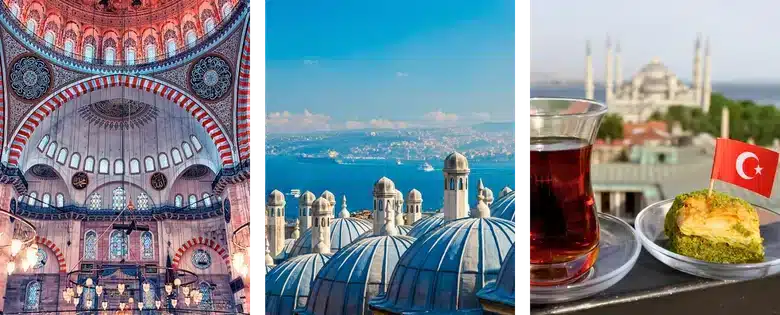
You can spend plenty here, but you do not need to. These 10 free or low-cost plans give you a grounded way to read the city through its streets, views, rituals, and daily noise.
Join a Free Tour of Istanbul
The cost is tip-based, so there is no fixed ticket price at the start. A free tour of Istanbul is useful once you have already walked a bit on your own and want someone to connect the dots properly. The stronger routes usually focus on Sultanahmet and the Historic Peninsula, with specific stops or exterior explanations around Hagia Sophia, the Blue Mosque, the Hippodrome, the German Fountain, Basilica Cistern surroundings, and the climb toward areas such as Süleymaniye or the Grand Bazaar.
At the end, visitors decide how much to pay based on what they felt the experience was worth. That pay-what-you-want model can attract mixed crowds, but in a city as layered as Istanbul it often works well because a sharp local guide can explain, in one walk, why a former Byzantine capital now reads through Ottoman külliyes, republican squares, ferry routes, and market streets.
Cross Galata Bridge on Foot
Galata Bridge is more than a crossing between Eminönü and Karaköy. It is one of the few places in the city where fishermen, office workers, ferry passengers, and tea sellers all occupy the same strip of concrete at once, and that mix tells you a lot about Istanbul in a very short distance. The current bridge dates from the 1990s, but earlier versions became such a fixture of urban life that Ottoman writers used them as shorthand for the city’s social variety.
Walk it slowly and look in both directions instead of treating it as a shortcut. Early morning is best if you want to watch the first lines going into the water and catch the mosques of the Historic Peninsula in a softer light, while the lower level is useful for a tea stop if the wind picks up.
Climb Pierre Loti Hill
Admission is free. Pierre Loti Hill overlooks the Golden Horn from Eyüpsultan, and despite the name, locals have long used it less for literary nostalgia than for funerals, tea, and long pauses above the city. The hill is named after the French writer Julien Viaud, who wrote under the pen name Pierre Loti and spent time in Istanbul, but the real weight of the place comes from its position above one of the city’s most conservative and historically layered districts.
Take your time at the top and look past the café tables toward the curve of the inlet and the packed neighborhoods beyond it. Late afternoon works well, especially once the heat drops, and it is worth knowing that the nearby Eyüp Cemetery on the slope is one of the oldest and most significant Muslim burial grounds in the city, so a quiet, respectful pace matters here.
Browse the Grand Bazaar
Admission is free. The Grand Bazaar is not a museum piece preserved behind glass but a working commercial district whose basic structure goes back to the 15th century, soon after the Ottoman conquest. Many visitors focus on carpets and lamps, but the more revealing story is in its internal trade geography: the bazaar grew around bedestens, hans, and streets devoted to particular crafts, and some lane names still preserve those older specializations even when the goods have changed.
Wander without trying to conquer every corridor. Look up at painted vaults, inspect the heavy stone hans tucked behind the main flow, and notice how quickly the mood shifts once you leave the most theatrical aisles. I think the bazaar is at its best in the first hours after opening, when shopkeepers are hauling in stock and sweeping thresholds, because that is when it still feels like Istanbul working rather than Istanbul performing for cameras.
Visit Süleymaniye Mosque
Admission is free. Süleymaniye Mosque is one of Mimar Sinan’s major works, built in the 16th century for Sultan Süleyman I on one of the city’s highest hills. What sets it apart is not only scale but planning: this was conceived as a full social complex with kitchens, schools, a hospital, and caravanserai functions, which says more about Ottoman urban life than a quick glance at the dome ever will. Even the acoustic design has its own lore, with Sinan said to have used suspended vessels to help control sound inside the prayer hall.
Spend time in the courtyard before entering, then step inside and notice how the light is managed rather than simply poured in. Mid-morning outside prayer times is usually the easiest moment for a calm visit, and modest dress is expected, with head coverings available for women near the entrance if needed.
Watch the Ferries at Kadıköy Pier
Admission is free. Kadıköy Pier on the Asian side is one of the best places to understand that Istanbul is a commuter city before it is a postcard city. The movement here matters because ferries have shaped daily life for generations, and even after bridges and tunnels, many regulars still choose the boat for the rhythm, the air, and the simple fact that sea traffic remains part of how the city thinks.
Stand by the waterfront, watch arrivals and departures, and follow the changing calls from simit sellers and seagulls circling the decks. Sunset is the obvious hour, but weekday mornings are better if you want the place in working mode, and nearby benches fill quickly on mild evenings so arrive a little earlier if you want to sit.
Wander Balat Streets
Admission is free. Balat, along the Golden Horn, is often reduced to colorful façades, but its deeper story lies in how Greek Orthodox, Armenian, Jewish, and Muslim communities lived in close quarters here over centuries. One concrete detail that tends to get skipped is that the neighborhood absorbed many Sephardic Jews after 1492, and traces of that migration shaped local trade, language, and religious life for a very long time. It is also the district of the Ahrida Synagogue, whose bimah is said to have been built in the shape of a ship’s prow, a small but telling sign of how memory travels in this city.
Walk uphill and downhill instead of sticking only to the photographed lanes around Kiremit Caddesi and Merdivenli Yokuş. Notice workshops, schools, old apartment blocks, and laundry lines that make clear Balat is still lived in, not staged. I would avoid treating the area as an outdoor backdrop, because the best part is precisely the friction between heritage, repair, and ordinary neighborhood life.
Enter the Spice Bazaar
Admission is free. The Spice Bazaar, also called the Egyptian Bazaar, has been tied to trade routes and religious endowments since the 17th century, when its revenues helped support the Yeni Mosque complex nearby. Its Turkish name, Mısır Çarşısı, points to the old Ottoman link with Egypt, whose taxes and goods helped feed the imperial economy. That history is more interesting than the usual perfume-of-cinnamon cliché, and you can still feel it in the place’s stubbornly practical rhythm.
Move beyond the central aisle and look for older shop signs, stacked tins, and traders weighing goods by hand. Late morning is a good compromise between atmosphere and crowd level, and if you want to buy spices, compare prices at two or three stalls because quality and markups vary more than first-time visitors expect.
Explore Yıldız Park
Admission is free. Yıldız Park sits between Beşiktaş and Ortaköy on grounds that once formed part of the imperial gardens linked to Yıldız Palace. Unlike the more formal Ottoman spaces visitors usually prioritize, this area developed into a looser landscape of wooded paths, pavilions, and slopes, and it still carries the feel of a place meant for retreat rather than display. In the late 19th century, when Abdülhamid II shifted the political center toward Yıldız Palace, these grounds became part of a guarded world of court life, which gives the park a more political backstory than its picnic atmosphere suggests.
Follow the interior paths instead of staying near the entrances, and pause at the clearings where the Bosphorus appears through the trees. Weekday mornings are the quietest, especially outside school holidays, and the hills are real enough that a water bottle and comfortable shoes are not a bad idea.
Study the Theodosian Walls
Admission is free. The Theodosian Walls ran for roughly 6.5 kilometers across the peninsula and were one of the main reasons Constantinople resisted siege after siege for centuries. Built in the 5th century under Theodosius II, they were not a single barrier but a layered defense system with moat, outer wall, and inner wall, a level of military engineering that changed the city’s fate more than once. The section near Edirnekapı is especially worth your time, not least because the nearby land walls witnessed the final Ottoman assault of 1453 at one of the city’s most contested edges.
Walk a section slowly and pay attention to repairs in different brick and stone patterns, which reveal how often the fortifications were patched after earthquakes and attacks. Late afternoon gives the masonry more texture in photographs, and some stretches feel isolated, so it is better to stick to active areas with regular foot traffic.
Notice How the Golden Horn and Bosphorus Still Dictate the Day
The Bosphorus is not just scenery here, and neither is the Golden Horn. That is the thread worth holding onto from the first ferry wake to the last slope you climb above Eyüpsultan or Balat. Water and topography still decide where people gather, how they commute, where trade thickens, and which viewpoints acquire meaning. Istanbul may have changed names and rulers, but it still behaves like a city trained by currents, shorelines, and steep ground.