


Before you see Trinidad’s pastel facades or hear live music near Plaza Mayor, you can taste the town’s history in one detail that is easy to overlook: this is one of the few places in Cuba where a meal can still move naturally from cassava flatbread older than the colony to fish sauces shaped by Casilda’s coast and sugarcane drinks tied to the Valle de los Ingenios. Trinidad’s cooking is shaped by sugar estates, cattle country, nearby fishing grounds and a long habit of making do with what the region produced well: cassava, pork, river fish, shellfish, cane syrup and tropical fruit.
In this preserved colonial town, food still reflects central Cuba more than Havana, with Afro-Cuban techniques, Spanish pantry habits and old rural preparations that survived because the Escambray and the coast kept the local economy tied to the land.
A Trinidad cocktail workshop gives you a direct taste of the city’s most famous drink: canchánchara, the honey, lime and rum cocktail tied to local tradition. The 1 hour 30 minute class meets in Callejón de los Gallegos, costs about €12.50, and includes the ingredients plus a tasting of four cocktails, making it an easy activity to pair with a food-focused walk through the historic center.
Canchánchara is only the most visible entry point into Trinidad’s food culture. The same local logic runs through the town’s cassava breads, pork dishes, fish sauces, sugarcane drinks and rural stews, all shaped by the coast, the valley and the old plantation economy around central Cuba.
1. Casabe (Cassava Flatbread)
Casabe is the oldest food on this list, a thin, dry flatbread made from grated yuca brava, the bitter cassava that must be pressed and cooked to remove its toxic juice. It predates Spanish arrival and comes from Indigenous Taíno foodways that persisted in eastern and central Cuba long after many other native preparations disappeared from daily life. A lesser-known detail is that casabe lasted not only because it keeps well in the humidity, but because it was practical for mule transport through the interior, where bread made from wheat was expensive and perishable.
In Trinidad, ask for casabe at restaurants that work with regional products such as Taberna La Botija in the historic center, where it sometimes appears alongside pork or local spreads rather than as a standalone snack. You may also find it through private casas offering traditional dinners, especially if you ask in advance for comida criolla from the countryside around Trinidad rather than standard tourist menus.
2. Lechón Asado (Roast Suckling Pig)
Lechón asado is central Cuban feast food, usually prepared whole over charcoal or hardwood embers, basted with sour orange and garlic adobo until the skin tightens and the meat softens enough to pull apart. Around Trinidad, it belongs to Christmas Eve, family parties and rural gatherings, but it is also tied to the old pig-raising economy of the surrounding valleys, where smallholders traditionally fattened hogs on kitchen scraps, corn and root crops. One detail visitors often miss is that in Sancti Spíritus province the souring agent is often naranja agria when available, not lime, and older cooks insist it changes the aroma of the meat as much as its acidity.
In town, ask for roast pork at La Ceiba or Taberna La Botija, both in or near the historic center and both more likely than seafood-led menus to have recognizably Cuban pork dishes. If you are in Trinidad during December, ask your host about private paladares or family-run holiday meals, because that is when the strongest lechón often appears outside formal restaurant kitchens.
3. Ajiaco Criollo (Creole Stew)
Ajiaco is a thick, slow-cooked stew of viandas such as malanga, yuca, boniato, plantain and calabaza, often enriched with pork, beef or chicken depending on the household and the season. In Cuban food history it is often described as a metaphor for the island itself, but in Trinidad it remains something more practical: a rural pot meal designed to stretch mixed root crops and lesser cuts into a sustaining lunch. A useful distinction is that local cooks tend to keep the broth dense and earthy rather than refined, and older recipes from central Cuba sometimes included maize dumplings or bits of salted meat when fresh meat was scarce.
Look for ajiaco in family-run paladares rather than places built around seafood or international dishes. Restaurante San José is a good place to ask whether it is running as a daily special, and some casas particulares around the historic center will prepare it with notice for lunch. Order it at midday, when substantial cooked dishes are more common, and ask whether the kitchen makes it with mixed viandas in the central Cuban style.
4. Tamal en Cazuela (Corn Tamal Cooked in a Pot)
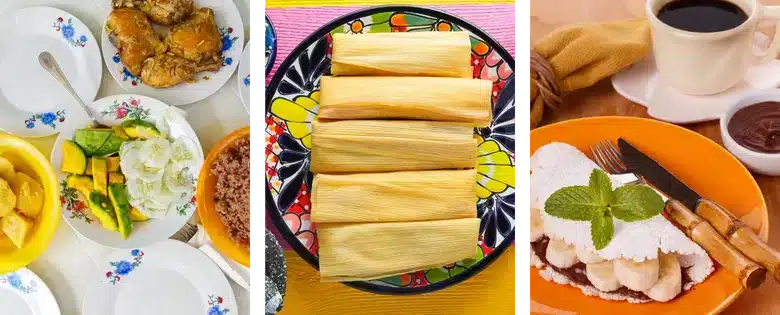
Tamal en cazuela takes the same fresh corn base used for tamales but cooks it loose in a pot with sofrito, pork, broth and sometimes tomato, rather than wrapping it in husks. It is a farmhouse dish tied to the corn harvest, especially in regions where preparing dozens of wrapped tamales was too labor-intensive for an ordinary weekday meal. A lesser-known point is that many Cuban cooks consider tamal en cazuela more revealing of a cook’s hand than the wrapped version, because texture can easily go wrong: too wet and it becomes porridge, too dry and it loses the soft grain of freshly ground maize.
In Trinidad, this is the kind of dish most likely to appear by arrangement in casas particulares cooking for guests, especially when produce is coming in from farms near the Valle de los Ingenios. At Taberna La Botija or Restaurante San José, it is worth asking directly rather than relying on the printed menu, since fresh-corn dishes tend to appear seasonally or as specials.
5. Pescado a la Trinitaria (Trinidad-Style Fish)
Pescado a la Trinitaria is the town’s best-known named preparation, usually a fillet of local fish topped with a sauce of tomato, onion, peppers and often shellfish such as shrimp or lobster when available. It reflects Trinidad’s position between the mountains and the Caribbean coast, with Casilda supplying seafood that inland Cuban towns did not always have regular access to. What is less often noted is that the dish likely gained its current restaurant form in the late 20th century, when local paladares began formalizing older home combinations of fish and creole sauce into something distinctly associated with the city.
The clearest place to try it is Restaurante San José, where pescado a la Trinitaria is one of the house specialties most closely associated with Trinidad itself. You can also ask in restaurants around Plaza Mayor or down in Casilda whether the catch of the day can be prepared a la Trinitaria, which is often a better sign than ordering a fixed fillet from a standard menu.
6. Langosta Enchilada (Lobster in Creole Sauce)
Langosta enchilada is lobster cooked in a red creole sauce of tomato, garlic, onion and pepper, sometimes with a touch of wine, and despite the name it is not about heavy heat but about the older Spanish-Cuban meaning of enchilado as something simmered in a seasoned sauce. Along the southern coast near Trinidad, lobster moved from export commodity to restaurant staple in complex ways, especially in the years when tourism created a parallel demand for seafood that local home tables could rarely afford regularly. An overlooked detail is that many cooks in this region prefer to cut the lobster into medallions before saucing it, a practical method that lets the shell perfume the pot while keeping the meat from toughening.
For a plate in town, ask at Restaurante San José or other seafood-oriented dining rooms near the historic center, then compare with restaurants in Casilda where access to the day’s catch can be better. Order it at lunch if possible, when supply is usually clearer, and ask whether the langosta is served enchilada or simply grilled, since both styles are common in Trinidad.
7. Canchánchara (Honey, Rum and Lime Cocktail)
Canchánchara is Trinidad’s emblematic drink, made with aguardiente or rum, honey, lime and water, served in a small clay cup that keeps the mixture cool. It is usually linked to mambí fighters of the independence wars, and while the exact story is hard to verify in every detail, the combination itself makes historical sense in a cattle-and-cane region where rough cane liquor and honey were readily available. A useful local nuance is that the drink was traditionally more medicinal and rustic than the sweeter tourist versions now served around Plaza Mayor.
The classic place to try it is La Canchánchara, the long-running bar in the old town where musicians and guides still send visitors for the standard version. If you want to compare styles, order another at Taberna La Botija and note the balance of honey and citrus, which can vary noticeably from bar to bar.
8. Guarapo (Fresh Sugarcane Juice)
Guarapo is pressed sugarcane juice, and in Trinidad it carries the full weight of the region’s sugar history, especially the nearby Valle de los Ingenios, where mills, estate houses and enslaved labor built the wealth that financed the city. Fresh cane juice is older than most of Trinidad’s restaurant culture and belongs to the world of field refreshment, street pressing and mill-side consumption rather than formal dining. One lesser-known fact is that older Cubans often distinguish between guarapo drunk immediately after pressing and juice left to stand even briefly, because oxidation dulls the grassy sweetness and changes the texture.
You are most likely to find guarapo from street vendors or at stops connected to the Valle de los Ingenios route rather than in sit-down restaurants. Drink it in the hottest part of the day and as soon as it is pressed. If offered a choice, ask whether it is pure cane juice or mixed with ice or citrus, because that varies from one seller to another.
Where to Eat Traditional Food in Trinidad
For traditional food in Trinidad, start in the historic center around Plaza Mayor, where places such as Taberna La Botija, Restaurante San José and La Ceiba are practical first stops for classic Cuban dishes and Trinidad specialties. For seafood, especially fish and lobster, ask around Casilda, the port south of town, where the connection to the catch is closer even if menus change day by day.
Budget around 8 to 15 USD or the rough equivalent in MLC or cash for a solid meal in a paladar, and more for lobster. In casas particulares, arranged lunches can sometimes come in lower if booked ahead with your host. Lunch is usually strongest from about 12:00 to 3:00 pm. Dinner often starts after 7:00 pm, and stews, roast pork and corn dishes are more likely to appear as off-menu specials than as permanent menu items. If you want local cooking rather than standard grilled combinations, ask directly for comida criolla or for dishes typical of Trinidad and the Valle de los Ingenios.
The free tour of Trinidad is a practical way to get current local recommendations, especially since kitchens, daily specials and seafood supply can change from one day to the next. A guide can also point you toward casas particulares and neighborhood paladares that serve traditional dishes not always advertised outside.