
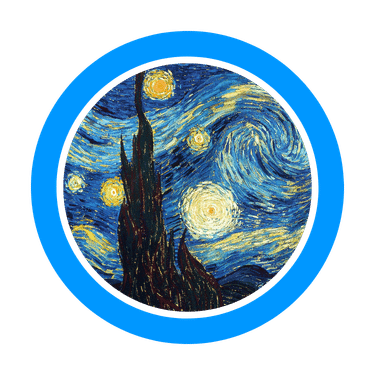

Book the Van Gogh Museum before the day you visit: adult admission costs €27, tickets are tied to a selected date and time, and 90 minutes to 2 hours is the right window if you want to follow the permanent collection properly. The museum works best when you treat it less as a shrine to one painter and more as a documented working life shaped by letters, experiments, influences and Jo van Gogh-Bonger’s preservation.
Most visitors arrive expecting a shrine to a solitary genius and leave having seen something more precise and more unsettling: a carefully documented working life. The museum exists largely because Vincent’s sister-in-law, Jo van Gogh-Bonger, organised, promoted, loaned and helped publish the material that made his posthumous reputation possible. Without that family stewardship, Amsterdam would not read Van Gogh in the same way today.
1. Reserve a Timed Ticket Before the Day of Your Visit
The Van Gogh Museum works with timed entry, and tickets are valid only for the selected date and time. Adult admission currently costs €27, while visitors under 18 enter free. In 2026, the museum is generally open daily from 9:00 to 18:00 until September, with Friday evening opening until 21:00 except on selected dates, so check the official calendar before choosing your slot.
That system suits the museum itself. The main building by Gerrit Rietveld opened in 1973, and the later exhibition wing by Kisho Kurokawa added space without turning the site into an oversized palace museum. The collection is enormous, but the galleries are still read best as a sequence of rooms rather than a hall for processing crowds, so timed entry protects the way the story is meant to unfold.
2. Follow the Chronology Slowly Instead of Hunting for the Famous Works
Inside, give yourself at least 90 minutes, and closer to two hours if you want to read the labels and letters properly. Start with the permanent collection route and stay with the chronology from the Dutch years through Paris, Arles, Saint-Rémy and Auvers-sur-Oise. The museum is designed so that his changes in colour, brushwork and subject matter build step by step, which is easy to miss if you race ahead looking only for the best-known paintings.
That order matters because Van Gogh’s development was unusually compressed. In only about a decade of serious work, he moved from dark peasant scenes shaped by Dutch realist painting to the broken colour and sharper contrasts he absorbed in Paris. The letters help make that transition concrete. They show a painter who studied technique obsessively, exchanged ideas with other artists and thought hard about materials, reproduction and audience, rather than simply painting in a burst of feeling.
3. Look for the Other Artists in the Collection
Many visitors arrive expecting a room built only around Sunflowers and self-portraits, but the museum makes more sense when you pay attention to the surrounding names. Look out for works connected to artists such as Gauguin, Toulouse-Lautrec, Monet and Émile Bernard, because they clarify what Van Gogh was responding to and pushing against. Displays can also shift, especially when loans or temporary exhibitions affect what is on view, so it helps to approach the collection as an argument rather than a checklist.
That broader framing is one of the museum’s sharpest curatorial choices. Van Gogh collected Japanese prints, discussed new painting intensely with friends, and often worked through influence in public view rather than hiding it. The result is a less mythic and more convincing picture of late 19th-century art, where ideas moved through studios, letters, print shops and exhibitions at speed. Seeing him in that network is far more revealing than treating him as an isolated exception.
4. Arrive Light and Expect Screening at the Entrance
Plan to arrive a little before your timed slot because entry can include bag screening. The museum allows coats, handbags, small backpacks up to 45 × 25 × 25 cm and umbrellas in the cloakroom lockers, but large backpacks, wheeled suitcases, trolleys and oversized luggage are not accepted. A small day bag will make the visit smoother, especially if you are also fitting in the Rijksmuseum or Stedelijk on the same day.
That level of control reflects the museum’s status as a place holding fragile works on paper as well as famous canvases. The letters are especially important here. They turn biography into primary evidence, and they also require careful environmental and handling conditions. In other words, the practical rules are tied not only to security but to the fact that the museum preserves an archive of process, not just a set of iconic paintings.
5. Use Museumplein to Read the Museum in Context
After your visit, spend a little time on Museumplein instead of leaving immediately for the canal belt. The Van Gogh Museum stands within a concentrated cultural district that also includes the Rijksmuseum, the Stedelijk Museum and the Concertgebouw, all within a short walk. Even a brief circuit of the square helps you understand how deliberately this part of Amsterdam was organised as a public cultural zone rather than a random cluster of institutions.
That setting adds useful context. Museumplein was shaped over decades as Amsterdam expanded southward, and its major institutions reflect different ideas of national culture, modern art and civic display. The Van Gogh Museum, with its modern architecture and tightly focused narrative, feels different from the Rijksmuseum’s broader historical sweep. Reading those contrasts in one place makes the museum feel less like a standalone attraction and more like part of a larger Dutch argument about how art should be collected, framed and shown.
6. See Jo Van Gogh-Bonger in the Galleries, Not Just Vincent
One of the least obvious things about the museum is how much of it is really about afterlives. Jo van Gogh-Bonger, who married Vincent’s brother Theo, inherited hundreds of works and letters after both men died within months of each other. She did not simply store them. She edited letters, organised loans, cultivated collectors and critics, and slowly built the conditions that made Vincent’s reputation possible in cities such as Amsterdam, Paris and Berlin.
That story still shapes the visitor experience. The museum’s emphasis on correspondence, sequence and context comes from an archive-minded approach that owes as much to family stewardship as to modern curating. In a city that often packages painters into icons, the Van Gogh Museum remains unusually attentive to the machinery of reputation: who kept the papers, who arranged the exhibitions, and who decided that unfinished struggle should become national cultural inheritance.
From Museumplein to the Canals
After the galleries, Amsterdam can feel newly legible, especially if you continue on foot through Oud-Zuid or head back towards the canal belt on a free tour of Amsterdam. The city that presents Van Gogh so carefully is also a city built on selection, preservation and retelling. That makes the walk away from Museumplein part of the same story, not a break from it.
Seen that way, planning around traditional food in Amsterdam, the best of Amsterdam, and other things to do in Ámsterdam becomes less about ticking boxes and more about noticing how the city edits its own past. After the museum’s letters and working drafts, even the polished streets and orderly facades look a little different. Amsterdam starts to read less like a finished masterpiece than a place constantly arranged for future viewers.
