

Book the Accademia Gallery before the day you visit, aim for the first morning slot, and treat it as more than a quick stop for Michelangelo’s David. Long before most visitors step into the Tribune, the Accademia was tied to artistic training, working models, plaster casts and the education of the eye, which is why a €55 Accademia Gallery Guided Tour makes sense if you want the museum explained as a place of process, not just a single-statue destination.
For visitors combining two museums, the Florence, Uffizi and Accademia guided tour offers a broader itinerary. David still dominates the building, but some of the sharpest moments come earlier and later, in corridors lined with unfinished figures and rooms that many people rush through. With a guide, the visit can connect Michelangelo’s Prisoners, the Tribune, the Hall of the Colossus and the academy’s teaching legacy into one route. Without that context, the Accademia can feel short; with it, the museum becomes a lesson in how Florentine artists learned to look, compare and carve.
1. Use The First Slot To See David Before The Crowd Peaks
Queues on Via Ricasoli can build early, especially from spring into autumn, so reserve a timed ticket before the day of your visit. The gallery normally opens from 8:15 to 18:50, with last admission at 18:20, and it is closed on Mondays. Arrive at least 15 minutes before your time, bring ID if needed for reduced tickets, and expect security at the entrance.
Early entry changes the way the museum reads. In quieter rooms, you notice that the Accademia is relatively compact and was never designed as a grand ceremonial palace. Its core identity comes from artistic training: plaster casts, paintings and sculpture sit together more like tools of study than trophies of display.
2. Follow the Prisoners Before Reaching David
Walk slowly down the Galleria dei Prigioni and resist the instinct to rush straight to the dome-lit hall at the end. Michelangelo’s unfinished Prisoners, carved for the tomb of Pope Julius II, stand on either side of the corridor and are central to understanding what you are about to see. Give them a few minutes each, and look at the rough stone around the emerging bodies, not only the finished anatomy.
Their unfinished state mattered deeply to later Florentine artists because students could study the sculptor’s decisions almost step by step, from blocked-out mass to polished surface. In an academy setting, that made these figures especially valuable. By the time you reach David, the statue looks less like an isolated masterpiece and more like the fullest expression of a method that others tried to learn from, imitate, and argue with.
3. Spend Time in the Hall of the Colossus
Many visitors spend most of their time with Michelangelo and leave quickly, but the Sala del Colosso deserves proper attention. It contains Giambologna’s model for The Rape of the Sabine Women, among other works, and it gives the visit a wider Florentine context. Set aside at least 15 to 20 minutes for this room instead of treating it as a passage.
The room takes its name from the colossal ancient plaster cast that once dominated the space when the academy used it for teaching. That older academic function helps explain why the hall still feels different from a conventional museum gallery. Seen here, the Accademia becomes a story about how Florentine artists learned by comparing antique forms, modern sculpture, and competing ideals of movement, balance, and anatomy.
4. Detour into the Gothic Gold Rooms
Turn into the rooms of medieval and early Renaissance painting even if your main reason for coming is sculpture. The gold-ground panels can feel quiet after the drama of David, which is exactly why they are worth seeing. In practical terms, these rooms are often less crowded, so they also give you breathing space in the middle of the visit.
Some of these works entered the museum during the great 19th-century suppression of convents and religious houses, when paintings were removed from their original settings and concentrated in state collections. That history matters because you are not only seeing medieval devotion, but also the modern making of Florence as a museum city. The rooms reveal how objects once used in chapels and cloisters were later recast as material for study, classification, and public display.
5. Circle David Instead of Taking One Front View
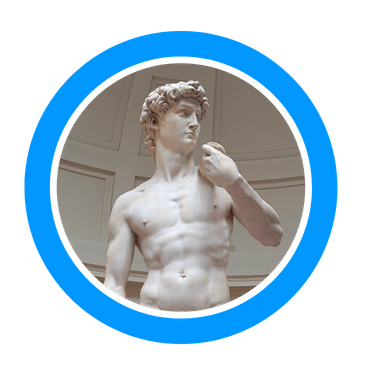
Once you reach the Tribune, do not stop at the first frontal view. Circle the statue if the crowd allows, and look from the side and slightly behind, where the twist of the torso and the tension in the right hand become clearer. A full circuit does not take long, but it changes the experience far more than snapping one quick photo from the centre line.
David was carved from a difficult block of marble that had already been worked on and then abandoned by earlier sculptors, a constraint that shaped Michelangelo’s solution in ways you can best grasp from several angles. The statue was made for Florence’s cathedral authorities but became a civic image in Piazza della Signoria, where its alert gaze could be read politically. Walking around it restores some of that complexity, because the sculpture was designed as a statement of judgment, risk, and controlled force, not as a flat icon.
Why Via Ricasoli Still Feels Like a Street of Study
The setting around the Accademia tells its own story if you pay attention before or after your visit. Via Ricasoli runs through a district shaped for centuries by institutions of learning, workshops, religious houses, and later museums, all within a short walk of the Duomo. Even now, the rhythm of the street feels different from the ceremonial openness around Piazza della Signoria. It is narrower, more workmanlike, and more tied to study than spectacle.
That helps explain why the gallery can feel surprisingly concentrated despite housing one of the most famous sculptures in the world. The Accademia belongs to a Florence of classrooms, plaster casts, technical training, and artistic discipline. Visitors who only register the headline masterpiece often miss that the building still carries traces of that older purpose.
From the Tribune to San Marco
After the Accademia, the streets around San Marco make a good continuation because they keep you in the same intellectual Florence, with convents, studios and university life still close at hand. A free tour of Florence can help connect the gallery’s quiet rooms with the political, religious and civic city that produced them.
Keep that first idea in mind as you walk away from Via Ricasoli: this was a place where artists were trained to look hard, compare forms and learn through repetition. After the Prisoners, the plaster-cast legacy of the academy and David seen in the round, the nearby streets can start to feel less like a route between landmarks and more like an extension of the same discipline of seeing.
