

Oaxaca’s cooking is not defined by one signature plate but by a working system of corn, chile, herbs, cacao, lard, market exchange and regional ecology that changes from the Valles Centrales to the coast and the Isthmus. In the city of Oaxaca, that complexity shows up in everyday ways: a tlayuda base sold separately from its toppings, a soup built from squash vines rather than just the fruit, and chocolate still prepared as much for breakfast as for dessert. The state’s geography matters, but so do its Indigenous cooking traditions, especially Zapotec and Mixtec ones, along with convent kitchens, colonial trade routes and the constant movement of ingredients through markets.
These are eight foods and drinks that explain Oaxaca better than any menu summary ever could.
1. Mole Negro (Black Mole)
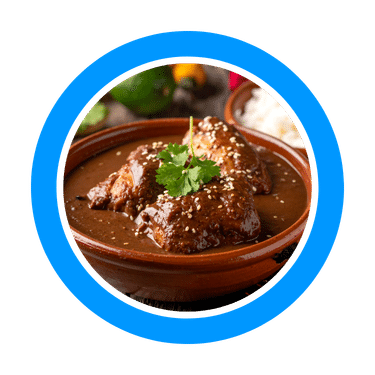
Mole negro is the ceremonial sauce most closely associated with the city of Oaxaca and the Valles Centrales, made from chiles such as chilhuacle negro when available, charred tortillas or bread, nuts or seeds, spices, plantain, and a measured amount of chocolate that gives roundness rather than sweetness. It is linked to fiestas, weddings, patron saint days and large family meals, where the labor of toasting, grinding and balancing bitterness is still a social act. One detail visitors often miss is that many older cooks consider the leaf called hierba santa or avocado leaf as important as the chile base in giving a mole its local identity, and some households still thicken with tortilla rather than relying heavily on nuts.
In Oaxaca de Juárez, try mole negro at Las Quince Letras, where it is often served with chicken and rice in the style most local families know from celebrations. At the Mercado de la Merced, order a comida corrida if mole negro is on the day’s menu, since many stalls prepare it in small batches closer to home cooking than restaurant versions.
2. Tlayuda (Large Toasted Oaxacan Tortilla)
A tlayuda begins with an oversized corn tortilla dried to a leathery crisp, then spread with asiento, the unrefined pork fat left from rendering lard, plus black bean paste, quesillo, lettuce or cabbage, avocado and usually tasajo, cecina or chorizo. Although now treated as street food shorthand for Oaxaca, the word originally refers to the tortilla itself, not the fully dressed dish, and that distinction still matters in markets where women sell stacks of semidried tortillas for home use. The crackly texture comes from partial dehydration before cooking, a technique that made the base practical for transport and storage in valley communities long before it became a late-night city staple.
For a classic version in Oaxaca de Juárez, go to Tlayudas Libres on Calle Libres and order one with tasajo and asiento. For a more market-centered experience, the Pasillo de Humo in Mercado 20 de Noviembre is the place to compare grilled meats that often end up folded into tlayudas, especially in the evening when smoke from the charcoal grills fills the corridor. In Mercado de la Merced, ask specifically for a tlayuda preparada if you want the fully assembled dish rather than just the tortilla to take home.
3. Memelas (Thick Corn Masa Cakes)
Memelas are small hand-shaped discs of masa pinched at the edge, cooked on a comal and topped in their simplest form with asiento, black beans, salsa and crumbly cheese. In Oaxaca they are often breakfast food, but they are also a practical comal snack sold at markets and neighborhood stands where women can prepare them one by one. A lesser-known point is that the memela’s edge is not decorative: the raised rim helps hold salsa and beans on softer fresh masa, especially when the tortilla is made from nixtamal ground that same morning.
Try them at Mercado de la Merced early in the day, where vendors turn out memelas with a direct, smoky comal flavor and several salsa options. In the Reforma neighborhood, Itanoni is a good place to order memelas made from specific native maize varieties, which lets you taste how corn type changes texture and aroma.
4. Sopa de Guías (Squash Vine Soup)
Sopa de guías is one of the clearest examples of the Mesoamerican milpa on the table, using squash vines, tender leaves, blossoms, young squash, corn and often chochoyotes, the small masa dumplings pressed with a thumb. It is tied to the rainy season, when the plant is tender enough to cook whole sections of the vine, and it reflects a kitchen logic that wastes very little of what the field produces. In Oaxaca, the dish has long been associated with home kitchens in the Central Valleys more than with restaurant menus, which is why many visitors encounter it only if they arrive in season. Older cooks often insist that the guides, the curling tendrils of the squash plant, are not interchangeable with the leaves because they contribute a different texture once simmered.
Look for it in fondas inside Mercado de la Merced during the wet season, usually from summer into early autumn, when squash growth is at its peak. At Casa Oaxaca, when it appears seasonally, order it as a first course to see a more formal treatment of a soup that is otherwise deeply domestic and still strongly tied to the agricultural calendar.
5. Tamal de Chepil (Corn Dough Tamal with Chepil Herb)
Tamal de chepil is made with masa mixed with the tender leaves of chepil, a warm-weather herb common in southern Mexico, then wrapped and steamed, often in corn husks and sometimes served plain, with salsa, or alongside beans. It belongs to a broad Indigenous tamal tradition, but in Oaxaca it is especially associated with everyday market eating rather than festival excess. Chepil is botanically unusual because its flavor softens dramatically when steamed, which is why cooks often use more of it in tamales than they would in soups or fresh masa preparations. In the city, it is also one of those foods that quietly marks the rainy and warm months, when the herb is easiest to source in good condition from surrounding valley communities.
For a straightforward local version, go to Mercado de la Merced in the morning and order tamales de chepil with atole or coffee, when the best batches are freshest from the steamer. In Mercado Benito Juárez, ask vendors whether they also have tamales wrapped in banana leaf that day so you can compare central-valley and more tropical styles of tamal making.
6. Chapulines (Toasted Grasshoppers)
Chapulines are grasshoppers toasted on a comal with garlic, lime and salt, and in Oaxaca they are not a novelty item but a longstanding seasonal food tied to agricultural cycles and market trade. Their use predates Spanish rule, and they remain part of the practical protein economy of the valleys, especially during the rainy season when collection is strongest. One detail many guides skip is that size matters locally: smaller chapulines are often preferred for tacos and snacks, while larger ones can be more intensely seasoned and sold as a mezcal accompaniment. Vendors also sort them by texture and by how aggressively they are flavored, since some buyers want them dry and sharp with lime, while others want a plainer batch to cook with guacamole or fold into tortillas at home.
The easiest place to compare quality is Mercado Benito Juárez, where several vendors sell chapulines by size and seasoning level. Ask for a small mixed bag and notice whether they are dry-crisp rather than oily. At Mezcalería In Situ, order mezcal with a side of chapulines to see how they function socially as botana rather than as a standalone plate.
7. Quesillo (Oaxacan String Cheese)
Quesillo is the stretched-curd cheese of Oaxaca, wound into a ball or long ribbon and used in tlayudas, empanadas and snacks across the state. Local oral history often points to Reyes Etla as an important center of its production, and whatever the exact beginnings, the technique clearly belongs to a wider family of pasta filata cheeses adapted to local milk and market conditions. A less obvious fact is that many Oaxacans distinguish between quesillo for melting and quesillo for table use, judging not just salt level but how the strands pull apart, which is why market buyers often ask to taste before purchasing a whole ball. In city markets, that habit matters because heat, freshness and the day’s milk can change the texture noticeably from one vendor to another.
In Mercado Benito Juárez, buy quesillo by weight from dairy stalls and ask for a tasting piece before choosing. The best vendors will cut from a fresh coil rather than a prewrapped piece. For a cooked application, order an empanada de quesillo at a comal stand in the market or at Itanoni, where the cheese’s stretch is balanced by the flavor of heirloom corn masa.
8. Chocolate de Agua (Oaxacan Water-based Chocolate Drink)
Chocolate de agua is the older, lighter style of Oaxacan drinking chocolate, beaten with water rather than milk and usually perfumed with cinnamon, sugar and ground cacao processed into tablets. It carries clear Indigenous and colonial layers at once: cacao drinking is ancient in Mesoamerica, while cinnamon and the popular tableted preparation reflect later trade and convent influence. One useful distinction is that locals often recognize two service styles, chocolate de agua and chocolate de leche, and the water version is prized not because it is richer but because it shows the cacao’s aroma more directly under the foam raised with a molinillo. In Oaxaca, it is also tied to pan de yema and market breakfast culture, which is why many residents still think of it as a morning or late-afternoon drink rather than a dessert course.
Go to Mayordomo in the city center and order chocolate de agua with pan de yema, the standard pairing in many Oaxacan homes and cafés. For a market setting, sit at a chocolate-and-atole counter in Mercado Benito Juárez and ask whether the cacao was ground in-house, since that usually gives a fresher, less sugary cup.
Eating Around Mercados
If you want traditional food at sensible prices, start early around Mercado de la Merced, where breakfast and almuerzo are usually stronger value than restaurant-heavy streets around Santo Domingo. Memelas, tamales and chocolate often run from about 25 to 80 pesos per item, while a market comida or mole plate is often in the 90 to 180 peso range. Mercado Benito Juárez is practical for chocolate, quesillo and snacks to carry, while Mercado 20 de Noviembre is best approached for grilled meats and the Pasillo de Humo, especially from late morning into mid-afternoon. In Jalatlaco you will find more polished dining rooms, and in Reforma there are useful stops such as Itanoni for maize-focused cooking.
Traditional midday eating still revolves around comida, usually from about 1:30 pm to 4:00 pm, when fondas serve soups, moles and guisados that may not appear again at dinner. Tlayudas and other antojitos become more visible later, particularly from evening onward. Ask whether a dish is available that day rather than assuming a fixed menu, since many seasonal foods, especially sopa de guías and certain moles, are cooked in limited quantities and sell out. The free tour of Oaxaca is a useful way to get current local recommendations, especially for market stalls that work more by routine and reputation than by signage.