

Guided tour
Secrets of Seville Evening Tour
9.2 Exceptional · 3,060 reviews (as of Nov 2026) Free cancellation
Choose your date
Civitatis displays availability and confirms bookings on its own site.
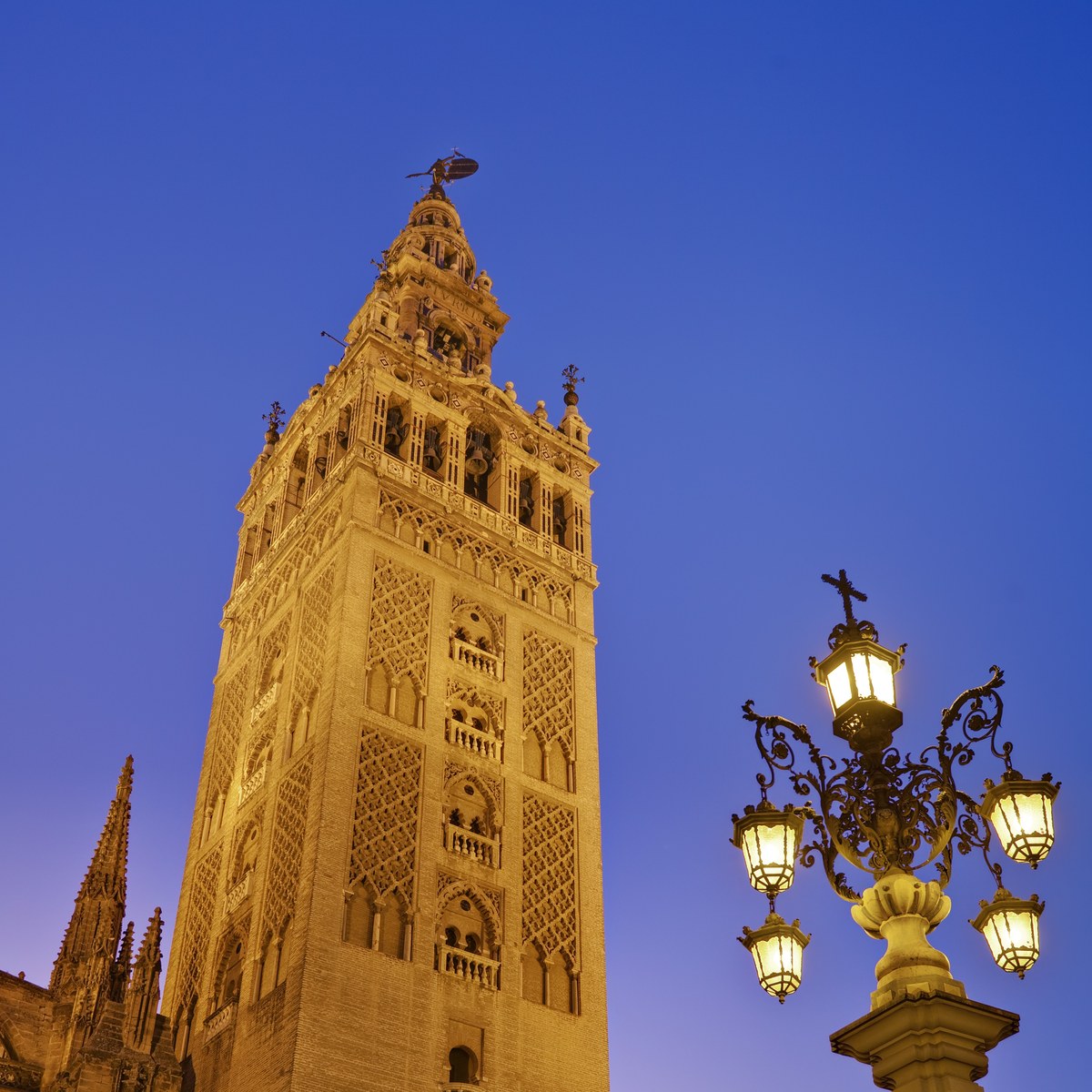
Seville’s old Jewish quarter was never laid out in a straight line. Its tight lanes, dead ends and sudden small squares grew over centuries inside the medieval walls, and after dark that irregular plan becomes easier to notice as the Cathedral, the Giralda and the edges of the Alcázar stand out against the narrower residential streets around them.
Over 2 hours, the route passes through parts of the historic centre, including Santa Cruz, Calle Fabiola, Plaza de la Alfalfa and the areas around the Cathedral and the Alcázar. It is led by an English-speaking guide, so the focus stays on the city’s layered history while you move through the streets themselves rather than stopping only at major façades.
Because the walk takes place in the evening, it works especially well for travellers who want Seville’s most central quarter with less daytime glare and a clearer sense of how closely its medieval street network sits against its monumental core.
What You Will See on the Secrets of Seville Evening Tour
Plaza del Triunfo
The walk begins in Plaza del Triunfo, one of the most important monumental spaces in Seville. Within a few metres stand the Cathedral, the Archivo de Indias and the Alcázar, three major buildings tied to the city’s medieval, imperial and royal history. The square takes its name from a baroque monument raised after the 1755 Lisbon earthquake.
Santa Cruz Streets
Santa Cruz occupies part of the former Jewish quarter of Seville, known historically as the Judería. Its narrow lanes reflect a medieval urban layout, and many of its present houses and patios stand on plots that long predate the 1492 expulsion of Spain’s Jewish communities.
Fabiola Street
Calle Fabiola cuts through the old centre near aristocratic houses and religious foundations. It is one of the streets where the scale of the buildings still shows how dense the historic core remained before 19th and 20th century urban reforms changed other parts of Seville.
Alfalfa Square
Plaza de la Alfalfa has been a commercial meeting point for centuries and still marks a natural hinge between the monumental centre and the everyday city. Its name recalls the old market trade of the area, and the square connects routes leading towards El Salvador, Santa Cruz and older mercantile streets.
The Surroundings of the Cathedral
Seville Cathedral was built after the Christian conquest on the site of the city’s former main mosque. Its Giralda tower began as a 12th-century Almohad minaret, which means the area around the cathedral preserves visible layers from both Islamic and Christian Seville.
The Surroundings of the Alcázar
The Alcázar is a royal palace complex whose structure combines Islamic, Mudéjar, Gothic and later Renaissance additions. Around its outer walls and nearby streets, you can trace how court life, defence and religion were concentrated in this part of the city for many centuries.
Tips to Enjoy the Secrets of Seville Evening Tour
✔️ Get to Plaza del Triunfo 10 to 15 minutes early and look specifically for the Inmaculada statue, the stated meeting point. In this part of the centre, the Cathedral, Archivo de Indias and Alcázar sit so close together that first-time visitors often lose a few minutes circling the square.
✔️ The walk finishes on Calle Laraña, so you will end in a central area where it is easy to continue your evening on foot.
✔️ If you use a wheelchair or have reduced mobility, mention it when booking because the route is wheelchair accessible, this must be indicated in the reservation, and an accompanying person is required.
✔️ Set your phone or camera to a night or low-light mode before the walk starts. Around Plaza del Triunfo and the lanes beside the Cathedral, bright floodlit stone and darker side streets can confuse automatic exposure after sunset.
✔️ If you want dinner after the tour, use Plaza de la Alfalfa as your reference point rather than returning to the monument zone around the Cathedral. It sits between several central eating streets and is a practical area to reach soon after a 2-hour route.
✔️ Pets are allowed on this activity, which is useful on a route that starts in an open square and continues through pedestrian streets such as those in Santa Cruz.
What Else to See in Seville
Archivo de Indias
On Plaza del Triunfo, this 16th-century building preserves documentation linked to Spain’s administration of the Americas. Seeing it alongside the Cathedral and the Alcázar helps explain why this small area became one of the most politically important points in the city.
Casa de Pilatos
About a 10-minute walk from Plaza de la Alfalfa, Casa de Pilatos is one of Seville’s clearest noble palaces, combining Renaissance planning with Mudéjar decoration. After a street-level tour of the old centre, it gives useful context for how elite households were organised inside the city.
Hospital de los Venerables
In the Santa Cruz quarter, the 17th-century Hospital de los Venerables was founded for elderly priests and now functions as a cultural venue. It adds depth to the area by showing that Santa Cruz was shaped not only by houses and patios, but also by religious institutions.
The Best of Seville
One of the clearest ways to understand Seville is to see how little distance separates its great monuments from its oldest residential streets. Around the Cathedral, Santa Cruz and the Alcázar, Roman, Islamic, medieval Christian and early modern layers sit almost wall to wall, which is exactly what gives this evening route its interest.
For food afterwards, try espinacas con garbanzos, a Sevillian dish of spinach and chickpeas with strong links to Andalusi and convent cooking, often found in traditional bars in the centre. Another local classic is montadito de pringá, a small sandwich filled with slow-cooked meat from puchero stew, common in taverns around the old town.
If the walk makes you want a broader sense of the city, continue with places that connect directly to the same story, such as the Archivo de Indias, the area around El Salvador and a daytime visit to the Alcázar interiors.
Frequently Asked Questions
How long does the Secrets of Seville Evening Tour last?
The route lasts 2 hours. That gives enough time to cover Santa Cruz, Calle Fabiola, Plaza de la Alfalfa and parts of the historic centre around the Cathedral and the Alcázar without needing transport between stops.
Where does the Secrets of Seville Evening Tour start?
It starts at Plaza del Triunfo, next to the Inmaculada statue. This is a central meeting point in Seville’s monumental area, close to the Cathedral and the Alcázar.
What language is the Secrets of Seville Evening Tour conducted in?
The activity is conducted in English. An English-speaking guide leads the route through the old centre.
Is admission included in the Secrets of Seville Evening Tour?
The included service is the English-speaking guide. No monument entry is stated as part of the activity, so plan for it as a walking route through the historic centre rather than a visit inside the Cathedral or the Alcázar.
Do I need to book in advance?
Free cancellation is available up to 24 hours before the activity starts, while later cancellations and no-shows are not refunded. If you want a specific evening date, booking in advance is advisable.
Is the Secrets of Seville Evening Tour accessible for people with reduced mobility?
Yes, the activity is wheelchair accessible. You need to indicate this when making the reservation, and an accompanying person is required.
Is photography allowed during the Secrets of Seville Evening Tour?
As general travel advice for an outdoor route in public streets, photography is usually straightforward. Evening light can be uneven in narrow lanes, so a phone or camera with a night setting is useful.
What is the best time of year to visit Seville?
Spring and autumn are usually the easiest seasons for walking in Seville because daytime temperatures are milder than in high summer. Evening routes are particularly practical from late spring to early autumn, when the city remains active after sunset and the old centre is pleasant to explore on foot.
Popular Activities in Spain

Free Tour of Seville
Alcazar of Seville Tour

Seville Cathedral and Giralda Guided Tour
Tour of Macarena + Palacio de las Dueñas
