

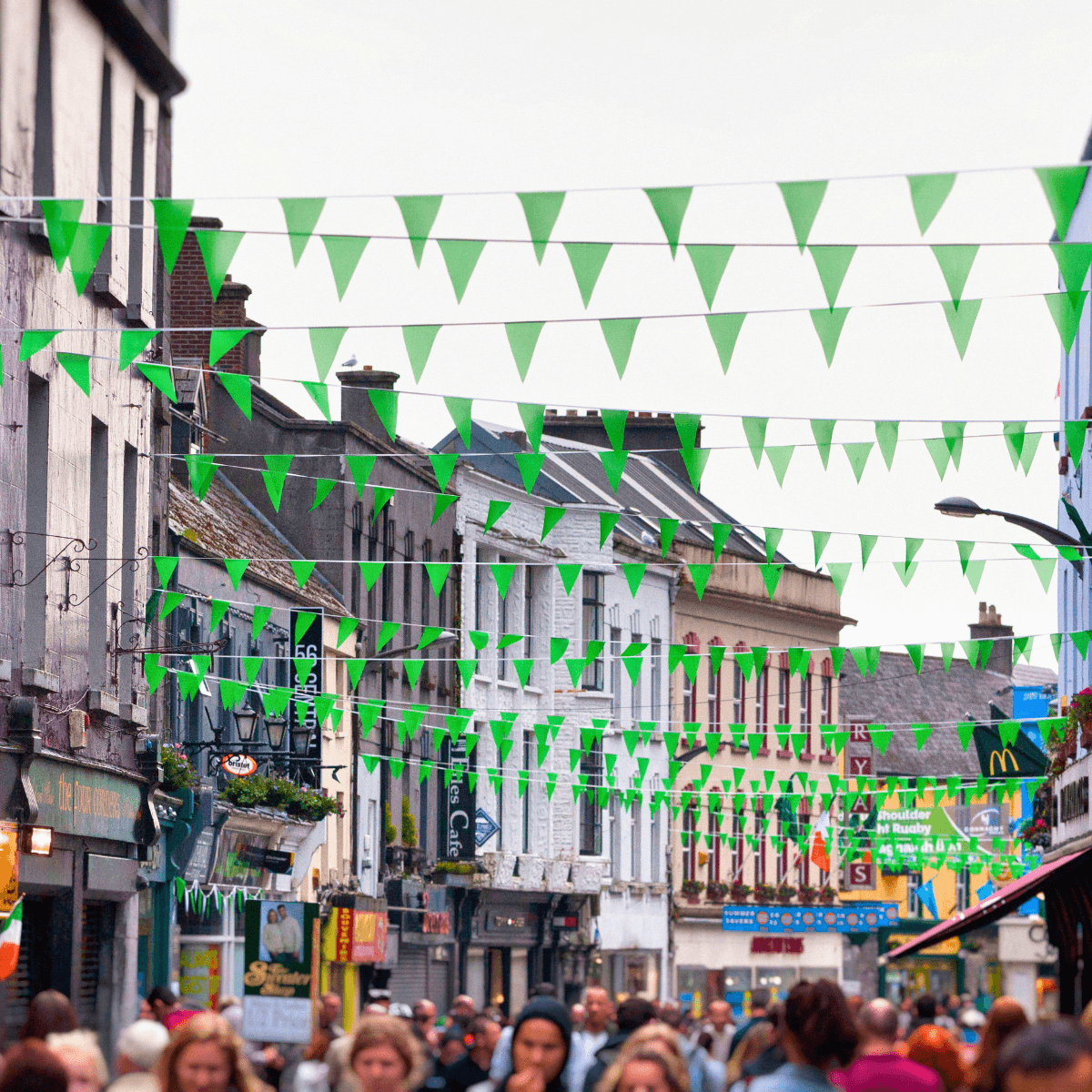
Free walking tour
Free Tour of Galway
9.2 Exceptional · 555 reviews (as of Nov 2026) Free cancellation
Choose your date
Civitatis displays availability and confirms bookings on its own site.
Only two arches survive from Ceann na Bhalla, the old waterfront defences by the Corrib, and one of them is the Spanish Arch. It was built in 1584 as an extension of the town walls to protect ships at the nearby quay, which tells you something important about Galway from the start: this was a trading town first, and a scenic riverfront later. Even now, the position at the mouth of the river makes the city’s origins unusually easy to read in the landscape.
This free walking tour takes in several of the places that still define historic Galway, including the Spanish Arch, the narrow medieval streets, Lynch Castle and the facade of the Collegiate Church of St. Nicholas. You will also spend time around the harbour area and the mouth of the Corrib River, where the reasons for Galway’s growth become clear. The walk finishes at a lookout point with views of the river.
The tour lasts 2 hours and is led in English by an English-speaking guide. The meeting point is Galway’s Spanish Arch and the walk ends at a lookout point with views of the river. The guide is included. Tipping is optional.
What You’ll See on the Free Tour of Galway
Spanish Arch
You will see one of the clearest surviving pieces of Galway’s old waterfront defences at the Spanish Arch. Built in 1584, it extended the town walls to protect ships moored at the quay beside the Corrib at Ceann na Bhalla, meaning “the Head of the Wall”. It is also a reminder that fish used to be sold here, so this riverside spot was once part of the city’s working market as well as its line of defence.
Lynch Castle
Lynch Castle is a 16th-century fortified town house at the junction of Shop Street and Upper Abbeygate Street. Its exterior preserves rare Irish gargoyles, and you can also look for the coats of arms of Henry VII, the Lynch family and the Fitzgeralds of Kildare. Those details point to the political and commercial connections of the merchant elite who shaped Galway between the late medieval and early modern periods.
The Facade of the Collegiate Church of St. Nicholas
The walk takes in the facade of a church whose present building was completed in 1320 on an older site of worship. St. Nicholas is the largest medieval parish church in Ireland still in continuous use, which makes it one of the city’s most important surviving medieval monuments. Around its churchyard, market life still continues in the form of Nicholas’s Market, linking the church to everyday trade as well as religion.
The Narrow Streets of the City Centre
The centre of Galway still follows a medieval pattern of narrow, irregular streets rather than later planned avenues. Many of the buildings you see conceal 16th- and 17th-century structures behind more recent facades, so the age of the city is not always obvious at first glance. The varying heights, widths, parapets and eaves of the shopfronts also give the core its close, uneven look. Streets and public spaces such as Shop Street, Fishmarket and the surrounding lanes still reflect the old walled-town pattern.
Galway Harbour and the Mouth of the Corrib
In the harbour area, you can see why a natural harbour helped make Galway a successful medieval port with trading links to France, Portugal and Spain. At the mouth of the Corrib, the geography becomes even more revealing: Galway began with a fort built in 1124 at Dun Bun na Gaillimhe, meaning “fort at the mouth of Gaillimh”. Few Irish cities show so clearly how a river mouth, a harbour and a defended site worked together to produce an urban centre.
The River Lookout
The walk ends at a lookout point over the Corrib, a short but important river flowing from Lough Corrib south to Galway Bay. From here you are looking at the waterway that links one of Ireland’s great lakes to the Atlantic. It is a good final view because it pulls together several themes of the tour: defence, trade, fishing and the shape of the city itself.
History and Curiosities of Galway
From Fort to Walled Town
Galway’s recorded story begins in 1124, when High King Tairrdelbach Ua Conchobair built Dun Bun na Gaillimhe at the river mouth. After Anglo-Norman expansion into Connacht, Richard de Burgo built the first stone castle here in 1232, giving the settlement a new military and political centre. Around 1270, Walter de Burgo granted Galway its first mural charter, allowing tolls on goods to fund the walls, and by the early 1400s most, if not all, of the town was enclosed. That sequence still matters because the compact shape of the centre follows the footprint of that defended medieval town.
The Merchant Families Known as the Tribes
From the 15th to the 17th centuries, Galway was effectively run by 14 merchant families later known as the Tribes of Galway. Their power rested on trade with the Gaelic hinterland, with Europe and later with the Americas, and the harbour made those networks possible. Buildings such as Lynch Castle are the visible trace of that merchant order, showing that commercial success in Galway often looked fortified, heraldic and urban. The city’s historic wealth did not come from court life or industry first, but from a port economy managed by a small group of families.
The Waterfront That Used to Work for a Living
The riverfront now looks like a place for views and photographs, but its earlier life was more practical. The Spanish Arch is only one of two remaining arches of Ceann na Bhalla, a fragment of the old waterfront defences, and fish used to be sold here as part of Galway’s market system. Traditional Galway Hookers, the working boats of Galway Bay, brought fresh fish from the Claddagh fleet to the markets at the Spanish Arch. That makes this one of the best spots in the city for imagining how trade, fishing and town life once overlapped.
The Claddagh and Its Symbols
Just outside the old walls, the Claddagh developed as a fishing settlement on the foreshore at the mouth of the Corrib. It was historically headed by an elected king or mayor chosen from the community itself, a striking reminder that Galway’s edge could have its own institutions and identity. The Claddagh ring, with two hands holding a crowned heart, is closely tied to this area, and Galway City Museum holds what it identifies as the oldest known Claddagh ring made in Galway, by Richard Joyce around 1700. In the 19th and early 20th centuries, the Claddagh was also an Irish-speaking fishing community, linking the city closely to the language traditions of the west.
Local Life, Traditions and Food in Galway
Markets, Streets and Daily City Life
The centre of Galway is still the city’s main retail area, especially around Shop Street and High Street, where commerce, tourism, arts and leisure all meet in a small walkable core. Around St. Nicholas’s churchyard, Nicholas’s Market continues the older habit of street trading in the middle of town. Historically, Galway organised markets by product: vegetables, butter and fowl near St. Nicholas’s, fish at the Spanish Arch, and baskets in Woodquay. Cross Street and the surrounding lanes remain some of the city centre’s busiest social and commercial spaces, showing how medieval streets still structure daily life.
Music, Festivals and the Claddagh Tradition
Galway’s cultural reputation is not a recent invention. St. Nicholas’ Collegiate Church established a college of singers in 1486, and that musical tradition still survives through its Schola Cantorum. In modern city life, the Galway International Arts Festival has been a central part of the cultural calendar since 1978 and fills two weeks each July with performance and visual art. The Claddagh ring and the Galway Hooker also remain active symbols of local identity, one in jewellery and one in maritime tradition.
Seafood and the Traditional Food of Galway
If the route leaves you hungry, the traditional food of Galway is strongly shaped by the bay, the harbour and the old fishing settlement of the Claddagh. Galway Bay flat oysters are the classic local oyster, the European flat oyster species Ostrea edulis, long associated with these waters. Seafood matters here for historical reasons as much as culinary ones: fish sales at the Spanish Arch and catches brought in by Galway Hookers were part of the city’s everyday economy. Even without a tasting on the tour, the walk gives useful context for what you see later on menus around town.
Tips for the Free Walking Tour of Galway
- Wear comfortable shoes with grip and bring a waterproof layer, because Galway’s riverfront weather can change quickly and the walk uses city streets and waterside areas.
- If you are visiting in July, book ahead and allow extra time to move around the centre, as the Galway International Arts Festival makes the city busier than usual.
- Tips are not included, and tipping the guide is optional.
- The walk is not wheelchair accessible and pets are not allowed.
- You can book up to 12 hours before the activity if places remain. Cancellation is free, and if you cannot attend, cancel so the guide is not kept waiting.
- Use the tour as your orientation walk, then return later to the area around St. Nicholas’s churchyard and Shop Street when you have time to browse the market streets more slowly.
Frequently Asked Questions
What is the meeting point for the free tour of Galway?
The meeting point is Galway’s Spanish Arch. Check your booking confirmation before you go, as the exact meeting point can change for seasons, events or roadworks.
What route does the free tour of Galway follow?
The walk takes in the Spanish Arch, parts of the lively city centre, narrow medieval streets, Lynch Castle, the facade of the Collegiate Church of St. Nicholas, the harbour area and the mouth of the Corrib River. It finishes at a lookout point with views of the river.
How long is the free tour of Galway?
The tour lasts 2 hours.
Is the free tour of Galway in English?
Yes. The tour is conducted in English with an English-speaking guide.
What is included in the free tour of Galway?
An English-speaking guide is included. Tips are not included, and tipping is optional.
What is Galway known for?
Galway is known for its medieval walled-town street pattern, its merchant history and its long relationship with harbour trade. It is also closely associated with the Claddagh tradition, the Claddagh ring and a strong arts culture shaped by festivals and live performance.
Is Galway worth visiting?
Yes, especially if you want a compact historic centre that works well on foot. You get visible medieval remains, a clear river-and-bay setting, and a city culture shaped by markets, music and festivals rather than only major monuments.
How long should I stay in Galway?
A day is enough to see the compact medieval centre and riverfront. An overnight stay is better if you want time for evening cultural life, more time around the harbour area, or a slower look at the market streets and waterfront.
Popular Activities in Ireland
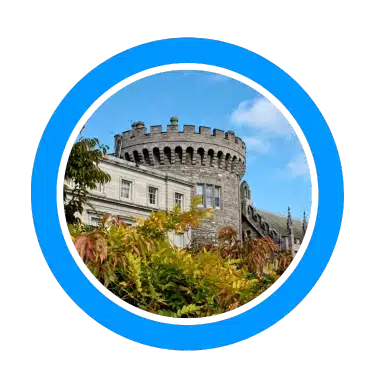
Free Tour of Dublin
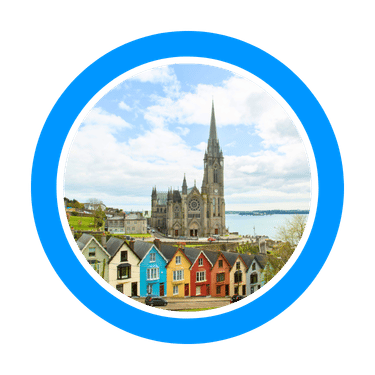
Free Tour of Cork
