

Before Medellin became a case study in urban change, it was a factory city with a strict sense of hierarchy: wealthy families on better-ventilated slopes, workers closer to the river and industry, and a downtown shaped by commerce, churches, and government. You can still read that older Medellin in the street plan, in the public buildings, and in the way the hills remain far more than a backdrop. This is a city that makes most sense when you walk it with your eyes open.
You do not need a big budget to get a real sense of the city. These 10 free or low-cost plans give you a sharper look at Medellin, from public art and local memory to hillside views and everyday street life.
1. Join a Free Tour of Medellin
A free tour of Medellin usually runs for around two and a half to three hours and is led by a local guide. The strongest versions focus on the historic center and connect places such as Parque Berrío, Plaza Botero, the Palacio de la Cultura Rafael Uribe Uribe, La Alpujarra, Pasaje Junín, and Parque de las Luces, which matters because downtown Medellin is where the city’s commercial ambition, political power, and public contradictions are easiest to read. After seeing some places on your own, this is the most efficient way to understand why the center feels rough in parts, monumental in others, and indispensable if you want more than a surface-level visit.
At the end, visitors decide how much to pay based on what they felt the experience was worth. That pay-what-you-want model gives you room to judge the tour by the guide’s clarity, historical honesty, and ability to explain Medellin beyond the usual transformation script.
2. Explore Plaza Botero
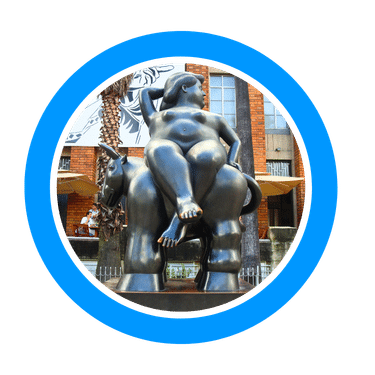
Plaza Botero is free to enter and works as an open-air collection of 23 bronze sculptures donated by Fernando Botero to his hometown. What makes the square worth your time is not just the scale of the figures but the setting: they sit in the civic heart of old Medellin, beside the Museo de Antioquia and the Palacio de la Cultura Rafael Uribe Uribe. A detail many visitors miss is that several sculptures show visible wear from constant touching, especially on hands and feet, because locals long ago turned them into informal good-luck objects.
Go slowly and circle each piece rather than taking one quick photo from the center. Early morning is the best time if you want clearer views and less heat, and it is worth keeping an eye on your belongings here because this is one of the busiest pedestrian zones in the city.
3. Ride the Metrocable to Santo Domingo
The Metrocable is not free, but the fare is low-cost when paid as part of the metro system. This gondola line was built not as a tourist ride but as public transport linking hillside communities to the rest of Medellin, which is why it matters more than a simple viewpoint. Line K, opened in 2004, became an urban planning reference across Latin America because it tied mobility to public investment in areas long neglected by city government.
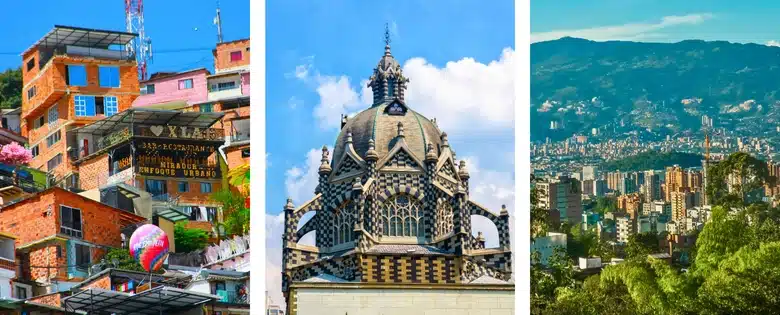
Take the ride for the changing angle over the valley, the dense brick neighborhoods on the slopes, and the sense of Medellin’s geography that you do not get from street level. Late afternoon usually gives the clearest light across the hills, and if you use the system outside commuter rush hours, the cabins are noticeably calmer.
4. Visit Casa de la Memoria
Casa de la Memoria is free, and it is one of the few places in Medellin that deals directly and carefully with the city’s experience of violence and displacement. It is not a conventional museum full of objects in cases; much of its force comes from testimony, audiovisual material, and temporary exhibitions that connect Medellin to wider Colombian conflict. One important detail is that the institution grew out of local demands for public remembrance rather than from a tourism initiative, which explains its sober tone.
Set aside time to read and listen rather than rushing through the galleries. Weekday mornings tend to be quieter, and it is smart to check the day’s programming because talks, screenings, and temporary exhibits can add a lot to the visit.
5. Climb Cerro Nutibara
Cerro Nutibara is free to access and gives you one of the clearest central views over the Aburrá Valley. This hill is one of Medellin’s few preserved natural elevations inside the urban grid, and its name refers to the indigenous cacique Nutibara, folding pre-Hispanic memory into a heavily modern city. On the summit sits Pueblito Paisa, a stylized reconstruction of a traditional Antioquian town square that says as much about regional identity-making in the 20th century as it does about colonial aesthetics.
Head up for the panorama first, then walk the perimeter paths and spend some time looking at how the city spreads north and south along the valley floor. Sunset is popular for obvious reasons, but morning often gives better visibility, and bringing water helps since the uphill sections feel steeper than they look.
6. Step Inside the Palacio de la Cultura Rafael Uribe Uribe
Admission is generally free, and the building itself is the main draw. Designed by the Belgian architect Agustín Goovaerts, the Palacio de la Cultura stands out for its black-and-white checkered façade, a style that feels almost improbable in the middle of downtown Medellin. It began in the 1920s as the Government Palace of Antioquia, and its long, interrupted construction reflects the political and financial instability of the period more than any tidy civic narrative does.
Walk through the interior courtyards, look at the arches and decorative details, and if access is open, go up to the rooftop terrace for a different angle on Plaza Botero and the Catedral Basílica Metropolitana nearby. Mid-morning is a good time to visit because the light works well for the façade, and cultural programming inside can alter which rooms are open on a given day.
7. Wander Through Comuna 13’s Main Murals
Access to Comuna 13 is free, though some guided activities and performances are paid. The area around the Escaleras Eléctricas de la Comuna 13 in Las Independencias is now one of Medellin’s most visited streetscapes, but I would not treat it as a simple redemption story. The murals, rap performances, and terrace viewpoints make more sense when you remember the weight of operations such as Mariscal and Orión in the early 2000s, and when you notice that many walls have been repainted repeatedly, turning the neighborhood into an argument about memory rather than a finished exhibit.
Stay near the main route around the escalators, watch how local businesses use the foot traffic, and look beyond the biggest photo walls. Earlier in the day gives you more room to read the art properly, and cash is useful if you want to buy a drink, a snack, or tip performers.
8. Browse the San Alejo Handicraft Market
Browsing is free, and buying anything is optional. The San Alejo market takes over Parque Bolívar on the first Saturday of each month, bringing together artisans, small collectors, and vendors selling everything from leather goods to old coins and vinyl. It started in the 1970s with a stronger antiques profile than it has today, and if you look past the obvious souvenir tables you can still find that older Medellin habit of collecting, repairing, and reselling rather than replacing.
Take your time with the less polished stalls, especially those with paper objects, photographs, or household items from earlier decades, because they often reveal more about Antioquian domestic life than the standard crafts do. Arrive in the morning for cooler weather and fuller stock, and keep in mind that prices are not always fixed, especially for vintage items.
9. Admire the Basilica of Our Lady of Candelaria
Entry is free, and this church matters because it was Medellin’s first cathedral before the episcopal seat moved. Standing beside Parque Berrío, La Candelaria has been tied to the city since the colonial period, when the original settlement formed around this area rather than the later commercial and residential expansions. One fact that often goes overlooked is that the image of the Virgin of Candelaria was central enough to local devotion that Medellin’s early civic life developed in direct conversation with this temple.
Go inside to look at the contrast between the restrained exterior and the darker, more atmospheric interior. Late morning is a practical time because the surrounding square is fully active but not yet at its hottest, and modest dress is still the safest choice if you want to avoid problems at the entrance.
10. Cross the Puente de Guayaquil
Walking across the Puente de Guayaquil is free, and it gives you a better lesson in Medellin than many polished viewpoints do. This steel bridge over the Medellin River dates to the early 20th century and formed part of the city’s push to connect rail, trade, and expanding urban districts during a period when Antioquia’s economy was shifting fast. Its name links it to the old Guayaquil sector, once associated with warehouses, transport, traders, and working-class nightlife, a side of Medellin that tourism brochures usually soften.
Use the crossing as a short urban walk between the river corridor and the traditional center, and pay attention to how infrastructure still shapes movement here. Daylight hours are the right moment for this one, and it makes sense to keep the visit brief and purposeful rather than lingering too long after dark.
From Parque Berrío to the Hillsides
What stays with me in Medellin is not the skyline but the tension between the old center and the slopes above it. Down in places like Parque Berrío and Guayaquil, you see the city that trade built. Up on the hills, you see the Medellin that expanded faster than its institutions could keep up. That contrast was there from the start, and it still explains more than any slogan about innovation ever will.
If you pay attention to that thread, the city stops looking like a collection of stops on an itinerary. It becomes a place where geography, inequality, memory, and civic ambition are all visible at once, from the river corridor to the brick neighborhoods climbing out of the Aburrá Valley.