

This 2-hour kendo experience in Kyoto takes place at Studio NIN Kendo in a traditional machiya more than 100 years old, with an English-speaking instructor guiding you through the fundamentals of Japanese sword practice. You change into authentic training attire and protective gear, learn how to hold and control a practice sword, work on posture, footwork and basic techniques, and finish with photos and videos in full equipment.
The activity is designed for beginners rather than experienced martial artists. No previous kendo knowledge is required, and the session begins with safety, etiquette and an explanation of the equipment before you start moving with bamboo, foam or replica training swords.
Kendo is a modern Japanese martial art with deep roots in older schools of swordsmanship. During the Edo period, the development of bamboo swords and protective equipment allowed practitioners to train more safely against one another, helping create methods that eventually evolved into contemporary kendo. That history explains why the experience combines physical technique with bowing, composure, respect and disciplined movement.
Uniform, protective equipment and the training gear required for the session are included. Your instructor also helps take photographs and videos during the experience, while replica swords are available separately if you want to purchase one after the class.
How the Kyoto Kendo Experience Works
The experience begins at Studio NIN Kendo in Kyoto’s Shugakuin area. Once everyone has arrived, the instructor introduces the space and helps participants change into the training uniform and protective equipment used during the session.
The class then moves into a safety briefing. You learn how the sword should be handled, how to maintain enough distance from other participants and how the formal etiquette of the training space works before beginning any striking movements.
From there, the instructor introduces grip and posture. These fundamentals matter because kendo does not treat the sword as something to swing with the arms alone. Foot position, balance, body alignment and the movement of the whole body affect how each technique is performed.
You then practice foundational movements including strikes, defensive actions and footwork. Different safe training tools can be used during the session, including bamboo swords, foam swords and replica blades, depending on the exercise.
The final part combines further practice with photos, videos and cultural explanation. After approximately 2 hours, you return the equipment and change back into your normal clothes.
Kendo Uniform, Protective Gear and Sword Training
Changing into Kendo Gear
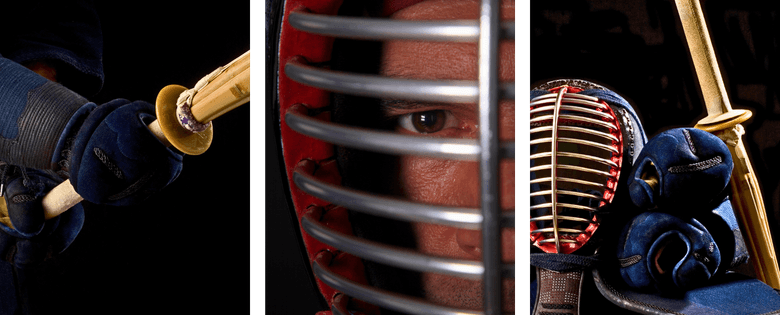
The experience is not built around putting on a decorative samurai costume and posing for photographs. Participants change into actual training attire and protective equipment before beginning the practical lesson.
The uniform influences the way you move. The hakama changes how your legs appear and encourages controlled footwork, while the protective equipment makes it possible to practice sword movements more safely.
Uniform, equipment, protective gear and the required footwear are supplied, so you do not need previous martial-arts equipment or specialist clothing.
Learning How to Hold the Sword
Before attempting strikes, the instructor explains how to grip the practice sword and align it with the body. Beginners often instinctively use too much tension in the arms, so part of the lesson involves learning how controlled movement works more effectively than simply swinging with force.
The class uses safe training equipment rather than a sharpened Japanese sword. Bamboo swords, foam swords and replica blades allow participants to experience different movements without turning an introductory workshop into live-blade practice.
Posture and Footwork
Footwork is one of the most important parts of the lesson because the sword and body need to move together. You practice maintaining balance while advancing, adjusting distance and positioning yourself for basic techniques.
This is where the class begins to feel more like martial-arts training than a tourist demonstration. Repeating apparently simple movements makes it clear how much precision is required before techniques can be performed smoothly.
Strikes, Etiquette and the Samurai Connection
Practicing Basic Techniques
Once you understand the starting posture and grip, the instructor introduces basic sword movements. The session includes strikes, defensive movements and footwork drills performed with controlled training equipment.
The emphasis is on technique rather than strength. Correct distance, timing and body position matter more than simply hitting quickly or forcefully.
Depending on the structure of your session, some practice may also involve working opposite another participant with safe equipment. The exact sequence can vary according to group composition and the instructor.
Why Etiquette Matters in Kendo
Bowing and formal behavior are introduced alongside the physical techniques rather than treated as decorative additions. Modern kendo places considerable emphasis on respect for the opponent, correct conduct and the attitude brought into training.
That approach developed over centuries as Japanese swordsmanship gradually became more than preparation for combat. During the long peace of the Edo period, many sword traditions increasingly emphasized discipline, character and mental training alongside technical ability.
Kendo and Samurai Swordsmanship
The experience uses samurai history to explain where modern sword practice comes from, but kendo should not be understood as a direct reconstruction of medieval battlefield combat.
Earlier schools of Japanese swordsmanship developed techniques around the use of real swords. From the 18th century onward, bamboo swords and increasingly sophisticated protective equipment made it possible to practice full-contact techniques more safely.
Those developments eventually contributed to modern kendo, which uses the shinai as a representation of the Japanese sword while placing strong emphasis on correct technique, etiquette and personal discipline.
Photos, Historic Machiya and What Is Included
Training in a Historic Kyoto House
The workshop takes place inside a traditional Kyoto machiya that is more than 100 years old, with the current activity description dating the building at approximately 120 years.
That does not turn the building itself into a museum visit. Its value is the atmosphere it gives the lesson: wooden architecture and a quieter residential location provide a markedly different setting from a modern commercial activity centre.
Photos and Videos in Full Gear
Photography is deliberately built into the session. While you are wearing the uniform and equipment, the instructors help take photographs and videos so you can concentrate on the activity without relying entirely on another participant to document it.
The images are connected with the training rather than forming a separate costume photoshoot. Some are taken while you pose with the equipment, while others can capture parts of the practical session.
What the Booking Includes
The standard booking includes instruction, uniform rental, equipment rental, protective gear and the footwear required for the experience.
You do not keep the training equipment after the class. Replica swords are available for separate purchase if you want a physical souvenir, but they are not included in the activity price.
Location, Accessibility and Frequently Asked Questions
The experience takes place at Studio NIN Kendo, 16 Shūgakuin Daidōchō, Sakyo Ward, Kyoto 606-8037. The studio is in a residential part of northern Kyoto rather than the main sightseeing centre.
Shugakuin Station is approximately a 15-minute walk away. Near the property, enter the narrow lane leading toward the large traditional gate. Give yourself extra time for the final walk because the studio is less visually obvious than a commercial attraction on a major street.
The activity begins and ends at the same studio. It is not wheelchair accessible, although strollers can be accommodated and service animals are currently permitted.
The physical session is not recommended during pregnancy or for travelers with significant back, spinal or cardiovascular problems. Alcohol and drugs are prohibited.
Participants must currently be at least 7 years old for this particular booking. Free cancellation is available until 24 hours before the starting time.
How Long Does the Kyoto Kendo Experience Last?
The activity lasts 2 hours, including changing into the uniform, instruction, practical training, cultural explanation and photography.
Do I Need Previous Kendo Experience?
No. The class is designed for beginners and starts with safety, grip, posture and fundamental movements.
Do I Wear Real Kendo Gear?
Yes. Training attire and protective equipment are included rather than a purely decorative samurai costume.
What Kind of Swords Are Used?
The experience uses safe training equipment that can include bamboo swords, foam swords and replica blades. It is not a live-blade cutting class.
What Language Is the Experience Conducted In?
The current GetYourGuide booking guarantees an English-speaking instructor.
Are Photos and Videos Included?
The instructors help take photos and videos during the session while you are wearing the training outfit and equipment.
Can Children Participate?
Yes, from age 7 on this particular booking. Children under 7 are currently listed as unsuitable for the activity.
Is the Studio Wheelchair Accessible?
No. Current accessibility information for this activity lists the studio as not wheelchair accessible.
Can I Buy a Replica Sword?
Yes. Replica swords are available for separate purchase but are not included with the standard experience.
Popular Activities in Kyoto

Chopstick Making Workshop in Kyoto

Candlelit Zen Meditation

Kyoto Knife-Making Workshop
