

This free tour of Prague lasts approximately three hours, begins at Václavské náměstí 832/19 on Wenceslas Square and ends outside the Rudolfinum after an English-language walk through the New Town, Old Town and former Jewish Quarter.
The published route includes the National Museum, Karolinum, Estates Theatre, House of the Black Madonna, Powder Tower, Municipal House, Old Town Square, the Astronomical Clock, Ungelt, the Old-New Synagogue and the Old Jewish Cemetery. The guide introduces these landmarks from streets and squares because attraction tickets and guaranteed interior visits are not included.
No fixed tour price is paid in advance. Each participant chooses how much to contribute to the guide at the end according to the length of the walk, the quality of the explanations and their own budget.
You can reserve the free tour of Prague in English until two hours before departure when places remain. The activity requires at least four participants and does not accept groups of more than six friends or relatives, even when they use separate reservations.
Why This Route Works as a First Prague Tour
The route begins in the New Town, crosses the medieval commercial center and finishes beside the Vltava at the Rudolfinum. That progression explains Prague more clearly than a list of disconnected monuments.
Wenceslas Square was created in 1348 when Charles IV founded Prague’s New Town. It functioned for centuries as the Horse Market and later became a setting for political demonstrations, public celebrations and events associated with the creation of Czechoslovakia, the Nazi occupation, the Prague Spring and the Velvet Revolution.
The Old Town section follows streets connected with Charles University, royal coronation processions, international trade and municipal government. Buildings from the Gothic, Baroque, Neoclassical, Art Nouveau and Czech Cubist periods stand within a compact area, allowing the guide to compare architectural forms without leaving the central districts.
Old Town Square then reveals the commercial and political heart of medieval Prague. The Astronomical Clock, Týn Church, St Nicholas Church and the former customs courtyard at Ungelt show how merchants, religious institutions and local government shared the same urban space.
The final section reaches Josefov, where the surviving synagogues and cemetery preserve only part of the former Jewish Town. Much of the old neighborhood was demolished and rebuilt around the turn of the 20th century, so the guide can distinguish medieval and early modern sites from the broad avenues and apartment buildings created during redevelopment.
This activity does not visit Prague Castle, Charles Bridge, Malá Strana or the castle-side St Nicholas Church. Those landmarks require another route, while this tour concentrates on the New Town, Old Town and Josefov.
From Wenceslas Square to the Powder Tower
Wenceslas Square and the National Museum
The group meets at Václavské náměstí 832/19 on Wenceslas Square. Arrive 10 to 15 minutes early and use the electronic voucher to identify the guide, since the square extends for roughly 750 meters and contains several common meeting areas.
The guide introduces the square as part of the New Town founded in 1348, not as an original section of medieval Old Town. At its upper end stand the National Museum and the equestrian monument to St Wenceslas.
The National Museum building opened in 1891 and dominates the southeastern end of the square. Museum admission and access to its collections are not included, so the tour discusses the façade and the square’s political history from outside.
Karolinum and Charles University
The route enters the Old Town and passes Karolinum, the historical center of Charles University. The university was founded in 1348, while Karolinum became part of the institution in 1383 and continues to host ceremonies and official events.
The building’s present appearance reflects Gothic remains, Baroque changes and 20th-century reconstruction. A university interior visit is not included, although public exhibitions can occasionally operate in the ground-floor gallery.
Estates Theatre
The Estates Theatre opened in 1783 and remains one of the best-preserved historical theaters in Europe. Wolfgang Amadeus Mozart conducted the world premiere of Don Giovanni here on October 29, 1787.
The tour introduces the theater from Ovocný trh. Performance tickets, backstage access and an interior theater visit are not included.
House of the Black Madonna
The House of the Black Madonna was constructed in 1911 and 1912 from designs by Josef Gočár. Its angular façade and carefully integrated Baroque corner statue make it one of the principal examples of Czech Cubist architecture.
The building contains a Cubism exhibition and the Grand Café Orient, but neither museum admission nor food and drinks are included in the free tour.
Powder Tower and Municipal House
The Powder Tower was completed in 1475 as a representative entrance to the Old Town. It later stored gunpowder, which gave the building its current English name.
The tower marks the traditional beginning of the Royal Route followed by Czech rulers before coronation ceremonies at Prague Castle. The tour does not climb the tower, and the observation gallery requires a separate ticket.
Beside it stands the Municipal House, constructed in the early 20th century on the site of the former King’s Court. Its halls, mosaics, stained glass and decorative program make it a major example of Prague Art Nouveau, but an interior guided visit or concert is not included.
Old Town Square, Ungelt and the Astronomical Clock
Basilica of St James and Ungelt
The published highlights include the Basilica of St James, founded during the 13th century and rebuilt in Baroque form after later damage. The church remains active and hosts organ concerts, so entry depends on opening hours, services and events.
Nearby Ungelt, also called Týn Yard, served as a protected customs courtyard for foreign merchants. Goods entering Prague were registered and taxed here, while inns, warehouses and stables supported the traders using the Old Town market.
Old Town Square
Old Town Square developed from a marketplace at the intersection of European trade routes. Its buildings include the Old Town Hall, the Gothic Church of Our Lady before Týn, the Baroque St Nicholas Church and houses representing several centuries of urban change.
The guide can also point out the pavement crosses commemorating the 27 leaders executed in 1621 after the Bohemian Revolt. Public markets, festivals, demonstrations and seasonal installations can alter the path used across the square.
Old Town Hall and Astronomical Clock
The Old Town Hall was established in 1338. Its medieval astronomical clock dates to 1410 and combines a clock face, astronomical information and a calendar dial added and modified during later periods.
The procession of the apostles normally appears each hour between 8 am and 11 pm. Crowds gather before the performance, so the guide may explain the mechanism from another position or continue the route without waiting for a specific hourly display.
The free tour does not include admission to the town hall, tower, chapel, state rooms or Romanesque-Gothic underground. Those areas require a separate ticket and additional time.
Týn Church and St Nicholas Church
The Church of Our Lady before Týn was constructed mainly between the 14th and early 16th centuries, with later Baroque changes inside. Its twin towers rise behind the buildings facing the square, while the entrance is reached through an arcade from the plaza.
St Nicholas Church on the opposite side of the square was rebuilt between 1732 and 1737 and now belongs to the Czechoslovak Hussite Church. Neither church interior is a guaranteed part of the walking tour.
Josefov and the Rudolfinum
The final section enters Josefov, the district created from Prague’s former Jewish Town. Most of the medieval and early modern neighborhood was demolished during redevelopment between the 1890s and the First World War, but several synagogues, the cemetery and the Jewish Town Hall survived.
Old-New Synagogue
The Old-New Synagogue dates to the 13th century and remains the oldest active synagogue in Europe. It continues to function as a place of worship, so entry requires the appropriate Jewish Museum ticket and respect for religious schedules.
The free tour observes the building from public streets. It does not include synagogue admission, religious services or the Jewish Museum’s interior route.
Old Jewish Cemetery
The Old Jewish Cemetery was used from 1439 until 1787 and contains more than 12,000 surviving tombstones. Because the burial ground could not expand and Jewish law discourages disturbing graves, new layers of earth were added and burials accumulated vertically.
The cemetery is visible only in limited sections from surrounding public areas. Full entry requires a Jewish Museum ticket, and the sites close on Saturdays and Jewish holidays.
Kafka and the Former Jewish Town
Franz Kafka was born near the edge of the former Jewish Town in 1883 and lived at several Prague addresses. The guide may connect his family history and writing with Josefov, but the tour does not include a Kafka museum or a preserved interior of his birthplace.
The 1920 film The Golem: How He Came into the World used the legend of the Prague ghetto as its setting. The route discusses the cultural tradition surrounding the golem rather than visiting a confirmed filming location.
Rudolfinum
The tour finishes outside the Rudolfinum on Jan Palach Square. The Neo-Renaissance building was constructed between 1876 and 1884 and formally opened in 1885.
It is now the principal home of the Czech Philharmonic and also contains Galerie Rudolfinum. Concert tickets, exhibition entry and an interior building tour are not included.
The route does not return to Wenceslas Square. From the endpoint, Staroměstská metro station and tram stops are nearby, while Old Town Square is reachable on foot.
Practical Details and Frequently Asked Questions
- Duration: allow approximately three hours.
- Language: English-speaking guide.
- Meeting point: Václavské nám. 832/19 on Wenceslas Square.
- Final point: outside the Rudolfinum.
- Format: entirely on foot.
- Confirmed inclusion: English-speaking guide.
- Monument admissions: not included.
- Booking deadline: two hours before departure when places remain.
- Minimum participation: four people.
- Group limit: no more than six friends or relatives, including separate reservations.
- Children: must attend with an adult, with a maximum of three children per adult.
- Accessibility: most areas are accessible, and accessible toilets are available.
- Pets: not permitted.
- Voucher: electronic and accepted on a mobile phone.
The supplier’s narrative still says the walk ends after around two hours, but its structured booking information gives a duration of three hours. Plan for three hours and use the starting and finishing times shown on the voucher when arranging another activity.
Most areas are described as accessible, but this is not a guarantee that every optional interior, curb or crowded section is barrier-free. State mobility requirements during booking and confirm the route when step-free access is essential.
How much does the free tour cost?
No fixed tour price is collected in advance. Each participant decides their contribution at the end based on the three-hour duration, the guide’s explanations and their own budget.
Does the tour enter the Astronomical Clock or Old Town Hall?
No town hall ticket is included. The guide explains the clock from Old Town Square, while the tower, historical rooms and underground require a separate admission.
Does the tour enter the Jewish Cemetery or synagogues?
No Jewish Museum admission is included. The tour views the Old-New Synagogue, cemetery area and other Josefov landmarks from public streets.
Does the route include Prague Castle or Charles Bridge?
No. The confirmed highlights remain within the New Town, Old Town and Josefov, and the activity ends at the Rudolfinum before crossing the river.
Can more than six friends book separately?
No. The six-person limit applies to the complete group of friends or relatives, even when participants use different names or reservations.
Can children join?
Yes, children may participate with an adult. The supplier allows a maximum of three children for each accompanying adult.
Is the tour wheelchair accessible?
Most areas are described as accessible, and accessible toilets are available. Crowds, temporary barriers and optional building access can still affect the route, so mobility requirements should be declared before departure.
What happens when the minimum is not reached?
The tour requires at least four participants. When the minimum is not reached, the operator contacts affected travelers and offers an alternative arrangement.
Popular Activities in Prague
More Tours in Prague
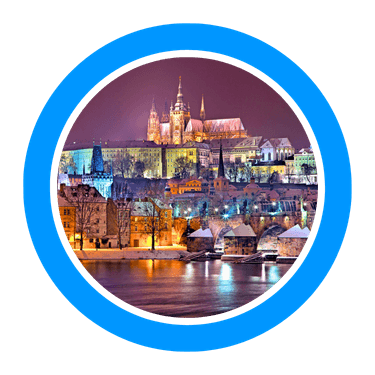
Prague at Night
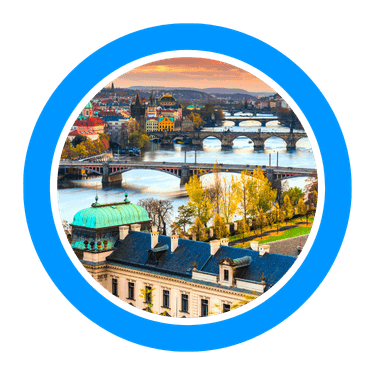
Prague in 1 Day
Prague by Bike
