


Setúbal cooks from two landscapes at once: the Sado estuary and the Arrábida hills. That double geography explains why the local table moves so easily from cuttlefish, oysters and fried fish to sheep’s cheese, vineyard sweets and rustic breads shaped by fishing, salt work, farming and river trade.
Guided tour
Setúbal Sardine and Market Walking Tour
Choose your date
GetYourGuide displays availability and confirms bookings on its own site.
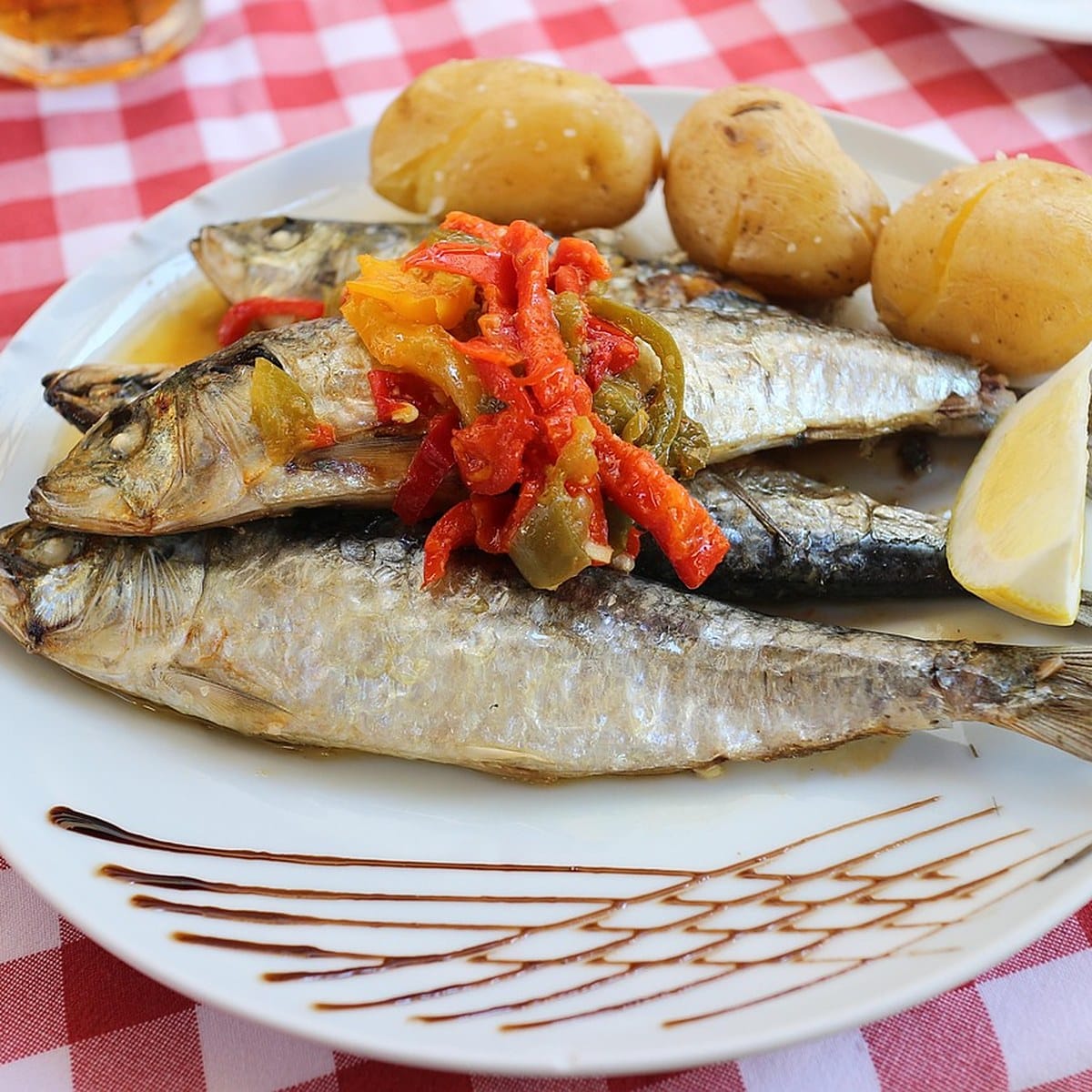
A local curiosity tied to that maritime history appears in the sardine market walking tour. Some guides repeat the old claim that Setúbal once counted more than 400 canning factories, a figure best treated cautiously. What is certain is that the Museu do Trabalho Michel Giacometti documents the labor world of the canning industry, while Mercado do Livramento still shows the fish trade that made the town famous.
These are the dishes and products that best explain traditional eating in Setúbal.
1. Choco Frito (Fried Cuttlefish)
Choco frito is the dish most closely tied to Setúbal: strips of cuttlefish, usually from the Sado estuary or nearby coast, marinated with garlic, lemon, salt and sometimes white wine, then coated lightly and fried. It became a restaurant emblem in the twentieth century, but its roots are practical and older, linked to a port town that always handled abundant cephalopods and needed quick, filling meals for workers and sailors. One detail often overlooked is that many local cooks insist on using larger cuttlefish cut into thick strips rather than rings, because the point is not a generic fried seafood plate but the particular texture of choco as Setúbal knows it.
In Setúbal, order it around Avenida Luísa Todi and the waterfront, where houses such as Casa Santiago and O Ramila built their names on the dish. Ask for choco frito with batatas fritas or salad, and if it is available, note whether the menu specifies choco de Setúbal, a distinction locals still care about.
2. Caldeirada à Pescador (Fisherman’s Fish Stew)
Caldeirada is a layered fish stew made with several species, potatoes, onion, tomato, peppers, garlic, olive oil and wine, cooked so the ingredients steam together rather than being stirred apart. In Setúbal it belongs to the old cooking logic of fishing communities: use what came ashore that day, especially fish that brought less money at auction but great flavor in the pot. In older local practice, the quality of a caldeirada was judged not only by the fish mix but by the order of the layers and the cook’s restraint, since broken slices meant the dish had been handled badly.
Look for it in traditional seafood restaurants near the docks or in Troino, the old fishermen’s quarter, where the daily catch still shapes menus more than fixed house specialties. Ask what fish went into that day’s caldeirada, because in Setúbal the answer should reflect the market and the season rather than a standard recipe repeated every day.
3. Ostras do Sado (Sado Estuary Oysters)
Oysters from the Sado estuary have a long local history, though they are less internationally known than oysters from French Atlantic regions. In the nineteenth century and into the twentieth, the estuary supported an important oyster economy tied to the same sheltered waters that also sustained salt pans, fishing grounds and shellfish gathering. A point often skipped in short guides is that Sado oysters were hit hard by decline in the later twentieth century, so eating them today connects not to uninterrupted abundance but to a more fragile story of recovery, cultivation and renewed local pride.
Try them at seafood-focused restaurants in Setúbal or ask at Mercado do Livramento which nearby places are serving local oysters that day. The simplest order is a plate of fresh oysters with lemon, and many locals still trust the cooler months more than the height of summer.
4. Queijo de Azeitão (Azeitão Sheep’s Cheese)
Queijo de Azeitão is a small, soft sheep’s milk cheese made in the Serra da Arrábida area, especially around Azeitão, using cardoon flower as the coagulant rather than animal rennet. It is one of Portugal’s landmark traditional cheeses, with a dense, creamy interior when properly matured and a production method closely tied to regional sheep herding. The use of cardoon matters historically because it places the cheese within an older Iberian vegetable-rennet tradition that survived here while many industrial systems moved in other directions.
The most direct place to look is Azeitão itself, at producers and specialist shops, but in central Setúbal it also appears at Mercado do Livramento and selected delicatessens. Order it whole if possible rather than pre-cut, and if choosing by maturity, ask for one soft enough to spoon from the center, which is how many locals prize it.
5. Torta de Azeitão (Azeitão Egg Roll)
Torta de Azeitão is a rolled sponge made with a thin cake wrapped around a rich egg-yolk filling, often scented lightly with cinnamon. It belongs to the peninsula’s convent-influenced sweet tradition, where egg yolks became central partly because egg whites were used in domestic and craft work, including clarifying wine and starching fabrics. The sweet is strongly associated with Azeitão and nearby pastry culture, and its texture is a clue to quality: the sponge should be fragile and slightly sticky, not thick like an ordinary cake roll.
For a classic version, go to Azeitão pastry shops such as Cego, whose name is closely tied to the sweet, or look for it in respected pastelarias in Setúbal. Order a fresh slice rather than a packaged version, because the delicate structure is part of what defines it.
6. Farinha Torrada (Toasted Flour Sweet)
Farinha torrada is one of Setúbal’s most distinctive old sweets, made from toasted flour mixed with sugar and often cinnamon and citrus elements, then shaped into a dense confection. It belongs to a city with a strong working and port history, where confectionery did not always depend on costly almonds or elaborate pastry technique. In Setúbal, the sweet also appears in memories of fairs, religious festivities and neighborhood sale tables, which is why it carries more local identity than its simple ingredient list suggests.
Look for it in traditional pastry shops and confectioners in Setúbal rather than in generic cafés. Ask specifically for the local style of farinha torrada, since it is far less universal than torta de Azeitão and usually survives where a shop still keeps a regional sweets repertoire.
7. Ensopado de Enguias (Eel Bread Stew)
Ensopado de enguias is a robust dish of eels cooked in a seasoned broth that is poured over bread, linking estuary fishing to the bread-based stews of southern Portugal. Around the Sado wetlands and channels, eels were once a much more familiar food than they are on many current menus, especially before refrigeration and modern fish distribution narrowed daily eating habits. The important cultural detail is that the bread is not an accompaniment but the framework of the dish, soaking up the broth in a way that reflects older household economy in river and marsh communities.
Seek it in traditional restaurants with regional menus rather than places focused only on grilled fish and shellfish. It is not listed everywhere, so asking ahead in Setúbal is sensible, especially in cooler months when heavier broth dishes are more likely to appear.
8. Moscatel de Setúbal (Fortified Muscat Wine)
Moscatel de Setúbal is the region’s defining fortified wine, made principally from Moscatel de Alexandria grapes and aged to develop character through oxidation and time rather than simple freshness. Its history is tied to the vineyards around Azeitão, Palmela and the wider peninsula, and by the nineteenth century it was already an established export. A less repeated detail is that the style took hold here because the peninsula combines maritime influence, sheltered slopes and sandy and limestone-marked soils that suit the grape and the region’s long fortified-wine tradition.
Try it in wine bars and restaurants across Setúbal, or visit producers in the municipality and nearby Azeitão for a more direct introduction. If ordering with food, ask for a glass at the end of the meal with local sweets, since that remains its most traditional place at the table.
Where to Eat Between Mercado do Livramento, Avenida Luísa Todi and Troino
For the densest concentration of traditional food, start around Mercado do Livramento in the morning, then walk toward Avenida Luísa Todi and into Troino, where many long-established fish restaurants are found. Lunch in Setúbal usually begins around 12:30 and stays strong until 15:00, while dinner commonly starts from 20:00 onward. Around the market and on side streets behind the avenue, simple lunch spots can still be moderate in price, while seafood restaurants nearer the waterfront can rise quickly depending on oysters, shellfish and the day’s fish.
As a rough guide, pastries, snacks and market bites stay in the low budget range, simple prato do dia lunches often sit in a moderate bracket, and seafood dinners on Avenida Luísa Todi can move much higher if the order includes premium fish or shellfish. It is normal in Setúbal to ask whether the choco is local, what fish came in that morning, and which desserts are made in-house. If heading out to Azeitão, that is the better zone for buying queijo de Azeitão, torta de Azeitão and bottles of Moscatel directly tied to the surrounding vineyards.
If you want local orientation before choosing where to sit down, the free tour of Setúbal can help place the market, old fishing streets and canning history in context. That background makes it easier to tell which dishes belong to the city itself and which are broader Portuguese standards.