


Roman cooking is defined by thrift, ritual and a city long fed by the countryside of Lazio as much as by its markets and slaughterhouses. Its most characteristic dishes come from taverns, trattorie, Jewish kitchens, shepherd traditions and the old working districts around Testaccio and Trastevere, where cuts, vegetables and pasta were turned into a cuisine with strict habits and very specific combinations.
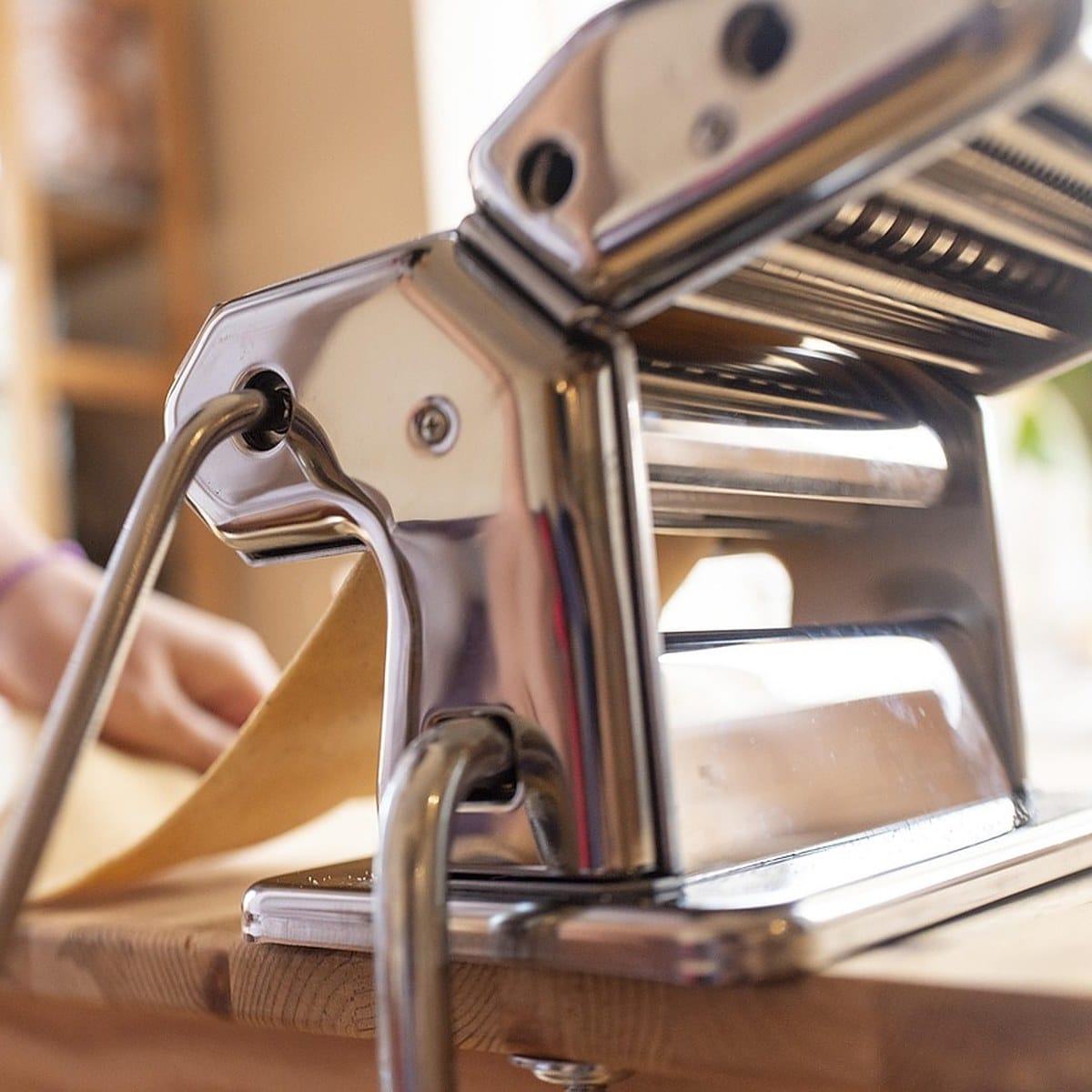
A local curiosity worth knowing is this pasta class with a Roman nonna, held inside a restaurant with about a century of history. Guests roll dough with a mattarello, shape ravioli and fettuccine by hand, then sit down to eat the pasta with a glass of wine.
Guided tour
Pasta-Making Class with a Roman Nonna
Choose your date
GetYourGuide displays availability and confirms bookings on its own site.
These are the Roman dishes and products that explain the city best.
1. Cacio e Pepe (Pasta With Pecorino Romano and Black Pepper)
Cacio e pepe is the Roman pasta reduced to its bare essentials: tonnarelli or spaghetti, Pecorino Romano, black pepper and starchy cooking water worked into a sauce without cream or butter. The dish is often linked to shepherd foodways because pecorino and dried pasta kept well, but in Rome it became an urban classic in the trattorie of the historic center and Trastevere. One useful detail often missed is that older Roman recipes and restaurant practice often call for toasted pepper, which gives the dish its aroma, while the pecorino itself is a protected cheese historically made in Lazio and Sardinia for the Roman market after transhumance patterns changed over time.
In Rome, order it at Felice a Testaccio, where it is famously finished at the table, or at Roscioli Salumeria con Cucina, where the cheese selection matters as much as the technique. Trastevere and Testaccio remain the neighborhoods most associated with the dish, and it is worth ordering at lunch when trattorie tend to serve pasta at their most straightforward.
2. Carciofi alla Giudia (Jewish-Style Fried Artichokes)
Carciofi alla giudia are whole artichokes, usually the Roman mammola variety, trimmed, opened like a flower and fried twice until crisp. They come from the cucina ebraico-romanesca of the former Roman Ghetto, where artichokes became one of the most recognizable ritual and seasonal foods, especially in spring. A lesser-known point is that the mammola used in Rome has no inner choke when harvested young, which is one reason this preparation became so established here rather than elsewhere.
The traditional area to eat them is the old Ghetto, especially around Via del Portico d’Ottavia, where restaurants such as Nonna Betta and Ba’Ghetto keep them on the menu in season. Order them in late winter and spring, when Roman artichokes are at their best, and compare them with carciofi alla romana if both are available.
3. Saltimbocca alla Romana (Veal With Prosciutto and Sage)
Saltimbocca alla romana is made with thin veal escalopes topped with prosciutto and sage, then cooked quickly with butter and white wine. It is one of the few Roman classics closely tied to restaurant dining rather than only home cooking, and it appears in nineteenth-century culinary writing as part of the city’s codified repertoire. An often overlooked fact is that the name, literally “jumps in the mouth,” became so famous that the dish spread internationally, but the Roman version is relatively restrained and depends on the balance between sage and cured ham rather than heavy sauce.
Look for it in traditional trattorie in Testaccio, Campo de’ Fiori and the Centro Storico, including Da Enzo al 29 and Sora Lella on Isola Tiberina. Order it as a secondo after pasta rather than as a stand-alone plate, which is still the most Roman way to fit it into a meal.
4. Supplì al Telefono (Roman Fried Rice Croquette With Mozzarella)
Supplì is Rome’s essential street snack, a breadcrumbed rice croquette filled most commonly with ragù and mozzarella, then fried. The tag “al telefono” refers to the thread of melted mozzarella that stretches when the croquette is opened, a comparison dating to the era of telephone wires rather than mobile phones. Its name likely derives from the French surprise, filtered through nineteenth-century culinary language in Rome, a reminder that even humble fried food in the city carries traces of papal and post-unification cosmopolitanism.
For a classic version, try I Supplì in Trastevere or Supplizio near Campo de’ Fiori, and order a simple supplì before pizza or as a quick afternoon stop. In many Roman pizzerie al taglio and friggitorie, this is the first item to ask for because it reveals whether the frying and ragù are being handled with care.
5. Trippa alla Romana (Roman-Style Tripe)
Trippa alla romana is tripe simmered in tomato, mint, pecorino and often a soffritto of onion, carrot and celery. It belongs to the quinto quarto tradition, the “fifth quarter” of offal and less valued cuts associated above all with Testaccio and the old slaughterhouse economy. A detail many visitors miss is the use of mentuccia, a local mint-like herb that appears in several Roman dishes and cuts through the richness of tripe in a way standard mint does not quite replicate.
Testaccio is the right district to look for it, especially at Checchino dal 1887, one of the most reliable addresses for offal cookery, or at Flavio al Velavevodetto. Order it as a secondo, and if it appears on the Thursday menu, that follows the old Roman rhythm summed up in the saying about gnocchi on Thursday and tripe on Saturday.
6. Pizza Bianca con Mortadella (Roman White Pizza Filled With Mortadella)
Pizza bianca in Rome is not focaccia by another name but a specific bakery bread, stretched thin, baked hard enough to blister and split, then often opened and filled. The classic pairing is mortadella, a combination sold in forno and takeaway counters across the city and eaten as a snack, quick lunch or merenda. One less obvious detail is that Roman bakers often judge a good pizza bianca by the fragile crackle of the crust and the open interior pockets, traits tied to high hydration dough and strong oven heat rather than abundant toppings.
For the canonical version, go to Antico Forno Roscioli near Campo de’ Fiori or Forno Campo de’ Fiori and ask for pizza bianca with mortadella by weight. It is best in the late morning, when the bread is still warm from the oven and office workers, market vendors and students stop in for something fast rather than a formal sit-down meal.
7. Puntarelle in Salsa di Alici (Catalogna Chicory Shoots With Anchovy Dressing)
Puntarelle are the crisp inner shoots of catalogna chicory, cut into strips and dressed with olive oil, vinegar, garlic and anchovies. This is one of the most distinctly Roman vegetable dishes, strongly seasonal and tied to winter, when the shoots are at their tightest and most bitter. A detail often overlooked is that the shoots are traditionally curled in cold water after cutting, which changes both texture and appearance and turns a bitter leaf into a salad with snap. In older Roman homes and markets, the cutting itself was specialized enough that vendors often prepared puntarelle to order with a dedicated tool, because slicing the shoots too thick changes the dish completely.
You will find puntarelle in winter at markets such as Campo de’ Fiori and Mercato Testaccio, and on the menu in old-style trattorie throughout Prati and the historic center. Order them as a contorno, especially with roasted or braised meat, because in Rome they are not a starter so much as the bitter counterpoint that completes the plate.
8. Maritozzo con la Panna (Sweet Bun Filled With Whipped Cream)
Maritozzo is a soft enriched bun, traditionally scented with raisins, pine nuts or candied citrus in older versions, then split and filled with whipped cream in the modern Roman style. It is tied to breakfast culture now, but its history runs deeper through Lent and courtship customs, with references in Roman dialect poetry and nineteenth-century city life. A lesser-known fact is that the cream-filled maritozzo familiar today is only one chapter in the pastry’s history, since earlier Roman versions were plainer and more bread-like, especially those eaten during fasting periods. The name is linked to marito, or husband, because fiancés were once said to give these buns, sometimes with a ring or token hidden inside, making the pastry part of Roman social custom as well as breakfast.
For a serious Roman reference point, try Regoli near Esquilino or Il Maritozzaro in Trastevere, where the bun remains part of everyday city habit rather than a novelty item. Order it in the morning with coffee, and if you want the more old-fashioned style, ask whether the bakery makes the version with raisins and pine nuts.
How to Eat Like a Roman in Testaccio, Trastevere and the Ghetto
For traditional Roman food, plan around neighborhoods rather than monuments: Testaccio for quinto quarto and classic trattorie, the old Ghetto for Jewish-Roman dishes, Trastevere for fried snacks and pasta, and Campo de’ Fiori for bakeries and market-linked eating. Lunch in Rome usually runs from about 12:30 to 2:30, while dinner in traditional trattorie often starts around 8:00 and kitchens can feel quiet before then. In Testaccio and Prati, weekday lunch is often a good moment for simpler ordering and shorter waits, while Trastevere is generally easier earlier in the evening than at peak hours.
Budget-wise, pizza bianca, supplì and bakery snacks often cost €2 to €6, a casual trattoria lunch usually lands around €15 to €25 per person, and a fuller dinner with antipasto, primo or secondo, wine and coperto commonly runs €30 to €50. In historic addresses such as Roscioli or Checchino dal 1887, expect higher totals because of ingredient sourcing, reputation and setting. When ordering in a traditional restaurant, it is still normal in Rome to build the meal in courses, with pasta as a primo, saltimbocca or trippa as a secondo, and vegetables like puntarelle as a contorno.
The free tour of Rome is a practical way to get oriented in the city’s food geography, especially if you want to understand why Testaccio, the Ghetto and Campo de’ Fiori matter so much. A local guide can also point out which dishes make sense in which part of Rome and at what time of day to look for them.