


Istanbul’s food identity starts with geography that most cities do not have: pelagic fish passing through a narrow strait, palace cooks refining recipes a few hills away, and ferry-linked neighborhoods that turned certain foods into rituals tied to specific stops and hours. What people eat here is shaped as much by the Bosphorus and the old imperial kitchens of Topkapı as by worker lokantas, Black Sea migration, and the bakery habits of districts that still keep their own rhythms.
Guided tour
Turkish Tea and Card Games with an Istanbul Grandma
Choose your date
GetYourGuide displays availability and confirms bookings on its own site.
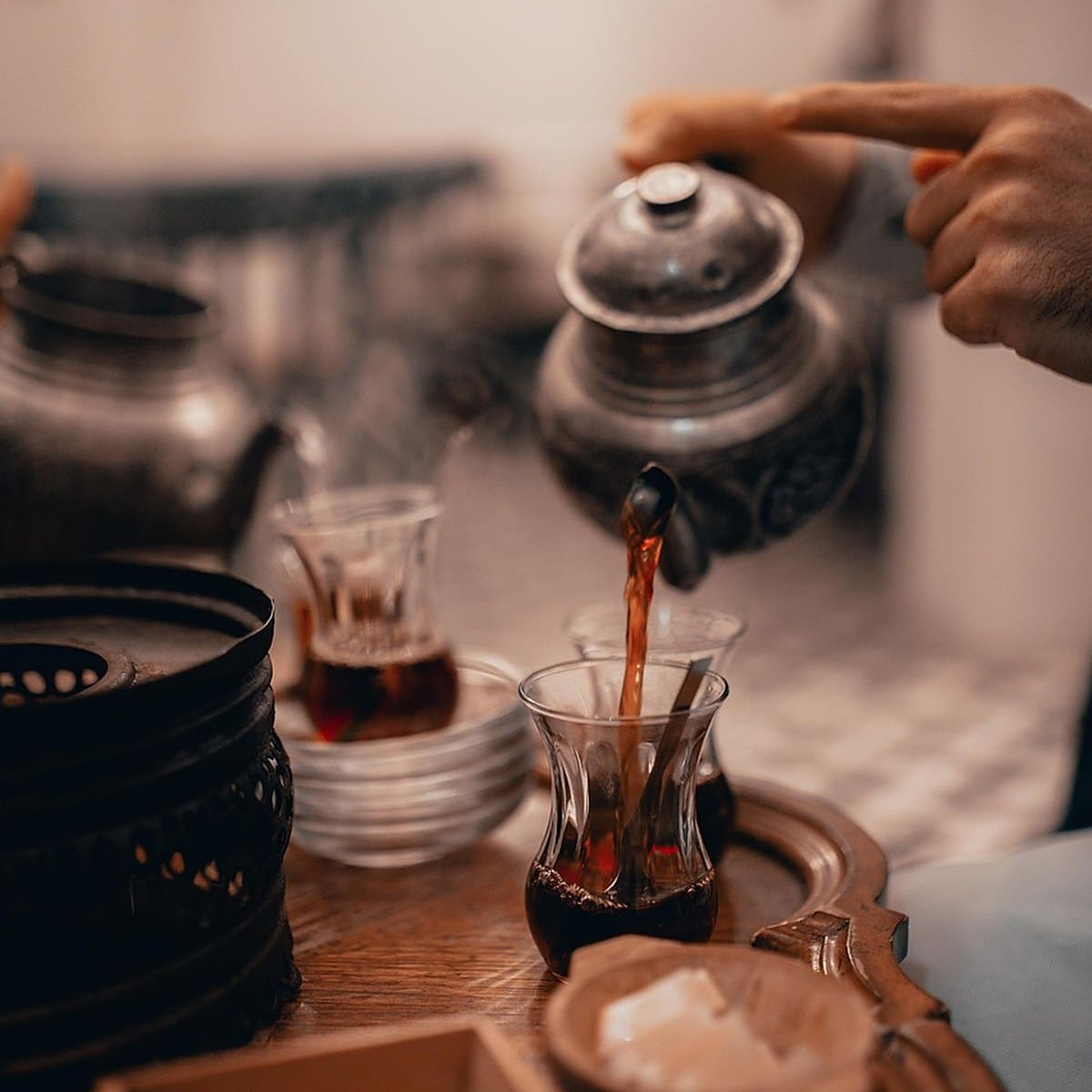
One local curiosity that helps explain Istanbul’s social food culture is an afternoon visit for tea and card games in a family home in Beşiktaş, hosted by a local grandmother. It is a small domestic setting rather than a meal, with drinks and cards included, and the tea and cards visit offers a glimpse of the kind of hospitality that sits behind many Istanbul food traditions.
These are the dishes and products that best show how the city eats.
1. Balık Ekmek (Fish Sandwich)
Balık ekmek is Istanbul’s best-known waterfront street food: grilled or sometimes pan-cooked fish served in bread with onion, greens, and often a squeeze of lemon. The classic fish today is usually mackerel or farmed sea bass, though older Istanbul memory connects the sandwich strongly to the migration seasons of palamut and lüfer in the Bosphorus. A lesser-known detail is that the Eminönü style became especially visible in the later 20th century through boat-based sellers, but the deeper habit of eating bread with fish belongs to the old shore culture of the Golden Horn and Bosphorus fishing districts.
In Istanbul, Eminönü remains the best-known area to try it, especially around the boats by Galata Bridge, where ordering a straightforward balık ekmek with onions and greens is the point. For a more neighborhood version, look in Karaköy or along the Bosphorus in Beşiktaş and Üsküdar, where small fish places may serve it with seasonal fish when the catch allows.
2. Kuru Fasulye (Stewed White Beans)
Kuru fasulye is a staple of Istanbul esnaf cooking, made by slowly stewing white beans with onion, tomato or pepper paste, and often pieces of pastırma or kavurma, though meatless versions are common. Its place in the city comes from lokanta culture, where workers and tradesmen have long relied on substantial midday dishes served with rice and pickles. One detail often overlooked is the prestige of the bean itself: many cooks value İspir beans from northeastern Turkey because their thin skins hold shape while turning creamy, a point discussed in old lokanta kitchens more than in tourist food lists.
The district most associated with the dish is Süleymaniye, where Ali Baba Kanaat Lokantası is widely known for kuru fasulye served with pilav and turşu. Traditional lokantas in Fatih and around the Grand Bazaar also do it well, and lunchtime is the most appropriate hour to order it the local way, with rice rather than bread as the main companion.
3. Kanlıca Yoğurdu (Kanlıca Yogurt)
Kanlıca yoğurdu is a thick, slightly tart yogurt associated with the Bosphorus neighborhood of Kanlıca on the Asian side. It is traditionally served plain or with a light shower of powdered sugar, a pairing that surprises visitors but has been part of Bosphorus excursion culture for generations. A less commonly noted fact is that Kanlıca’s yogurt fame grew with 19th-century leisure traffic on the Bosphorus, when stopping for yogurt became part of the same social geography as waterside promenades, ferry visits, and tea gardens.
The obvious place to try it is in Kanlıca itself, especially at longtime neighborhood spots around the ferry square such as Kanlıca İsmailağa Yoğurtçusu. Order a simple portion of yogurt, with or without powdered sugar, and go in the afternoon when the square is active with local visitors rather than treating it as a full meal.
4. Vefa Bozası (Fermented Millet Drink)
Boza is a dense fermented drink made from grains, most famously millet, with a long winter history in Istanbul and other former Ottoman cities. It is mildly sour-sweet, traditionally topped with cinnamon and roasted chickpeas, and it belongs to cold-weather street life as much as to the home table. The lesser-known historical point is that boza once existed in both low-alcohol and non-alcoholic forms across the empire, which partly explains why it appears in Ottoman moral and urban regulations more often than many modern drinkers realize.
In Istanbul, the canonical address is Vefa Bozacısı in the Vefa neighborhood, founded in the 19th century and still the city’s reference point for boza. Order a glass with leblebi and cinnamon in autumn or winter, when locals are most likely to seek it out, and pair the visit with a walk through nearby Süleymaniye streets where older food traditions still make sense in context.
5. Islak Hamburger (Wet Burger)
Islak hamburger is one of Istanbul’s most specific late-night foods: a small beef burger held in a soft bun and steamed in a garlicky tomato sauce until the bread becomes glossy and damp. It is strongly associated with Taksim and modern urban nightlife rather than Ottoman culinary heritage, yet it has earned a fixed place in the city’s eating habits. A useful detail often missed is that its texture comes not from a sauce poured at serving but from being kept warm in glass-fronted steam cabinets, where the buns absorb the seasoned vapor over time.
The classic place to try it is around Taksim Square, especially at Kızılkayalar, where the standard order is one or two islak hamburgers rather than a full sit-down meal. Go late in the evening or after midnight, when the dish is most tied to local custom, and eat it standing up or on the move as many Istanbul residents do.
6. Kokoreç (Seasoned Lamb Offal on Bread)
Kokoreç is made from seasoned lamb intestines wrapped around sweetbreads or other offal, roasted on a horizontal spit, then finely chopped and cooked with spices before serving in bread or on a plate. It belongs to the offal traditions of the wider region, but in Istanbul it has become a distinct street and meyhane-adjacent food with its own vocabulary of heat levels and chopping styles. A lesser-known point is that serious kokoreç sellers and regulars pay close attention to the balance between crisp outer layers and softer interior fat, because that ratio matters as much as the spice mix.
For a classic Istanbul setting, try Şampiyon Kokoreç in Beyoğlu or branches elsewhere in the city, and order yarım ekmek kokoreç with your preferred level of acı. Neighborhood grills in Beşiktaş, Kadıköy, and around late-night transport hubs also serve it, especially after dark when kokoreç culture is at its strongest.
7. Sarıyer Böreği (Sarıyer-Style Pastry)
Sarıyer böreği is a flaky baked pastry linked to the Bosphorus district of Sarıyer, usually filled with minced meat, pine nuts, currants, and black pepper, though cheese versions exist too. It reflects an Ottoman habit of balancing savory filling with small sweet accents, a combination still found in older börek repertoires but often simplified elsewhere. One underappreciated detail is that the pastry’s reputation depends not only on the filling but on very thin layered dough and a relatively dry, crisp bake, which distinguishes it from softer tray böreks sold for breakfast in many other parts of Turkey.
Head to Sarıyer itself for the most context, where historic börek shops and neighborhood bakeries still sell it by weight or portion, especially in the morning. In other parts of Istanbul, look for börekçi shops that specify Sarıyer böreği, and order the kıymalı version to get the classic mix of meat, currants, and pine nuts.
8. Tavuk Göğsü (Chicken Breast Milk Pudding)
Tavuk göğsü is an old milk pudding made with shredded chicken breast, milk, sugar, and starch or rice flour, then cooked until smooth enough that the meat nearly disappears into the texture. It comes from the Ottoman palace and confectionery tradition, where poultry in sweet dishes was not unusual in elite cuisine. The lesser-known fact is that the dish survives not because the chicken adds a strong taste, but because the fibers contribute a particular elasticity that older Istanbul muhallebicis still consider essential to the pudding’s structure.
In Istanbul, traditional pudding shops such as Saray Muhallebicisi and older-style muhallebicis in Beyoğlu, Fatih, and Kadıköy are reliable places to look for it. Order plain tavuk göğsü or, if available, kazandibi from the same family of milk desserts, and try it in the afternoon when these shops function as classic tea-and-sweets stops rather than as dessert counters after dinner.
9. Simit (Sesame Bread Ring)
Simit is the everyday bread ring that accompanies countless ferry crossings, morning commutes, and glasses of Turkish tea. Its crust is coated in sesame seeds and typically gains its color and subtle sweetness from a dip in grape molasses before baking. Crisp outside and soft within, it is a practical snack rather than a formal meal.
Buy one fresh from a busy bakery or street cart near Eminönü, Beşiktaş, or a ferry pier, preferably in the morning. Try it with çay, white cheese, or simply on its own. The setting—a waterfront bench or a ferry deck—is part of the pleasure.
10. Turkish Breakfast and Menemen
A traditional Turkish breakfast, or kahvaltı, brings small plates of cheeses, olives, tomatoes, cucumbers, bread, honey, jam, and tea together at a leisurely table. Menemen adds a warm favorite: eggs gently cooked with tomatoes and green peppers, sometimes with onion or sucuk. Unlike a grab-and-go simit, breakfast can be an occasion to spend time with family or friends.
For a generous breakfast, explore the cafés around Beşiktaş’s breakfast streets, Kadıköy, or the Bosphorus neighborhoods. Menemen is typically served in its pan with bread for scooping. A smaller breakfast of simit, cheese, and tea is just as characteristic of daily city life.
11. Döner and İskender Kebab
Döner is meat roasted on a vertical spit and shaved into thin slices, served in bread, a wrap, or on a plate. Istanbul’s kebab culture also reflects food traditions brought from other parts of Türkiye. İskender kebab, associated with Bursa, serves slices of döner over bread with tomato sauce, yogurt, and melted butter; it is a richer, sit-down variation.
Look for a busy döner shop around Beşiktaş, Kadıköy, or the historic center at lunchtime, when freshly sliced meat is moving quickly. For İskender, choose a dedicated kebab restaurant and allow time to sit down. The distinction matters: a quick dürüm and a plated İskender satisfy very different appetites.
12. Baklava and Other Istanbul Sweets
Baklava combines delicate layers of pastry, nuts, and syrup into one of Türkiye’s best-known desserts. Pistachio and walnut versions are common, but good baklava depends as much on thin, well-baked layers and balance as on sweetness. Istanbul also has a long tradition of pudding shops and confectioners, making dessert an excellent way to explore the city between meals.
Karaköy is a classic area for baklava, while longstanding sweet shops can be found in neighborhoods such as Eminönü and Beyoğlu. Order a small assortment with Turkish tea or coffee. For something served warm, seek out künefe, made with shredded pastry, cheese, and syrup.
13. Meze and the Meyhane Table
Meze are small dishes meant to be shared: creamy haydari, smoky eggplant, seasoned beans, and other vegetable, seafood, or yogurt preparations. At a traditional meyhane, the pleasure is in lingering over several plates and conversation, rather than rushing through a single main course. Istanbul’s meyhane culture reflects the city’s layered social and culinary history.
Explore established meyhanes around Beyoğlu or the Kadıköy market streets, and ask about the day’s cold and hot meze. You can enjoy the food without drinking alcohol. If you are vegetarian, check individual dishes: many are plant-based, while others contain fish or meat.
Kadıköy Çarşı, Vefa, and When to Eat What in Istanbul
For concentrated traditional eating, Kadıköy Çarşı works well for pickle shops, fish counters, meze ingredients, and long-standing esnaf spots, while Beşiktaş and Karaköy are better for quick bites that fit ferry traffic and office hours. Vefa and Süleymaniye make more sense for boza, kuru fasulye, and older lunch-oriented lokantas, and Kanlıca is worth treating as a Bosphorus stop for yogurt rather than as a general dining district. Taksim is the late-night address for islak hamburger, while kokoreç is strongest after dark in Beyoğlu, Kadıköy, and transit-heavy areas.
For timing, breakfast pastries and börek are best in the morning, lokanta dishes such as kuru fasulye fit lunch from about 12:00 to 14:30, Bosphorus yogurt stops suit the afternoon, and islak hamburger or kokoreç make the most sense late at night. Budget-wise, a simple lokanta lunch in Fatih or Süleymaniye can still fall in the modest range, while famous Bosphorus stops and historic names usually charge more for location and reputation. In many traditional places, especially at lunch, it is normal to point to tray dishes rather than rely on a long menu.
A free tour of Istanbul can help place these foods in the right streets, from market lanes to old ferry districts, and a local guide can often explain which dishes belong to which hour of the day. That context matters in Istanbul, where knowing when and where to eat is often as important as knowing the name of the dish.