

San Francisco is one of the few American cities whose signature foods were shaped as much by fog, tides, and wharves as by immigration. The result is a local canon that makes sense only here: a crab season followed like sports news, sourdough tied to Gold Rush baking, Italian fishermen’s stew, Chinatown dishes adapted under exclusion-era pressure, and a burrito style built for the Mission District’s working-day pace.
One way to experience this culinary heritage firsthand is through a guided food tour of North Beach and Little Italy, where San Francisco’s Italian-American traditions remain part of everyday neighborhood life. This three-hour walking tour combines tastings of freshly baked goods, Italian specialties, coffee, and other local treats with stories of the people and businesses that shaped the area.
Beyond North Beach, these are the San Francisco foods that best explain the city, from crab and sourdough to cioppino and Mission-style burritos.
1. Cioppino (Fisherman’s Seafood Stew)
Cioppino is San Francisco’s own tomato-rich seafood stew, associated with Italian fishermen, especially Ligurians, who worked the waterfront in the late nineteenth and early twentieth centuries. The classic pot brings together crab, clams, mussels, shrimp, fish, wine, garlic, and herbs, with toasted sourdough on the side for soaking up the broth. A useful local detail is that older versions were tied to what the boats actually landed that day, which is why cioppino was never a rigid recipe on the Barbary Coast but a practical dockside stew shaped by the catch and by mutual sharing among fishing crews.
For a classic version, order cioppino at Sotto Mare in North Beach, where it is built in the old red-sauce house style. Tadich Grill, in the Financial District, is also essential for San Francisco seafood cookery, and in crab season the stew is especially worth ordering when Dungeness is running well.
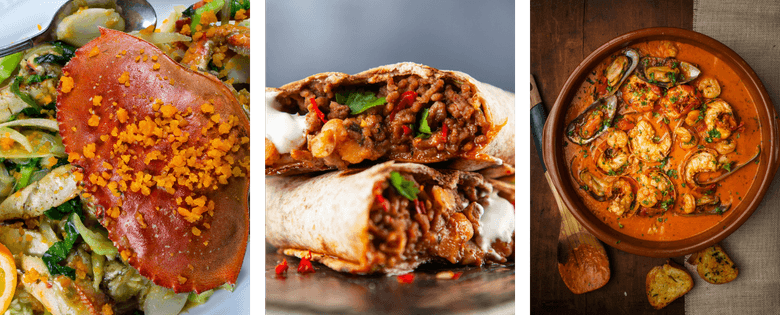
2. Dungeness Crab
Dungeness crab is the crustacean most closely tied to San Francisco winter eating, usually arriving in force from late fall into winter when the commercial season opens under changing state regulations. The crab itself is named for Dungeness, Washington, but San Francisco made it a civic ritual, especially through Fisherman’s Wharf stalls, family holiday tables, and old Italian restaurants serving cracked crab with garlic, olive oil, or simple salad. One lesser-known point is that local affection for Dungeness was strengthened by the city’s live-crab tanks and wholesale fish markets, where generations of cooks learned to judge freshness by movement, weight, and shell condition rather than by menu description alone.
At Swan Oyster Depot on Polk Street, order the cracked Dungeness crab when it is in season and available, or ask for half a crab alongside oysters and seafood salad. In North Beach, Sotto Mare often features it simply, while Fisherman’s Wharf remains the clearest neighborhood for comparing market-style preparations.
3. Sourdough Bread
San Francisco sourdough is the city’s most famous bread, marked by a pronounced tang and a crust shaped by old starter cultures and the local baking climate. Its popular history is often linked to Gold Rush bakers and miners, who prized naturally leavened dough because commercial yeast was unreliable and starters could be carried and refreshed. A fact that matters more than the souvenir version is that the bread’s identity was also preserved by large bakeries and neighborhood Italian baking traditions, with Boudin helping codify the city’s public idea of sourdough while smaller bakeries kept different crumb structures and fermentation styles alive. Another useful detail is that the bread’s reputation became so specific that microbiologists studied local starter cultures, turning San Francisco sourdough into one of the rare city breads with a scientific identity as well as a culinary one.
Try a loaf at Boudin Bakery at Fisherman’s Wharf if you want the best-known historic name, especially in a round loaf or as part of a clam chowder bread bowl if you want the late twentieth-century Wharf classic. For a more bakery-driven perspective, Acme Bread at the Ferry Building is a useful comparison, though the style is less tied to the old Wharf image and more to modern Bay Area bread culture.
4. Hangtown Fry
Hangtown fry is an old California dish of oysters and eggs, often with bacon, associated with Gold Rush-era abundance and swagger rather than everyday home cooking. The story usually points to Placerville, once called Hangtown, but San Francisco helped keep the dish alive because oysters were once central to the city’s diet, sold in saloons, oyster houses, and markets in startling volume during the nineteenth century. What many quick guides skip is that native Olympia oysters from the Pacific Coast were once common in California before overharvesting and habitat loss changed the local oyster trade, so the dish also hints at an earlier shellfish ecology now largely gone.
Order Hangtown fry at Tadich Grill, one of the city’s oldest restaurants and exactly the kind of room where the dish makes historical sense. It works best as a lunch or early dinner order, especially if you want to pair it with other old San Francisco seafood staples from the same menu.
5. Burrito estilo Misión (Mission-Style Burrito)
The Mission burrito is San Francisco’s most influential modern street food, a large flour tortilla wrapped tightly around rice, beans, meat, salsa, and usually extras such as cheese, sour cream, or guacamole. It took shape in the Mission District through Mexican and Mexican American taqueria culture in the second half of the twentieth century, with laborers, students, and late-night crowds all helping make it a neighborhood standard. A useful distinction is that the Mission style is less about ancient tradition than about San Francisco urban practicality: a foil-wrapped, full-meal burrito built for portability, long workdays, and city eating on the move. The local argument over rice is also part of the story, since some landmark shops became known precisely for rejecting one of the format’s most common fillers.
In the Mission, order a super burrito at El Farolito on Mission Street if you want the classic stuffed style, or compare it with La Taqueria, famous for its rice-free approach. Ask specifically for carne asada, carnitas, or al pastor depending on the house specialty, and eat it in the neighborhood rather than carrying it across town, since the tortilla and filling hold best when served fresh.
6. Chop Suey (Mixed Bits Stir-Fry)
Chop suey has long been linked to San Francisco’s Chinatown, even if its exact invention is debated across Chinese American history. In this city, the dish belongs to the era when Cantonese cooks adapted to American dining rooms while preserving familiar methods of stir-frying meats and vegetables in thickened sauces that translated well to local expectations. One less-obvious historical point is that chop suey houses helped make Chinatown legible to non-Chinese diners at a time when restrictive laws and racial segregation shaped who could eat where, so the dish is part of a complicated story of adaptation, commerce, and survival rather than a simple novelty. In San Francisco, that context matters because Chinatown became both a heavily toured district and a working community, which meant dishes like chop suey operated at the intersection of performance, business, and daily livelihood.
For old-school Chinatown context, look at menus at New Lun Ting Cafe on Jackson Street, where Chinese American standards still appear alongside broader Cantonese offerings. Ordering chop suey in Chinatown, within walking distance of Portsmouth Square and the old alleyway restaurant grid, gives the dish the setting that explains why it mattered in San Francisco dining history.
7. Dutch Crunch
Dutch crunch is a local sandwich-roll style with a mottled, crackled top made by applying a rice-flour paste before baking. Despite the name, many Bay Area sandwich shops treat it as a distinct local bread choice, especially for deli sandwiches stacked high enough to need both texture and structure. A detail often overlooked is that Dutch crunch became especially embedded in everyday San Francisco lunch culture through neighborhood delis and corner sandwich shops rather than through high-profile restaurants, which is why locals discuss it with unusual seriousness for something as humble as a roll. In San Francisco, it also reflects the city’s hybrid food habits: European-named bread, deli-counter practicality, and a lunch culture built around steep hills, short breaks, and portable meals.
Try a sandwich on Dutch crunch at Ike’s Place in the Castro or at Rhea’s Deli on Valencia Street. Specify the bread when ordering, because it is a choice rather than the automatic default, and go at lunch when neighborhood delis are operating at full speed.
8. It’s-It Ice Cream Sandwich
It’s-It is one of San Francisco’s defining packaged treats: vanilla ice cream pressed between two oatmeal cookies and coated in dark chocolate. It began in 1928 at Playland-at-the-Beach, the old oceanfront amusement park on the city’s western edge, which ties it directly to a vanished San Francisco landscape of boardwalk leisure and foggy seaside recreation. The part many visitors miss is that It’s-It survived the demolition of Playland and became one of the rare industrial snack foods that still carries a specific local memory, not just a brand identity. Even its oatmeal-cookie format feels tied to an earlier amusement-park snack logic, sturdier and less delicate than the ice cream sandwiches associated with later dessert culture.
You can buy It’s-It at corner stores, supermarkets, and convenience counters across the city, but trying one near Ocean Beach or in the Outer Richmond makes the most historical sense because of the Playland connection. If you find multiple flavors, start with the original vanilla before moving on to mint or cappuccino, since the original is the version tied most closely to the city’s food memory.
Where to Eat These Foods in San Francisco
If you want to eat San Francisco well without wasting meals, split your time between the Ferry Building for daytime grazing, North Beach for old Italian-American seafood, Chinatown for historical continuity, Polk Gulch for classic seafood counters like Swan Oyster Depot, and the Mission for substantial late lunches and dinners. A realistic budget is about $12 to $20 for taqueria meals, $16 to $25 for deli lunches and Dutch crunch sandwiches, $30 to $50 for classic seafood mains, and substantially more when Dungeness crab is in season and market prices jump.
Timing matters in San Francisco. Swan Oyster Depot often means lining up before opening, while many old-guard seafood and Italian spots are most comfortable at lunch or an early dinner, usually between 5:30 and 7:30 p.m. In the Mission, burritos make most sense from late lunch into the evening, especially along Mission Street and Valencia Street. Around Fisherman’s Wharf, sourdough and crab are easiest to combine in one stop, but North Beach usually makes more sense if the priority is a sit-down meal with local history behind it. Joining a free tour of San Francisco is a practical way to get neighborhood-specific eating advice from a guide who can tell you whether to head for North Beach, Chinatown, or the Mission after the walk.