

Lisbon was rebuilt after the 1755 earthquake with one of Europe’s earliest large-scale urban plans, but many of its steep streets still follow the older medieval topography that made daily movement hard for centuries. That contrast is exactly why an electric bike makes sense here: you cross districts shaped by very different moments of the city’s history without spending the whole day climbing hills. In a few kilometres, Lisbon shifts from orderly eighteenth-century avenues to lookout points, convent walls and older neighbourhood streets. The city reads differently when you move through its gradients instead of only seeing them from a tram window.
This route usually covers some of Lisbon’s main hills and viewpoints, with stops in areas such as Baixa, Alfama, Graça or around the riverfront, depending on the itinerary, and lasts around 2.5 to 3 hours. You ride an electric bike with a guide, making it possible to cover much more ground than on foot while still stopping for explanations and photos. The activity normally includes the e-bike, helmet and the guided route through central Lisbon. It is designed as a practical overview of the city’s geography, viewpoints and historic quarters.
The tour is conducted in English and the booking is made through Civitatis. If you want to continue discovering the city afterwards, Lisbon also has a free tour in English that works well as a slower introduction to its streets, squares and historical centre on foot. Combining both gives you a useful sense of Lisbon’s hills and its street-level detail.
What You Will See on Lisbon Electric Bike Tour
Baixa
Baixa is the part of Lisbon most clearly shaped by the reconstruction after the 1755 earthquake. Its straight streets and regular blocks are unusual in a city better known for hills and irregular lanes, and riding through Rua Augusta, Rua da Prata or nearby streets helps explain how the capital was reorganised after disaster.
Alfama
Alfama preserved much of its medieval street pattern because it survived the earthquake better than lower parts of the city. Here the route usually slows down for narrower streets, old houses, small squares and the urban fabric associated with fado and some of Lisbon’s oldest residential areas.
Miradouro da Senhora do Monte
This viewpoint is one of the highest in central Lisbon and gives a wide reading of the city’s layout, from São Jorge Castle to the Tagus estuary. It is the kind of stop that makes the electric bike worthwhile, since reaching it on foot means a long uphill climb through Graça.
Sé de Lisboa
Lisbon Cathedral, begun in the twelfth century after the Christian reconquest of the city in 1147, shows Romanesque features that are rare in much of central Lisbon. Seeing it in context, amid tram lines and sloping streets, helps connect the modern city to its medieval and early Christian phases.
Praça do Comércio
Facing the Tagus, this square marks the former site of the royal Ribeira Palace, destroyed in the 1755 earthquake. Today it still reads as Lisbon’s ceremonial riverfront entrance, and on a bike route it works as a clear transition between inland hills and the broad open edge of the river.
Graça
Graça sits on one of Lisbon’s prominent hills and is known for its viewpoints, convent history and residential character. Riding through it gives a better sense of how local neighbourhood life still exists within one of the city’s most visited panoramic areas.
Tips to Enjoy Lisbon Electric Bike Tour
✔️ Morning departures are usually the easiest in summer, especially before 11 am, because Lisbon’s exposed hills around Graça and Senhora do Monte heat up quickly and afternoon sun reflects strongly off the stone streets.
✔️ If your meeting point is near Praça do Comércio or Baixa, use the Baixa-Chiado or Terreiro do Paço Metro stations to avoid dealing with parking in the centre, where driving around Rua da Prata and Rua do Comércio can be slow.
✔️ On routes that pass the cathedral and Alfama, pay close attention to tram rails near Sé and Rua de São João da Praça. Cross the tracks with the bike as straight as possible, because narrow tyres can slip if they meet the rail at an angle.
✔️ Keep a few euros with you for a stop after the ride, as a coffee and a pastel de nata in central Lisbon often costs around €3 to €5. Manteigaria in Chiado is a practical option if you finish near the centre.
✔️ Phone cameras work best at viewpoints such as Miradouro da Senhora do Monte if you switch on HDR or the equivalent setting, since Lisbon’s white façades and strong river light often create harsh contrast in midday photos.
✔️ If you want to pair the ride with another visit on the same day, leave at least 1 hour after the end time before booking timed entry at places such as São Jorge Castle or Mosteiro dos Jerónimos. Lisbon traffic, hills and group return times can make the finish slightly later than expected.
What Else to See in Lisbon
São Jorge Castle
Overlooking Alfama, the castle occupies one of the key defensive points of old Lisbon and helps explain why the city developed across steep hills. From its walls you can read the same ridgelines and river edge that become clear during the bike tour, especially above the cathedral and Baixa.
Museu Nacional do Azulejo
This museum traces the history of Portuguese tiles from the fifteenth century onwards in the former Madre de Deus convent, east of the centre. After cycling through streets lined with tiled façades in Alfama and Graça, it gives useful context for one of Lisbon’s most visible urban details.
Mosteiro dos Jerónimos
In Belém, this monastery is one of the clearest monuments of Portugal’s sixteenth-century maritime wealth. It complements a central Lisbon bike route by showing the period when the Tagus riverfront became the departure point for oceanic expansion, and it is close to other riverside sights such as the Monument to the Discoveries.
The Best of Lisbon
Lisbon makes most sense when you pay attention to elevation and the river at the same time. The city’s neighbourhoods were not built on a flat grid but across ridges, escarpments and former access routes to the Tagus, which is why a route by electric bike reveals connections that are easy to miss when moving only by tram or metro.
That is also why the strongest parts of the city for this kind of ride are Baixa, Alfama, Graça and the riverfront around Praça do Comércio. In a short distance, you see the planned reconstruction after the earthquake, the older street pattern that survived on the hills, and the viewpoints that explain how Lisbon spreads between high ground and water.
For food, start with pastel de nata, the custard tart linked to the monastic baking tradition of Belém and still best known at Pastéis de Belém near the Jerónimos Monastery. Another Lisbon classic is bacalhau à Brás, made with salted cod, onions, eggs and thin potatoes, commonly found in traditional restaurants in Baixa and Chiado.
If you want to keep exploring after the ride, the free tour of Lisbon is a logical next step for understanding on foot the streets, squares and historical layers you have just crossed by bike.
Frequently Asked Questions
How long does Lisbon Electric Bike Tour last?
Lisbon Electric Bike Tour usually lasts around 2.5 to 3 hours. That normally includes the bike setup, safety briefing, the guided ride itself and short stops at viewpoints or major landmarks such as Alfama, Graça or Praça do Comércio.
Where does Lisbon Electric Bike Tour start?
The tour generally starts in central Lisbon, often in an accessible area close to Baixa or the riverfront where bike operators can manage group departures easily. You should plan your route in advance using nearby Metro stations such as Baixa-Chiado, Rossio or Terreiro do Paço, since central traffic and one-way streets can make taxis slower than expected.
What language is Lisbon Electric Bike Tour conducted in?
It is conducted in English with an English-speaking guide. Explanations are given during stops and while moving between districts, so a basic level of spoken English is useful for following safety instructions and historical context.
Is admission included in Lisbon Electric Bike Tour?
The electric bike, helmet and guided route are normally included in the price. This type of tour usually focuses on outdoor sightseeing rather than interior visits, so major monuments such as São Jorge Castle or the cloisters of the cathedral are generally seen from outside unless specifically stated otherwise.
Do I need to book in advance?
Yes, booking in advance is a good idea because group sizes are limited by the number of available e-bikes and guided departures. In spring, early summer and weekends, Lisbon’s cycling and sightseeing tours can fill up quickly, so reserving a few days ahead is sensible.
Is Lisbon Electric Bike Tour accessible for people with reduced mobility?
This is not usually the most accessible activity for people with reduced mobility because it involves riding a bicycle through sloping streets, cobbled surfaces and traffic-managed historic areas. Lisbon’s central neighbourhoods, especially Alfama and Graça, have uneven paving and steep gradients that can make access difficult even with electric assistance.
Can children participate in Lisbon Electric Bike Tour?
Children can usually participate if they meet the minimum age or height required by the operator and can safely handle the bike provided. Urban hill routes in Lisbon often require confidence on cobbles, descents and tram-track areas, so this is generally better for older children than for very young riders.
Is photography allowed during Lisbon Electric Bike Tour?
Yes, photography is allowed and there are usually several planned stops where taking pictures is easy and safe. Some of the best moments are at viewpoints such as Senhora do Monte or near Praça do Comércio, but you should avoid using your phone while the group is moving through tram tracks or narrow streets.
What is the best time of year to visit Lisbon?
Spring and early autumn are usually the best times, especially from March to June and from September to October, when temperatures are milder and the city is easier to cycle through comfortably. July and August bring longer days but also stronger heat on exposed hills, while winter is generally mild though occasional rain can make cobbled streets more slippery.
Popular Activities in Lisbon
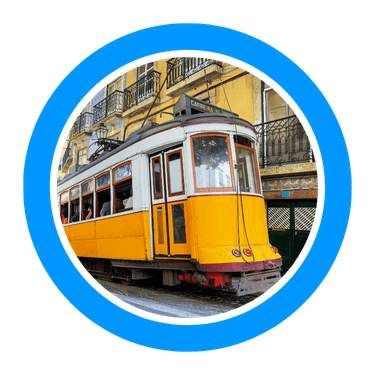
Lisbon Historic Tram

Lisbon Free Tour
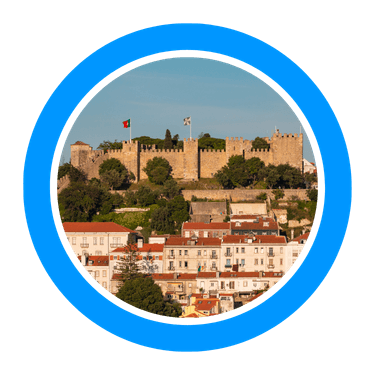
São Jorge Castle
