

This Rome e-bike tour runs in English with three route choices lasting 2.5 to 4 hours: the historic centre, Villa Borghese, or the Appian Way and Aqueduct Park, departing from the meeting point assigned to your option.
Rome’s geography is shaped by hills, river crossings and roads whose importance stretches back more than 2,000 years. Cycling helps connect those features: the distance between monuments becomes part of the experience, and the spaces between them reveal how the city developed. Electric assistance can reduce the effort of pedalling, while you remain responsible for steering, braking and controlling the bike.
The first decision is which part of Rome you want to understand. The central route brings together monumental squares and ancient landmarks within the modern city. Villa Borghese introduces a landscape of gardens, fountains and ornamental temples. The Appian option follows the infrastructure story beyond the historic core, connecting an ancient road with aqueduct remains and an underground burial site.
These are separate experiences, so choose according to your interests and the time available. A shorter park visit may fit a day that already includes another activity. The city ride suits travellers seeking a broad introduction, while the Appian route offers a stronger focus on archaeology and the landscape beyond central Rome.
Before booking, consider everyone’s cycling confidence and confirm any equipment needed for children. Allow time to reach the correct departure address, get comfortable with the bike and organise your belongings. The ride works best when you can concentrate on the route and save photographs for the stops, with enough time afterwards to return the equipment before continuing your day.
Choose Your Rome E-Bike Route
| Option | Duration | Meeting Point |
|---|---|---|
| Historic Centre | 4 hours | Lungotevere delle Armi, 44 |
| Villa Borghese | 2.5 hours | Lungotevere delle Armi, 44 |
| Appian Way and Aqueduct Park | 3.5 hours | Via Appia Antica, 136 |
Historic Centre: Ancient Monuments and Papal Rome
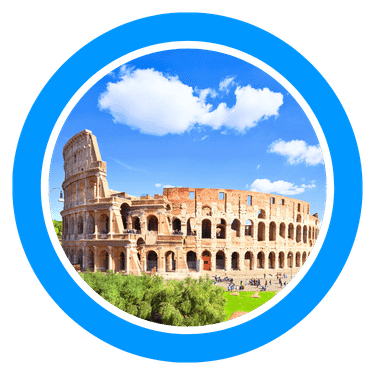
This option links Tiber Island, Circus Maximus, San Pietro in Vincoli and the Colosseum with Piazza Venezia, the Pantheon, Piazza Navona, Castel Sant’Angelo and St Peter’s Square. The focus is on their exterior setting and the connections between different parts of Rome.
Circus Maximus is particularly useful for understanding the city’s terrain. Its long valley lies between the Palatine and Aventine hills, giving the former chariot-racing ground a scale that is difficult to appreciate in a single photograph. Near the Colosseum, the concentration of ancient monuments shows a different relationship between public spectacle, imperial residence and civic space.
The later squares and riverfront buildings extend the story into papal Rome. Piazza Navona preserves the footprint of an ancient stadium, while Castel Sant’Angelo developed from Hadrian’s mausoleum into a fortress and papal refuge. Seeing both during one ride makes the reuse of ancient structures a concrete theme.
Choose this route if recognising the city’s major landmarks is your priority. You can use the ride to identify places that deserve a separate interior visit, then return with the appropriate ticket and enough time to explore them on foot.
Villa Borghese: Gardens and Ornamental Architecture
The park option includes Piazza del Popolo, the Temple of Aesculapius, ornamental garden structures and the exterior of Galleria Borghese. It offers a different setting from the dense concentration of monuments in the historic centre.
Villa Borghese developed as an aristocratic estate before becoming a public park. Its avenues, planted spaces and decorative buildings reflect generations of deliberate landscape design. The classical references belong to that designed environment: a temple in the gardens should not automatically be interpreted as a surviving structure from ancient Rome.
The Temple of Aesculapius illustrates how architecture and water were composed into a garden view. Elsewhere, the relationship between open lawns, trees and built features shows how the estate offered a sequence of different settings. This option suits travellers who want park scenery and architectural context within a shorter outing.
Passing Galleria Borghese introduces the building within its grounds. Its art collection requires a separate museum visit, so leave time for that independently if the paintings and sculptures are central to your plans.
Appian Way: Aqueducts and Catacombs
The Appian route combines the Via Appia Antica and Aqueduct Park with an interior visit to either the Catacombs of St Callixtus or St Sebastian. This option connects surface archaeology with an underground part of Rome’s history.
Construction of the Appian Way began in 312 BC. Its development connected Rome with southern Italy and helped organise movement across a much larger territory than the city itself. Surviving paving, roadside monuments and the road’s alignment make that infrastructure visible in the landscape.
At the Aqueduct Park, the engineering story shifts from moving people to supplying water. The surviving structures help explain how Rome depended on systems extending far beyond its inhabited centre. Roads and aqueducts served different purposes, but both required planning across long distances and uneven ground.
The catacomb visit adds a change of pace and environment. Expect part of the experience to take place on foot, and consider your comfort with underground passages when choosing this option. It is the most relevant route if ancient infrastructure and burial history interest you more than a survey of central squares.
Preparing for the Ride
Check the address for your selected option. The Appian departure is separate from the other two. Save the location from your confirmation and calculate your journey to that address, rather than heading directly to a landmark mentioned in the itinerary.
Get comfortable with the controls before moving off. Ask how the assistance settings and brakes work. Check the saddle position and practise starting and stopping in the space indicated by the guide before joining the route.
Carry a compact, secure bag. Keep straps clear of the wheels and handlebars, and avoid loose items that require constant adjustment. Your hands should remain available for steering and braking throughout the ride.
Prepare for the forecast. Bring water and suitable sun protection, and wear shoes that stay securely on your feet. Electric assistance reduces pedalling effort, but you will still spend time outdoors, including during explanation stops.
Take photographs only after stopping. Put your phone away while riding, particularly on uneven paving or when approaching other road users. Wait for a safe stopping place and keep the route clear for pedestrians and cyclists.
Confirm children’s equipment in advance. Provide each child’s age, height and weight so the appropriate arrangement can be checked. Do this before departure day, especially if your family needs more than one passenger seat or trailer.
Leave room after the scheduled ride. Avoid an immediate connection to another timed activity. Allow for returning equipment, collecting belongings and reaching your next destination before planning lunch or a museum visit.
Frequently Asked Questions
Do I Choose One Route?
Yes. Select the option that matches your interests; the three itineraries are separate rides.
What Equipment Is Included?
An electric bike, helmet, lock and rain poncho are supplied, alongside the English-speaking guide. Child transport equipment is included when required and appropriately arranged.
Are Entrance Tickets Included?
The Appian option includes one catacomb admission. Other monument and museum interiors are not included.
Can Children Participate?
The published arrangements are trailers for children up to 139 cm, e-bikes for children over 12, and child seats for babies under 20 kg. Confirm the appropriate equipment for your child.
Do I Need Cycling Experience?
You should be comfortable balancing, steering and braking. An electric motor assists pedalling; it does not control the bicycle for you.
Is This Suitable for Reduced Mobility?
No. The activity is listed as unsuitable for people with reduced mobility.
Can I Bring a Pet?
Pets are not permitted.
What Is the Cancellation Policy?
Cancellation is free until 24 hours before departure. Later cancellations and no-shows are non-refundable.
More Tours in Rome

Castel Sant’Angelo

Rome
Colosseum
