

This 2-hour free tour begins at Plaza de Europa, is conducted in English and follows a walking route through central Santa Cruz de Tenerife before finishing at Parque García Sanabria. Confirmed stops include Mercado de Nuestra Señora de África, Teatro Guimerá and Plaza de España, although their order may change for organisational reasons. Reserving does not require paying a fixed tour price, but participants are expected to leave a voluntary contribution based on their experience at the end.
One of the defining episodes in Santa Cruz took place in 1797, when British forces led by Admiral Horatio Nelson attempted to capture the port. The attack failed, and Nelson lost his right arm during the fighting. The event remains central to the city’s identity because it demonstrates how a relatively modest harbour became strategically important in Atlantic navigation.
Santa Cruz later overtook nearby La Laguna as Tenerife’s principal administrative and commercial centre. Its urban character was therefore shaped less by old university prestige and more by maritime defence, port activity, public institutions and trade between Europe, Africa and the Americas.
The walking tour connects that history with places still used in daily life. The market introduces the island’s produce and food culture, Teatro Guimerá represents the development of civic institutions during the 19th century, and Plaza de España occupies ground once defended by the Castillo de San Cristóbal. Finishing at Parque García Sanabria also places you near one of the city’s main green spaces, from where you can continue towards the central shopping streets, the seafront or the tram network.
The activity includes an English-speaking guide but no food, transport or monument admissions. Most of its value comes from understanding how apparently separate squares, public buildings and commercial areas fit into the wider development of Tenerife’s capital.
What You’ll See on the Free Tour of Santa Cruz de Tenerife
Plaza de Europa
The walk begins at Plaza de Europa, a central meeting point close to the older part of Santa Cruz. Its position makes it practical for introducing the development of the city between the harbour, commercial streets and neighbourhoods that grew inland.
Arriving here also avoids confusion with Plaza de España, which appears later in the tour. The two squares are within the central area but are not the same meeting point, so checking the location before leaving your accommodation is important.
Mercado de Nuestra Señora de África
Opened in 1944, Mercado de Nuestra Señora de África is one of the clearest places to observe daily food culture in Santa Cruz. Its neo-colonial design incorporates arches, courtyards and decorative references associated with Mudéjar architecture.
The stalls bring together tropical fruit, vegetables, spices, flowers, meat and seafood caught in the Atlantic. Rather than functioning only as a visitor attraction, the market remains connected to household shopping and the supply networks linking the capital with agricultural and fishing communities across Tenerife.
The tour introduces the market and its historical role, but food and purchases are not included. If the building interests you, note its location and return after the walk with enough time to look around independently.
Teatro Guimerá
Teatro Guimerá is the oldest theatre in the Canary Islands. It opened during the 19th century, when Santa Cruz was strengthening its position as a political and cultural centre as well as a working port.
The theatre is named after Ángel Guimerá, the dramatist and poet who was born in Santa Cruz before moving to Catalonia. Its restrained neoclassical exterior contrasts with the commercial streets around it and provides evidence of the civic institutions created as the city expanded.
The free tour focuses on the building’s exterior and historical context. Attendance at a performance or access to its interior is not included.
Plaza de España
Plaza de España is the largest and most prominent civic space in Santa Cruz. It was developed on land associated with the former Castillo de San Cristóbal, the defensive fortress that protected the harbour for centuries.
The area is closely connected with the failed British attack of 1797. Forces commanded by Admiral Horatio Nelson attempted to seize Santa Cruz, but the city’s defenders repelled the assault. Nelson was seriously wounded and lost his right arm during the operation.
Today, the square’s open layout, central lake and proximity to the port reveal a different phase of the city. What was once a defensive edge has become a public space connecting the historic centre with the seafront and modern administrative district.
Parque García Sanabria
The tour ends at Parque García Sanabria, one of the principal green spaces in Santa Cruz. The park combines shaded paths, tropical and subtropical vegetation, fountains and outdoor sculptures within a central urban setting.
Its location makes the finish practically useful. From here, you can remain in the park, walk towards the Rambla de Santa Cruz or return to the commercial centre. The nearby streets also provide cafés and restaurants for a break after the 2-hour route.
Practical Tips for the Walking Tour
- Confirm the correct square: the meeting point is Plaza de Europa, not Plaza de España. Save the location before setting out and arrive several minutes early.
- Bring sun protection: Santa Cruz can feel warm and bright throughout the year, and exposed central squares provide limited shade.
- Wear comfortable footwear: the route lasts 2 hours and some older pavements may be uneven or slippery after rain or street cleaning.
- Carry drinking water: this is particularly useful during warm weather, even when the tour takes place in the morning.
- Reserve your place: bookings are accepted until 1 hour before departure when spaces remain, but earlier reservation gives you a better chance of joining your preferred time.
- Keep some cash for the guide: the tour has no fixed participation price. You decide on a voluntary contribution at the end according to the quality of the experience.
- Plan market visits for earlier hours: if you want to return to Mercado de Nuestra Señora de África, check its trading hours because individual stalls may close before the rest of the city centre.
- Allow for the different finishing point: the walk ends at Parque García Sanabria rather than returning to Plaza de Europa.
What to Do After the Tour
Walk Through Parque García Sanabria
Because the tour finishes inside the park, you can continue along its paths without needing additional transport. The gardens provide more shade than the central squares and contain plants suited to Tenerife’s subtropical climate, along with sculptures placed throughout the grounds.
Visit the Iglesia de Nuestra Señora de la Concepción
This church is one of the most important historic buildings in Santa Cruz, but it should be treated as an independent visit rather than a guaranteed tour stop. Its origins are connected with the early Castilian settlement, while its tower remains a useful visual reference in the older part of the city.
Continue to Plaza de la Candelaria
Plaza de la Candelaria lies close to Plaza de España and historically connected the harbour with the city’s commercial streets. It is a logical place to continue walking if you want to understand how trade influenced the layout of central Santa Cruz.
Use the Tram to Visit La Laguna
Santa Cruz is connected with San Cristóbal de La Laguna by tram. The journey provides an effective contrast between the island’s modern administrative capital and the older colonial city, whose historic centre has a different street plan and architectural character.
Food to Try in Santa Cruz de Tenerife
Mercado de Nuestra Señora de África is a useful starting point for learning about ingredients used across Tenerife. Depending on the season and the individual stalls, you may see local cheeses, bananas, avocados, fish, spices and produce brought into the capital from different parts of the island.
For a meal after the walk, look for papas arrugadas served with red or green mojo. The potatoes are cooked in heavily salted water, while the sauces commonly use ingredients such as peppers, coriander, garlic, oil and vinegar.
Other Canarian dishes include grilled cheese with mojo, ropa vieja made with chickpeas and meat, and fish served with potatoes or gofio. Gofio is a flour prepared from toasted grains and appears in both savoury and sweet recipes.
The market district and streets around the historic centre provide options ranging from simple counter service to sit-down restaurants. Rather than trying to fit a food stop into the guided walk, use the tour to identify the areas you would like to revisit once the group reaches Parque García Sanabria.
Frequently Asked Questions
Where Does the Free Tour of Santa Cruz de Tenerife Start?
The meeting point is Plaza de Europa in central Santa Cruz. Your electronic booking confirmation provides the details needed to identify the guide.
Where Does the Tour End?
The walking tour ends at Parque García Sanabria. It does not return to the original meeting point at Plaza de Europa.
How Long Does the Tour Last?
The activity lasts approximately 2 hours, including walking time and stops for the guide’s explanations.
What Language Is the Tour Conducted In?
This version of the activity is conducted in English with an English-speaking guide.
Which Places Are Confirmed on the Route?
The published itinerary confirms Mercado de Nuestra Señora de África, Teatro Guimerá and Plaza de España. The order of these visits may change for organisational reasons.
Is the Tour Accessible for People With Reduced Mobility?
No. The activity is not considered advisable for people with reduced mobility. Travellers who need a step-free route should consider a different format rather than assuming the central location makes the entire walk accessible.
Can Groups of More Than 6 People Join?
No. Groups of more than 6 people cannot join the standard free tour, even when their members make separate reservations.
What Is Included in the Free Tour?
The activity includes the 2-hour walk and the services of an English-speaking guide. Food, drinks, transportation, admission tickets and the voluntary contribution for the guide are not included.
Are Pets Allowed?
No, pets are not permitted on this activity.
More Tours in Spain
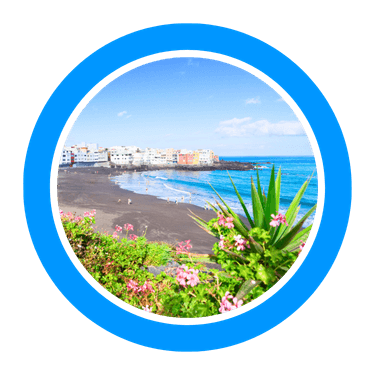
Puerto de la Cruz
Gran Canaria
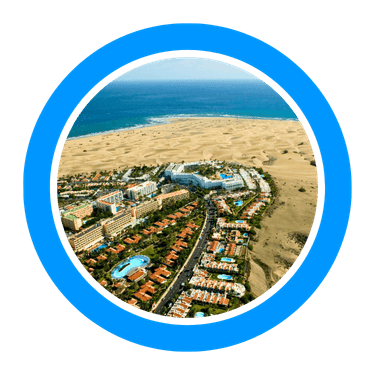
Maspalomas
